Official websites use .gov
A .gov website belongs to an official government organization in the United
States.
Secure .gov websites use HTTPS
A lock (
) or https:// means you’ve safely
connected to the .gov website. Share sensitive information only on official, secure websites.
Exercise Hurricane Don Demonstrates North Carolina Medical Reserve Corps’ Real-world Response Capabilities
By Kimberly Clement, MPH, Paramedic, Program Manager, Healthcare Preparedness Program, Division of Health Service Regulation, Office of Emergency Medical Services, North Carolina Department of Health and Human Services
From 1851 to 2019, 84 hurricanes made landfall in North Carolina. This year, NOAA predicts that the Atlantic hurricane season will be particularly active, and North Carolina Medical Reserve Corps (MRC) units recently trained with area responders before the first storm of the season threatened the area. Exercise Hurricane Don tested our ability to provide the kinds of support that keep people healthy when disaster strikes.
North Carolina uses its State Medical Response System, which includes our North Carolina Office of Emergency Medical Services (NCOEMS) staff; regional Health Care Coalitions; Medical Reserve Corps units; and governmental and private health care organizations across the state. When there is a state activation that requires public health and medical support under Emergency Support Function #8 (ESF-8), the North Carolina State Medical Response System is activated.
In preparation for hurricane season, the NCOEMS organizes an annual full-scale exercise to test policies and procedures for emergency operations, state medical support shelters, the North Carolina mobile disaster hospital, patient movement, and more. The Capital Medical Reserve Corps and the NC-400 State Medical Assistance Team MRC provided clinical and non-clinical support as part of this year's exercise. These MRC units provided staffing support at the mobile disaster hospital, a five-bed emergency department, and the state medical support shelter. The state medical support shelter provides assistance to individuals who have been displaced from their health care community and would have difficulty maintaining their usual level of health care without this support.
MRC clinicians trained in the roles they would have during a major hurricane or other type of disaster. Our clinicians dedicated a total of 134 hours to hurricane preparedness training during this event. Without the engagement of the State Medical Response System and our MRC units, the success of our disaster preparedness efforts would fall short of meeting the needs of our 10.8 million residents of North Carolina.
Exercise Hurricane Don simulated a Category 3 hurricane making landfall in Brunswick County resulting in a major disruption to the health care system. In this scenario, approximately 250 patients needed to be cared for in a state medical support shelter. Dozens of patients needed emergency department level of care in an area where the local hospital had just five beds.
Exercise Hurricane Don ensured we had the protocols, supplies, and medical logistics support for the level of patient care required during a large-scale hurricane. During this exercise, our team tested procedures for activating our MRC units; our state's Emergency System for the Advance Registration of Volunteer Health Professionals (ESAR-VHP); and our check-in and check-out procedures for staff in operational sites.
After the event, participants provided an evaluation of the exercise and helped with the identification of additional training and exercise needs that can be incorporated into our training and exercise plan as we continue to bolster our MRCs through the use of MRC-STTRONG funding.
The Woman Who Inspired the Elizabeth Fitch Memorial Award
MRC National Technical Assistance Coordinator Elizabeth Fitch
Atlanta, Georgia
As we celebrate Women's' History Month, the MRC Program recognizes Elizabeth Fitch as a shining example of service. Elizabeth had an unparalleled passion for leading and managing volunteers, was an expert planner, and was often the MRC Program's "go to" person for special projects at the national level. Her passion for service included inspiring the next generation, and she was the driving force in developing the partnership between MRC and HOSA, a student-led society of Future Health Professionals.
Elizabeth Fitch, although young, made an indelible mark on the MRC Program. She began as a unit leader in the Atlanta area, before taking on the role as the Region 4 MRC Liaison. Eventually she became the National Technical Assistance Coordinator for the MRC Program.
Her career in service began in the Atlanta area, working at Peachtree Presbyterian Church, Hemophilia of Georgia, Girl Scout Council of Northwest Georgia, Global Health Action, Atlanta Community Food Bank, and as the coordinator at the District IV Health Services. She earned her bachelor's degree in religion at University of the South at Sewanee, and her master's in public administration at Georgia State University.
The MRC Program Office established the Elizabeth Fitch award following her death from breast cancer at the age of 36 in 2011. It recognizes individuals who exemplify the outstanding passion, commitment, spirit of volunteerism, partnership, and leadership that Elizabeth embodied and inspired in others. We look forward to recognizing our newest Elizabeth Fitch Memorial Awardee May 23rd at the 2024 National MRC Summit in Chicago.
MRC Responds to the Opioid Public Health Emergency
The opioid crisis in the United States was declared a public health emergency in 2017 and remains one of the most devasting health challenges of the 21st century. The Medical Reserve Corps (MRC) is on the front lines of the battle in communities across the U.S. In 2024, local MRC units in 43 states and territories engaged in activities that aimed to prevent opioid abuse, enhance community education and training around the risk of opioids, and reduce the number of opioid-related deaths.
We started volunteering with the Upper Merrimack Valley Medical Reserve Corps (MRC) in 2019 when we were in 8th and 9th grade because we are passionate about service and health equity. As Gandhi put it, "in a gentle way, you can shake the world."
As student volunteers we helped the unit raise awareness of domestic violence prevention by supporting the Live for Liv fundraiser, which supporting domestic violence awareness. We also volunteered at vaccine clinics, flu shot drives, and at town fairs with the MRC for public health education, which was a fun way to contribute to the health and well-being of our community.
Our experience in the MRC connected us to FEMA's National Youth Preparedness Council. We were trained in CPR, psychological first aid, how to administer Narcan, Until Help Arrives, and what to do during an active shooter response.
There are so many connections between different local, state and federal health organizations, and we were able to use those connections to bring trainings to more students at our high school, Central Catholic, and other students across the country. Through our volunteering, we were able to work with our school and the Red Cross to make Stop the Bleed training a permanent part of our school's health curriculum.
Similarly, we were inspired by the MRC to explore solutions to behavioral health issues for young people and teens We led a psychological first aid Train-the-Trainer seminar for teens by providing a zoom training to nearly 50 students across the country on our best practices reduce stress and promote resilience. We shared information about how they can bring these same resources to their communities. We also created information sheets that the MRC distributed to over 500 people in Maynard.
We wholeheartedly encourage students to join their local MRCs. It's a great way to learn about the medical field and allows students and teens in their community to make a difference The skills you gain with the MRC can apply to any field and there are many ways to contribute.
We specifically want to thank our mentors Nancy Burns (MRC), Mr. Aaron Levy (FEMA), and Jessica Bowe (DPH/Red Cross). Change starts with each of us, and we're so grateful to be a part of our MRC.
Health Care Coalitions in Ohio and Arkansas Lead Comprehensive Preparedness Planning and Community Outreach Efforts for “The Great American Eclipse”
Arkansas and Ohio April 2024
Background On April 8, 2024, parts of North America witnessed a rare, total solar eclipse. Millions of people traveled to areas where the total eclipse would be visible, including parts of Ohio and Arkansas.
Response The WCO HCC, Central Ohio HCC, and Arkansas' Northcentral HCC developed and implemented plans that included outlining and delivering community safety education, distributing resources, and using advanced communication tools to provide seamless delivery of health care services during the eclipse. Their efforts created a blueprint for managing future large-scale events.
Impact The HCCs' extensive planning and community education efforts prepared communities for an influx of visitors, allowing residents and visitors alike to safely enjoy the eclipse. The coalitions established key community and emergency response partnerships, created new mass gathering preparedness plans, and developed a repository of health care and emergency response contacts and resources that can be used for future events.
On April 8, 2024, the skies darkened as a total solar eclipse cast its shadow across the United States. While millions gazed in awe at the rare event, three health care coalitions (HCCs)—the West Central Ohio Healthcare Preparedness (WCO HCC), the Central Ohio HCC, and Arkansas' Northcentral HCC—worked diligently behind the scenes to prepare their communities were an emergency or disaster to strike during the eclipse.
As thousands of people traveled to areas with higher eclipse visibility, preparation was key to supporting local communities. Central to this preparation were HCCs, networks of local health care and response organizations partnering to support emergency response. ASPR's Hospital Preparedness Program (HPP) supports the WCO, Central Ohio, and Northcentral Arkansas HCCs, along with hundreds of others across the nation. With the support of HPP funding and guidance, HCCs unite health care and emergency response partners to prepare for, respond to, and recover from threats and emergencies by emphasizing a comprehensive, community-focused approach. HCCs also use HPP funding to invest in preparedness and response resources like patient tracking dashboards and mobile broadband kits. As the nation prepared for the rare solar event, HCCs and their partners assembled plans, protocols, and resources to prioritize the safety of all residents and visitors.
To prepare for an influx of over 1.5 million visitors across Ohio, the WCO HCC and the Central Ohio HCC organized, planned, and collaborated with partners. Both coalitions focused on preparing their regions to handle the expected surge of visitors and any potential disruptions. Their efforts, which began more than two years prior to the eclipse, involved numerous health care organizations, emergency management agencies, local health departments, and other key partners.
To prepare, the WCO HCC drew upon lessons from past emergencies, such as the 2019 Memorial Day Tornados and the Oregon Dis trict Shooting. The HCC organized multiple meetings, assessments, and exercises, including presentations on previous eclipse events, a meeting with representatives from major broadband companies, and county-specific Incident Action Planning Templates to inform placement of staff and resources. On the day of the eclipse, every county in West Central Ohio opened or partially opened its Emergency Operations Center. Using the Ohio Emergency Management Agency Ohio-Specific Eclipse Event Dashboard, the WCO HCC used technology that tracked planned events and real-time traffic, ensuring that resources were optimally allocated should an emergency occur. The careful planning combined with increased technological capabilities enabled the WCO HCC to handle an influx of visitors without disrupting day-to-day health care services.
Similarly, the Central Ohio HCC proactively tackled logistical challenges, such as adjusting staffing schedules and ensuring early resource deliveries to minimize disruptions during the eclipse. They pre-positioned mobile clinics in key counties to bolster health care capabilities and provided extensive public messaging to manage visitor expectations and traffic. The Central Ohio HCC used statewide patient tracking dashboards, which prompted all hospitals in the area to report bed availability data twice daily. They also held calls with planning partners to share new information and address emerging issues in real time, prioritizing situational awareness among all involved parties before, during, and after the event.
Meanwhile, Arkansas' Northcentral HCC demonstrated a comprehensive and collaborative effort in preparing for the eclipse. Their efforts, too, began months in advance and focused on community engagement and education, along with distributing resources in key locations. HCC representatives conducted over 20 workshops and training sessions across the state, educating the public on eclipse safety and preparedness and outlining additional resources available. The HCC also coordinated with local clinics, positioning mobile medical units in areas of Arkansas expected to experience high visitor traffic . They further used their mobile communications trailer – a resource purchased with HPP funds – as a mobile command center. The mobile command center provided advanced communication capabilities, including a secure network for voice and data communications, automatic dispatch consoles, and radio capability, all of which helped the Coalition, and its partners have continuous connectivity even if traditional networks failed.
Taken together, the WCO HCC's use of the Ohio Emergency Management Agency's dashboard and Arkansas' Northcentral HCC's deployment of a mobile command center showcased the roles of technological integration and resource allocation in mitigating potential crises during the eclipse. This, long with the HCCs' proactive public education and coordination with local agencies created a blueprint for managing future mass gatherings and events.
"We wanted to make sure everyone was prepared not just for the eclipse, but for any large-scale event in the future."
The solar eclipse was more than just a special event; it was an example of the power of HCCs. Enabled by HPP guidance and funding, these HCCs established key partnerships, built comprehensive preparedness plans and community education efforts, and coordinated resources to mitigate potential surge or interruption in communication. The coalitions' efforts will continue to support and inform future mass-gathering planning and response efforts. The Ohio and Arkansas coalitions' stories highlight the importance of HCCs as a leader of community-centered disaster planning, collaboration, and resource allocation.
Alabama Black Belt MRC Delivers Vital Medical Training to Communities
By Dr. Cheryl Davis, Unit Coordinator, Black Belt Alabama MRC
February 29, 2024 |The Black Belt Alabama Medical Reserve Corps (MRC) is working with local organizations to train community residents in Cardiopulmonary Resuscitation (CPR).
The MRC is currently training people in several counties in the Black Belt and will continue to expand the program. We focus on CPR because the Black Belt MRC serves a rural area with limited access to health care and emergency care. In many areas in the region, it's not unusual to have only one ambulance serving an entire county. So, when you call an ambulance, if one is available, it may not arrive for 30 minutes or longer.
Why CPR?
Our MRC is dedicated to always improving the health of the people in their community, not just during public health emergencies and natural and man-made disasters.
Time is critical. According to the American Heart Association (AHA), every minute CPR is delayed, a victim's chance of survival decreases by 10% and immediate CPR from someone nearby can double—even triple—chance of survival after cardiac arrest.
When a person is in cardiac arrest, survival depends on immediately receiving CPR from someone nearby, typically a child, spouse, parent, or a friend. The people taking advantage of our training are positioning themselves to save the life of someone they care about.
The Training
The Black Belt MRC is currently offering three levels of CPR Training:
Heartsaver® First Aid CPR AED Training - trains participants to provide first aid, CPR and use an automated external defibrillator (AED) in a safe, timely, and effective manner.
Basic Life Support Training - trains participants to promptly recognize several life-threatening emergencies, give high-quality chest compressions, deliver appropriate ventilations, and provide early use of an AED.
Hands-Only Cardiopulmonary Resuscitation – trains participants to use chest compression to push remaining oxygen through body to keep vital organs alive.
The Hands-Only training is the most popular. It only takes about 20 minutes, and the Black Belt MRC has several mannequins for individuals to practice the compressions.
The Goal
Our MRC's goal is to train 1,500 people by the end of 2024. So far, about 400 people have been trained, typically in groups of 10 people or fewer. During the month of February, the MRC provided demonstrations on the campus of Tuskegee University.
We're partnering with schools, churches and other organizations and individuals who are willing to assist us reach our goal of 1,500 people, but when we hit that number, we're not going to stop.
The Black Belt MRC is part of a wider network of seven Alabama reserve corps units. Alabama MRC units have supported a wide range of activities and events across the state such as providing logistical support during Hurricane Sally,…assisting public health nursing staff with providing community education on hepatitis and vaccinations to at-risk individuals, and assisting with food distribution for those impacted by the COVID-19 pandemic.
Help Strengthen Health in Your Community
As Black History Month comes to a close, we're reminded of the tangible impact that MRC volunteers have on communities across the country. ASPR and MRC are proud of our work in the Black community this month and every month of the year.
If you are interested in joining the MRC and becoming one of the more than 300,000 volunteer medical professionals, public health experts, and others who help make their communities stronger and healthier during disasters and every day, visit the MRC website to learn more and find a unit in your area.
About Alabama's Black Belt Region
The name Black Belt originally referred to the region's rich, black soil. In the 1800's, the name took on an additional meaning when the region was developed for cotton plantation agriculture worked by enslaved African Americans. After the American Civil War, many freedmen stayed in the area as tenant farmers and sharecroppers.
The Black Belt has been the sight of some of the most important events of the Civil Rights Movement, including the 1955 Montgomery bus boycott sparked by Rosa Parks' refusal to give up her bus seat and the 1965 Selma to Montgomery marches.
Although rich in culture, the Black Belt has some of the highest rates of poverty and hardships such as a lack of economic development, poor wages, and substandard housing, education and medical care.
Historically, the counties comprising the Alabama Black Belt are located in the western and southern part of the state and include the cities of Selma, Tuskegee, and Montgomery.
Leading the Way with Power Outage Planning: The Los Angeles County Health Care Coalition’s Playbook for Power Emergencies
Los Angeles County, California September 2023
Quick Look
Background
Since 2012, power utilities in California have implemented public safety power shutoffs to reduce the risk of wildfires. Additionally, weather events and stress on California’s power grid can causes rolling blackouts throughout the year. Not all health care facilities are prepared to maintain power during these power outages, which can put patient safety at risk.
Response
The Los Angeles County Healthcare Coalition (LA HCC) used Hospital Preparedness Program funding to develop the Healthcare Facility Emergency Power Resilience Playbook, a consolidation of promising practices for power resilience. Key players across the energy and health care sectors provided input to inform the playbook, which provides resources to help health care entities better protect patients and providers during power outages.
Impact
This playbook helps healthcare entities to prepare for and respond to power shutoffs, limiting disruptions to life-saving patient care.
When extreme weather threatens power infrastructure stability and elevates wildfire risk, power utilities in California initiate public safety power shutoffs. Triggered by conditions such as high winds, dry vegetation, and extreme heat, these shutoffs are a proactive measure to reduce the likelihood of catastrophic fires. During these power shutoffs, hospital operations can be severely affected. To adequately prepare health care facilities during these times of crisis, the Los Angeles County Health Care Coalition (LA HCC) created the Healthcare Facility Emergency Power Resilience Playbook. The playbook provides practical guidance and resources to help health care facilities maintain patient care during power disruptions.
The LA HCC is a health care coalition that receives funding and guidance from the Administration for Strategic Preparedness and Response (ASPR) Hospital Preparedness Program. With support from the Hospital Preparedness Program, the LA HCC establishes partner networks, coordinates health care and emergency response, and participates in regularly required trainings and exercises. The coalition collaborates with over 1,000 partner organizations, including public health, health care, and government entities, as well as nontraditional partners like power and fuel companies, to strengthen local readiness ahead of disasters and emergencies.
In 2019, the LA HCC used Hospital Preparedness Program funding to launch a multi-year emergency power preparedness initiative to assess health care entities’ ability to operate during power disruptions, with the goal of addressing power challenges proactively. California, especially Los Angeles County, frequently experiences power outages due to seasonal weather events, high energy demands, and an aging power grid. Power outages affect more than just heating, cooling, and electricity – they also impact the use of medical equipment like dialysis machines, ventilators, and electrocardiogram machines. Additionally, power outages pose challenges to accessing patient medical records, performing surgeries, and maintaining a safe and temperature-controlled environment for patients and medications. Preparing for and responding to power outages is crucial in order to limit disruptions to patient care and protect the most vulnerable patients during emergencies.
The LA HCC serves several types of communities across the county, each of which experiences unique challenges during power outages. While some areas are urban and dense with minimal storage for generators and fuel, other areas are rural with limited accessibility for resource distribution. Some hospitals, dialysis centers, and long-term care facilities have robust, redundant emergency power systems, while others lack a backup generator. To address these challenges, the LA HCC developed an efficient and adaptable plan to help all types of health care entities prepare for and respond to power emergencies.
In 2023, the LA HCC published the Healthcare Facility Emergency Power Resilience Playbook to address gaps identified through the power preparedness initiative. The playbook details promising practices for safeguarding emergency power and provides recommended protocols for power outages. To develop this playbook, the LA HCC established and led the Emergency Power Resilience Work Group, which brought together members of the energy and health care sectors, including hospitals, skilled nursing facilities, and local power providers. The group created comprehensive protocols for each phase of the emergency management planning and operational continuum, including assessment, mitigation, response, and recovery. The playbook’s actionable guidance and resources, such as checklists, assessment tools, and tabletop exercises, help every partner understand their role in maintaining patient care during power disruptions.
This unified, community-based approach represents the health care coalition model in action. By building and maintaining partnerships with health care entities across the county, the LA HCC knew the right people to bring together to identify and mitigate a threat to the public’s health. As a result of this effort, LA HCC member organizations and community partners are equipped with the resources, tools, and protocols they need to assess vulnerabilities, implement mitigation strategies, and respond effectively so that health care entities can continue to provide critical services when the power goes out, minimizing the impact of unpredictable outages on patient care.
“We’ve had a relationship with these health care entities for over 15 years. It was the combination of trust that they had with our health care coalition and funding from the Hospital Preparedness Program that helped support the power preparedness initiative from the beginning.”
- Terry Crammer, Chief, Disaster Response and Coordinator, LA HCC
The LA HCC’s approach to power outage planning provides a proactive, collaborative, and adaptable framework for maintaining patient care during emergencies. By developing the Healthcare Facility Emergency Power Resilience Playbook, the LA HCC not only addressed the immediate challenges posed by power disruptions but also set a model for local preparedness and resilience. Hospital Preparedness Program funding empowered the LA HCC to bring the right partners together to solve an urgent, local challenge and protect the public’s health through meaningful, lasting partnerships.
With Expertise Onsite, Rural Hospital Treats More Patients, Reduces Transfers & Keeps Patients in Their Community
Soon after Hurricane Idalia swept through north-central Florida, a team of health care providers from the National Disaster Medical System (NDMS) walked into the emergency department at Doctor's Memorial Hospital in Perry, Florida. The emergency department was the only area within the hospital still treating patients, and they were at capacity with very few hospital staff available after the storm.
"We can breathe now," said one of the nurses. "They are here to help."
At the request of state health officials, the Administration for Strategic Preparedness and Response deployed 14 NDMS personnel – including doctors, nurses, paramedics, and safety and administrative personnel – to this small, rural hospital to help care for the community. Most of the hospital's staff were personally affected by the hurricane and could not report for duty. In situations like this, NDMS support becomes vital.
"We have the training and experience to treat almost anything that walks through the door," said Dr. Alisa Roberts, one of the NDMS emergency physicians who arrived in Perry to help.
The team worked alongside hospital staff to treat 325 patients in eight days. Many patients arriving at the emergency department had minor injuries or illnesses. Several patients required care that normally would be beyond the services available at a small, rural hospital. Instead of transferring them to Tallahassee, away from their homes and family, the expertise of the DMAT providers allowed the patients to be treated onsite and discharged quickly. Here are their stories. (Names have been changed to protect patient privacy.)
Image
‘Patrick', an older adult, came to the hospital in distress with a wooden toothpick lodged in his airway. Wooden objects don't routinely appear in X-rays, making removal more difficult. In such situations, a small, rural hospital would likely air transport the patient to a regional hospital for removal. Dr. Roberts didn't want to wait because the foreign body might move and entirely obstruct the patient's ability to breathe. Waiting also would increase the risk of infection and the possibility of an airway perforation. Pulling the team together, Dr. Roberts sedated the patient with the help of NDMS Nurse Scott Kress and used a video laryngoscopy to visualize the foreign body and retrieve it using a pair of forceps. The patient was placed on antibiotics and discharged without having to transport him away from his community.
Image
'Lisa,' a woman in her 50s, arrived at the hospital in the evening. She had fallen and was complaining about head and chest pain. Concerned about a possible blood clot, the doctor ordered a CT scan. However, they could not digitally transfer the image for interpretation due to inconsistent power issues. With NDMS onsite and a CT scan in hand, Dr. Roberts could read the CT imagery. She confirmed no blood clot in the brain and chest, allowing the patient to avoid an unneeded and costly transport to Tallahassee and preserving limited EMS resources.
Evelyn, a 15-month-old having an allergic reaction to medication, was brought to the hospital by ambulance. Although EMS had administered epinephrine and diphenhydramine to relieve breathing symptoms, an antihistamine blocker was needed to provide additional relief and help prevent symptoms from returning. Without access to the proper child-size medication dosage, NDMS members worked with what they had in the field.
"Working in austere environments is challenging and requires innovative thinking," explained NDMS Supply Management Lead Steven Kress. "With no access to an onsite pharmacist, we called on our NDMS pharmacist who was working at another location. We explained what medication was available at the hospital and what we had in our own cache of medical supplies. With his help, we were able to prepare a pediatric dosage using the only medication available at the hospital."
To help administer the medication, the NDMS team used an apple banana smoothy from within its cache of MREs (Meals Ready to Eat). Evelyn drank the smoothy, and even asked for more. Later that day, she left the hospital with a souvenir, the MRE that helped relieve her symptoms and keep her out of the hospital.
Sarah, a middle-aged woman, presented with a complicated forearm fracture that needed to be aligned and splinted. In larger hospitals, an orthopedic or emergency physician would be available to set the arm while another doctor would administer and monitor sedation. However, most rural hospitals do not have this level of expertise inhouse. The NDMS team stepped in. With expertise in reducing and splitting fracture bones and extra staff to administer and monitor sedation, the fracture was stabilized for later treatment by a specialist. The patient was discharged locally so she could return home that afternoon.
"DMAT is one of the best kept secrets in our emergency response system," said Lauren Faison-Clark, interim CEO for Doctor's Memorial Hospital. "They swooped in immediately after Idalia and offered critical support. They allowed us to take care of our community and our staff who were suffering their own personal crises."
According to Ashley Biddy, director of nursing at Doctor's Memorial Hospital, DMAT has been a lifesaver to our staff and patients. "Post-storm we saw a surge of patients with injuries related to storm clean up. The patients and our staff were so complimentary of the DMAT's expertise and help with patient experience. They immediately merged into our facility and became family."
Oklahoma Health Care Coalition Coordinates with Key Response Partners to Relocate Nursing Home Patients After Central Oklahoma Tornadoes
Oklahoma April 2023
Impact
The Region 6/8 – Regional Medical Response System (RMRS), the lead agency for one of Oklahoma's six health care coalitions (HCCs), coordinated a timely and successful near twenty-four-hour long response to the 18 tornadoes that hit central Oklahoma on April 19, 2023. The HCC coordinated with nearby hospitals, local emergency medical services (EMS), public health, and long-term care facilities to relocate 79 nursing home residents within just three hours after a tornado destroyed their facility. The Region 6/8 RMRS used lessons learned from previous disaster responses and trainings, in addition to calling upon key relationships with their health care and emergency partner networks to respond quickly and effectively.
"This situation shows the value of being a coalition that works together, plans together, and understands how a response will work. Having the opportunity to not only practice a response during an exercise, but practically apply it to real world scenarios, has added incredible value to our coalition and to our Region."
- Zakia Yazdanipour
Director of the Region 6/8- Regional Medical Response System
Background
Throughout the morning and afternoon of April 19, 2023, the Region 6/8 - RMRS was monitoring the events surrounding the 28th memorial anniversary of the Oklahoma City bombing. At the same time, HCC members were in constant communication with their partners at the National Weather Services office in Norman, OK, tracking the incoming severe weather that was expected to hit the area later that day. Around 6:00 PM, thunderstorms and severe weather began in Cleveland and South Oklahoma counties. These storms quickly formed tornados, bringing wind, hail, rain, and other severe weather along in their path. Before the storms had even hit, the Region 6/8 RMRS began coordination efforts that would eventually lead to a successful, timely, and effective response.
Response
Throughout the afternoon, the Region 6/8 - RMRS began contacting long term care facilities and hospitals in the tornadoes' path. The HCC's leadership team also contacted nearby hospitals, local EMS, and public health, assembling a response team in preparation for the destruction. As the evening progressed into the night, 18 tornadoes touched down, including two tornadoes with EF3 intensity and four with EF2 intensity. Once the storms had passed, the Region 6/8 - RMRS team sprang into action, simultaneously contacting teams on the ground that were assessing damage, reaching out to health care facilities in the affected areas as the coalition worked to identify needs, and coordinating a prompt response between all emergency and health care partners. After making direct contact with each facility in the tornadoes' path, the HCC identified two facilities that had sustained damage: one hospital which did not require evacuation, and one nursing home facility that required an immediate evacuation and relocation of its 79 residents. Throughout the storm, the nursing home facility was able to keep all residents safe and calm, moving them to safe spots throughout the facility, and keeping them in good spirits by playing games as they waited for the storms to pass. As a result, not a single resident sustained injuries.
Once the storms had passed, the Region 6/8 - RMRS team immediately began a multi-faceted effort to respond to the damage at the nursing home facility. The HCC worked with EMS, public health, and other partners including a local school where the Vice Principal volunteered to drive a school bus to transport patients from the nursing home nearly two hours away to a new, safe location. Within just three hours, the Region 6/8 - RMRS coordination team had secured placements for all 79 residents, thanks to help from neighboring HCCs and long-term care facilities.
Southern Regional Disaster Response System Tele-Emergency Medical Services System Advances Equity and Saves Lives in Georgia and Beyond
Georgia and HHS Region 4 April, 2023
Quick Look
Impact
ASPR funding played was critical in developing and scaling the tele-EMS system to serve more communities across Georgia and the Southeast. Through the Regional Disaster Health Response System, ASPR is working to expand availability of the system throughout the southeast. By connecting EMS clinicians to specialists virtually, they are better able to respond faster, diagnose patients more quickly, provide better health outcomes, and ultimately save lives.
Background
The Southern Regional Disaster Response System (SRDRS) tele-Emergency Medical Services (EMS) system connects EMS clinicians with emergency medicine physicians to enhance patient care during transport and provide more equitable access to care. This innovative method of care was developed by Emory University and ASPR funds were used to scale up the program, making it available in many communities throughout Georgia.
Response
During a response to a suspected food poisoning incident in rural Georgia, experts reached via tele-EMS were able to assist the patients. Virtual experts helped the team on the ground recognize and diagnose it as a case of phosphene gas exposure, manage patient care, and prepare the receiving facility to provide treatment – avoiding the delay of having to transport patients to a larger facility further away.
Small-town Georgia is a peaceful place away from the hustle and bustle of big cities. But when disaster strikes, tranquil rural life can be scary because lifesaving care is far away.
In April 2023, local EMS providers in rural Georgia received a 911 call about a suspected case of food poisoning. However, by the time that the emergency medical technicians (EMTs) arrived on the scene, what they saw was far from a simple case of food poisoning. One patient was unconscious, and two others were displaying symptoms indicative of a far more serious, life-threatening problem. It was a case of phosphene gas exposure, which threatened both patient and responder health and safety.
Thus, the race against the clock kicked off, where the patients needed to be transported to receive medical care before it was too late.
The SRDRS in Atlanta, Georgia, a part of ASPR’s Regional Disaster Health Response System, anticipated rural health crises like this and has been developing, implementing, and scaling their tele-EMS system to increase access to care and the speed it is provided. This initiative has been supported in part by ASPR funding, allowing the SRDRS to expand coverage of the network to communities across Georgia. Due to this system, cases like the phosphene gas exposure can be quickly identified and treated through the tele-EMS system.
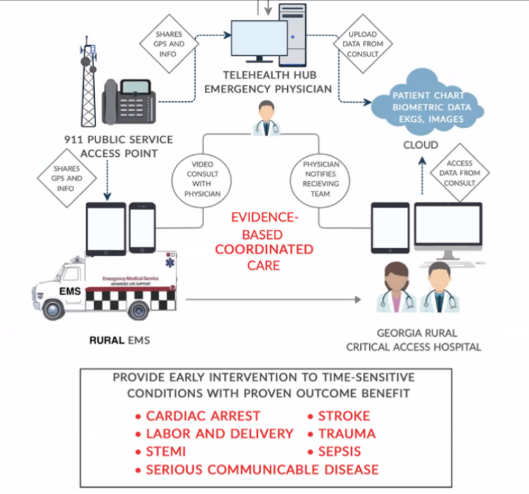
The tele-EMS system virtually connects the EMS clinicians in an ambulance with expert clinicians that may not be available locally. The experts then help diagnose the patient and guide the care EMS provides, while simultaneously coordinating with receiving facilities to ensure their care teams are prepared to provide the right treatment. This system enables local, rural EMS and medical facilities to save valuable time and improve patient outcomes, expanding patient access to a higher level of care through virtual coordination.
Without this system the EMTs, likely unaware of how to properly provide care, would rush the patients to a farther-away, larger hospital with more expertise than is available at a closer rural hospital. That transport could take hours and waste valuable time that could otherwise be used to provide care as the clock races for the patient.
The Phosphene Gas Case
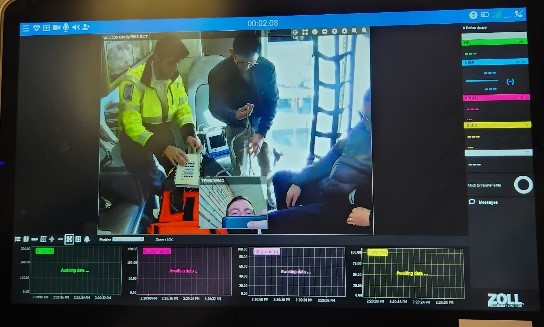
Above: Video connection used by the tele-EMS system
When EMTs arrived at the scene in rural Georgia they discovered one severely ill patient and two in stable but guarded condition. The SRDRS’ tele-EMS system helped them get a head start in their race against the clock to stabilize these patients and get them to definitive care.
The EMTs were able to connect with toxicologists in Atlanta who helped determine that the incident was not food poisoning as initially suspected, but actually a phosphene gas exposure that resulted from snake poison placed inside a home two days earlier. The nature of a gas exposure posed a potential hazard to the EMTs and other first responders and required a different, more complex course of treatment. The virtual experts helped direct the on-scene response, instructing the EMTs on how to protect themselves when entering the building. Even a world-renowned expert on phosphene gas exposure, located in India, connected with the rural EMTs to guide their response.
“The tele-EMS system is a force multiplier for small EMS organizations. It brings equity and access where there previously has not been.”
- Nathan Stanaway, Program Manager at the SRDRS
As the patients were transported to their local hospital, the same experts – connected through tele-EMS – advised the receiving hospital staff ahead of the patient’s arrival. This guidance ensured that the rural receiving hospital knew what protective measures to take for their staff and other patients, and how to properly provide care, avoiding a need to move the patients further from their community, such a delay may have cost the patients’ lives.
Leading Practice: Developing the Tele-EMS System and Why It Works
Emory University Hospital started the tele-EMS initiative in partnership with local EMS agencies, focusing on rural areas in Georgia. The goal of the system is twofold: 1) expand the reach of clinical expertise, and 2) mitigate the effects of rural hospital closures, which have resulted in longer patient transport times and delays in care.
Above: The SRDRS’ tele-EMS concept of operations
The SRDRS has used ASPR funding to scale and expand the program beyond rural parts of the state. Currently, the SRDRS is working to further expand the program across the Southeast.
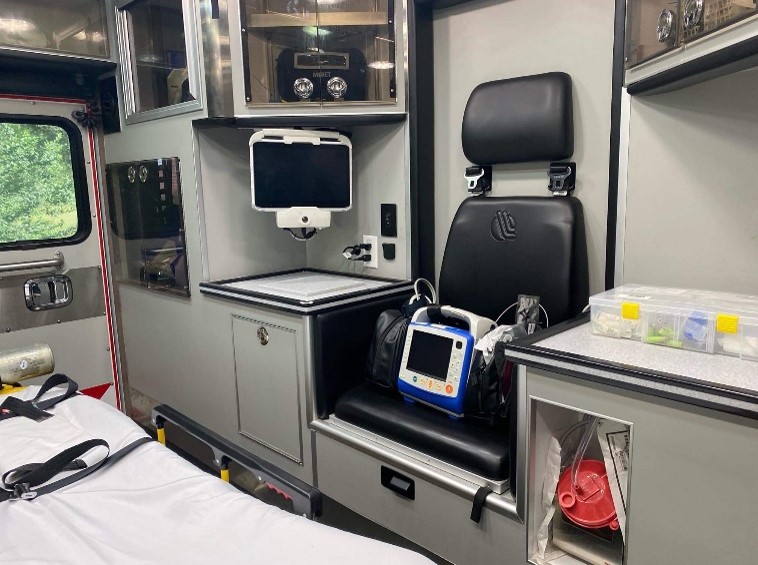
Above: A screen mounted in an ambulance to enable tele-EMS
One of the tele-EMS system’s keys to success is that it uses technology users are familiar with. Ambulances are equipped with hardware that enables EMTs to contact an expert clinician on a telemedicine shift at Emory University Hospital. The clinician receives a stream of real-time ambulance data, allowing them to monitor data points such as heart rate and blood pressure. They can also use a camera to see the patient as they discuss courses of action with EMTs on the scene.
The advising clinician also coordinates with receiving hospitals to provide direction on a patient’s course of care. This is essential as it equips local receiving hospitals with context and guidance to provide better care, which can help expedite treatment by preventing the need to transport a patient to a different facility that has the required specialty expertise in-house.
The tele-EMS system fits into the SRDRS’ wider telehealth strategy to better support disaster patients with telehealth systems that are easy for clinicians to use and reflect areas where clinicians need additional tools in their day-to-day work. SRDRS is also piloting telemedicine concepts in emergency medicine, critical care, and observational medicine.
“RDHRS funding from ASPR has directly supported the expansion of this tele-EMS system into communities which wouldn’t otherwise be eligible.”
- Alexander Isakov, MD, Lead Investigator for the SRDRS
About ASPR’s Regional Disaster Health Response System
These initiatives are a direct result of ASPR funding through the Regional Disaster Health Response System, and ASPR funding will continue to help the SRDRS serve more areas in both the state of Georgia, and the Southeastern United States.
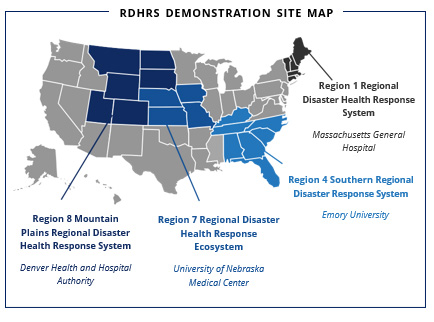
The Regional Disaster Health Response System is a unique program that provides all-hazards regional coordination in order to support a more coherent, comprehensive, and capable health care disaster response system within and across multi-state regions. During responses to disasters and emergencies, Regional Disaster Health Response System demonstration sites increase surge capacity within their regions by coordinating patient load-balancing, resource allocation, and access to specialty care (e.g., trauma, burn, infectious disease), reducing the need for federal support during the response. Regional Disaster Health Response System demonstration sites also enhance regional health care preparedness efforts by maturing models for intra- and inter-regional collaboration that ultimately saves lives.