Playing Defense Against Special Pathogens: A National Special Pathogen System (NSPS) Tabletop Exercise Helps Prepare the Nation for the Largest World Cup in History

Playing Defense Against Special Pathogens: A National Special Pathogen System (NSPS) Tabletop Exercise Helps Prepare the Nation for the Largest World Cup in History

Nationwide
January 10, 2025 

Quick Look 

Background

The 2026 Federation Internationale de Football Association (FIFA) World Cup is a global event anticipated to attract millions of international visitors to the United States, increasing the risk of special pathogen transmission. 

Response 

In preparation for these multi-city mass gatherings, the ASPR-funded National Emerging Special Pathogens Training and Education Center organized a national tabletop exercise to test and improve special pathogen readiness. Exercise planners organized more than 515 participants by region and tasked them with tracing an infected patient’s movement; identifying appropriate isolation, testing, and transport strategies; and validating coordination across the National Special Pathogen System.

Impact 

The exercise established strong partnerships and identified and addressed gaps in regional testing capabilities, strengthening local, state, regional, and national readiness to respond to and mitigate special pathogens.  

In June 2026, when North America hosted the largest Federation Internationale de Football Association (FIFA) World Cup, it wasn’t just the athletes and fans making history. With 48 nations competing in 104 matches across 16 cities in three countries, the event's size and global attendance also created distinct health care and public health challenges.

Behind the roar of the crowds, the United States has an unprecedented opportunity to test and strengthen its defenses against special pathogens. Special pathogens are high consequence infectious diseases (HCIDs) that, if contracted, can make people severely ill, have high mortality rates, and for which there are limited medical countermeasures or treatments. With increased global travel and large crowds expected during the 2026 World Cup, special pathogens may spread more quickly and pose a risk to national health security.

Anticipating these challenges, the Administration for Strategic Preparedness and Response (ASPR) funded Coordinating Body of the NSPS, the National Emerging Special Pathogens Training and Education Center (NETEC), organized a first-of-its-kind national tabletop exercise focused on a World Cup scenario to test and improve special pathogen readiness across the nation.

The NSPS prepares the health care delivery system to protect communities and the health care workforce and respond to special pathogen events nationwide. NETEC supports the NSPS by coordinating high-quality special pathogen care through a tiered network of health care entities across the United States, including 13 NSPS Level 1 or Regional Emerging Special Pathogen Treatment Centers (RESPTCs) and public health and EMS organizations.

In October 2024, NETEC assembled a planning committee for the World Cup exercise, which included representatives from all Regional Emerging Special Pathogen Treatment Centers. The planning committee provided the Regional Emerging Special Pathogen Treatment Centers with the flexibility to address local needs through and the ability to test their own plans and regional capabilities against a standard scenario. The committee met biweekly to coordinate logistics and resources, identify partners for outreach, and design an exercise based on the Middle East Respiratory Syndrome (MERS).1

On January 10, 2025, more than 515 participants from all 13 Regional Emerging Special Pathogen Treatment Centers, as well as federal, state, and local health care organizations and public health departments, emergency medical services, and health care coalitions, came together to conduct the exercise. NETEC created 11 separate breakout groups — one for each Department of Health and Human Services region and one for national-level coordination—each navigating a scenario involving a patient with a suspected MERS case near a World Cup site. Each region completed three modules:

  • Module 1: Early symptoms and laboratory testing

  • Module 2: Safe transport of infected patients, particularly at-risk populations such as children and older adults

  • Module 3: Coordination with other components of the NSPS and engagement with the media and the public.

Through these modules, participants practiced their roles, collaborated with the appropriate partners, tested their plans for strengths and weaknesses, and identified solutions to strengthen their collective response.

After the exercise, participants collectively debriefed to identify strengths and areas for improvement. For many regions, the exercise revealed gaps in laboratory capacity, highlighting the need for increased testing capabilities to provide timely diagnosis, treatment, and infection control. To mitigate this gap, numerous regions have convened laboratory working groups, collaborating with regional partners to improve testing capacity and coordination.

"When you see the patient quickly identified, when you see where NETEC comes in, where the Regional Emerging Special Pathogen Treatment Centers engage and support response and how it all of works together, that's when you're truly seeing how important it is to have a national system like this and the opportunity to save lives, protect communities and healthcare workers.”

- Shelly Schwedhelm, MSN, RN, NEA-BC
 Former National Special Pathogen System Executive Director

The exercise brought together partners across health care, emergency response, and public health for a rare collaborative effort. With all 10 Health and Human Services regions testing their special pathogen plans simultaneously, regional leaders exchanged challenges and promising practices to enhance nationwide preparedness. Participants shared expertise, formed new relationships, clarified roles, and coordinated response strategies—benefits extending beyond special pathogen events to any emergency. Like soccer, effective defense against pathogens relies on practice, teamwork, coordination, and communication.

 Learn more about the National Special Pathogen System 2026 World Cup Tabletop Exercise.


1. Citation-Khan S, El Morabet R, Khan RA, Bindajam A, Alqadhi S, Alsubih M, Khan NA. Where we missed? Middle East Respiratory Syndrome (MERS-CoV) epidemiology in Saudi Arabia; 2012-2019. Sci Total Environ. 2020 Dec 10;747:141369. doi: 10.1016/j.scitotenv.2020.141369. Epub 2020 Aug 3. PMID: 32791417; PMCID: PMC7398055
 

Remembering Jimmy Carter: A Legacy of Public Health and Humanitarian Leadership

Remembering Jimmy Carter: A Legacy of Public Health and Humanitarian Leadership

Topic:

Today, we reflect on the extraordinary life and enduring legacy of President Jimmy Carter, who passed away on December 29, 2024. As we mourn his loss, we celebrate his contributions to public health, disaster preparedness, and humanitarian efforts that have shaped our nation and the world.

A Champion for Public Health

President Carter's commitment to public health was evident during his presidency and his post-presidential years. His efforts in this arena included:

  • Campaign to Eradicate Guinea Worm Disease: One of Carter's most significant public health achievements was his tireless work to eradicate Guinea Worm Disease. Through The Carter Center, he led a global campaign that has reduced cases by 99.99%, bringing this debilitating parasitic infection to the brink of eradication.
  • Addressing the Impacts of Neglected Tropical Diseases: The Carter Center's work extended beyond Guinea worm, tackling other neglected tropical diseases such as river blindness, lymphatic filariasis, and trachoma. These efforts have improved the lives of millions in under-resourced communities worldwide.
  • Mental Health Advocacy: Carter was a pioneer in addressing mental health issues. During his presidency, he created the Presidential Commission on Mental Health and signed the Mental Health Systems Act of 1980, providing crucial funding for community mental health centers.

Disaster Preparedness and Response

One of Carter's most enduring legacies in the field of emergency preparedness and response is the establishment of the Federal Emergency Management Agency (FEMA) in 1979. This pivotal decision centralized the federal government's disaster response capabilities, setting a new standard for national emergency preparedness.

Innovations in Healthcare Policy

Carter's presidency saw several important healthcare initiatives:

  • Rural Health Initiative: In 1975, Carter championed the Rural Health Initiative, which led to the funding of numerous new health centers in rural areas, significantly improving access to health care for underserved populations.
  • Department of Health and Human Services: Carter's administration oversaw the creation of the Department of Health and Human Services (from the Department of Health, Education and Welfare), centralizing and strengthening the federal government's role in health care policy.

A Model of Leadership and Service

Beyond his policy achievements, Carter's personal commitment to service and humanitarian causes serves as an inspiration to all of us in public service. His work through the Carter Center, his efforts in conflict resolution, and his advocacy for human rights demonstrate the profound impact one individual can have on global health and well-being.

Carrying Forward the Carter Legacy

As we remember President Carter, let us recommit ourselves to the ideals he championed:

  1. Prioritizing neglected health issues.
  2. Advocating for mental health awareness and treatment.
  3. Improving health care access for underserved communities.
  4. Strengthening our nation's disaster preparedness and response capabilities.
  5. Promoting human rights and dignity in all aspects of public health.

President Carter's life reminds us that with dedication, compassion, and perseverance, we can make significant strides in improving public health and emergency preparedness and response. His legacy will continue to inspire our work at ASPR and beyond. We extend our deepest condolences to the Carter family and express our gratitude for President Carter's lifetime of service. May his vision of a healthier, more equitable world continue to drive our efforts in public health and emergency preparedness and response.

Answering the Community’s Call: How the Central Virginia Healthcare Coalition Enabled Continuity of Care During the Richmond Water Crisis

Answering the Community’s Call: How the Central Virginia Healthcare Coalition Enabled Continuity of Care During the Richmond Water Crisis

Richmond, Virginia
January 5, 2025  

Quick Look 

Background

On January 6, 2025, a severe snowstorm hit the Greater Richmond Area, causing widespread power outages. These outages affected the city's water treatment plant, which led to a water crisis across the area. 

Response 

The Central Virginia Healthcare Coalition (CVHC) jumped in to support the 21 health care facilities affected by the water crisis. Using existing plans and relationships, the CVHC coordinated with its members to fulfill 28 resource requests, providing supplies such as heaters, bottled water, water tankers, portable handwashing stations, and personal protective equipment. 

Impact 

The CVHC responded promptly and effectively, supplying resources and support that kept all affected health care facilities operational. Consequently, none had to shut down or evacuate, ensuring continuous patient care.

On Sunday, January 5, 2025, local and national news channels began reporting on the potential for a blizzard to hit the greater Richmond area. While residents rushed to the grocery store to grab last-minute necessities, the Central Virginia Healthcare Coalition (CVHC) began monitoring weather reports and preparing for the snow’s potential impacts on health care in the area. The Greater Richmond area, inclusive of Henrico and Chesterfield counties, typically experiences minimal snowfall, averaging a total of three to seven inches annually. However, meteorologists predicted an unusual six to eight inches in just one day. 

CVHC is a health care coalition funded by ASPR’s Hospital Preparedness Program (HPP). CVHC leadership works with its members to conduct annual emergency preparedness and response exercises, establishing systems, protocols, and key relationships ahead of an emergency response. CVHC’s 203 member organizations include local emergency services, public health, fire departments, long-term care facilities, and acute care hospitals. As the storm approached, the CVHC maintained close contact with its members, sharing weather and situational awareness updates to stay ahead of any potential emergencies. 

By Monday, January 6, nearly six inches of snow had fallen, setting off a series of cascading consequences that resulted in widespread water contamination and issues with distribution in and around the greater Richmond area. By Monday afternoon, the CVHC team began receiving texts and calls from several of its members, informing Coalition leadership of the impending water crisis. Soon after, the CVHC received the first of what would be many hotline calls, warning that the city would be out of water by approximately 5:00 PM that day. The Coalition immediately jumped into response mode. 

The Coalition activated pre-developed plans and systems to coordinate a virtual response, keeping its members and partners connected despite unsafe road conditions and limited access to water in the CVHC office. Without these pre-developed plans and systems, the CVHC team would not have been able to safely coordinate the response, allowing the crisis to grow to the point of needing to evacuate affected facilities and patients. Together, the team quickly worked with its members to procure urgent supplies (e.g., heaters, blankets, bottled water, handwashing stations, non-potable water tankers), establish daily coordination calls, and provide 24/7 support to all affected facilities. 

For example, one of the community’s most immediate needs was to secure alternative water sources, both to maintain facility operations (e.g., heating, plumbing) and to continue patient care. The CVHC coordinated with the Emergency Support Function #8 at the Virginia Emergency Operations Center to identify and distribute 36 tanker trucks to provide non-potable water to the 21 affected facilities, including 11 hospitals and freestanding emergency departments and 10 long-term care facilities. The CVHC team also set up hand-washing stations and coordinated the distribution of bottled water to facilities to ensure patients stayed hydrated, ate, and took their medications. As a result of CVHC’s efforts, none of the 21 affected facilities had to evacuate.

Throughout the week, CVHC staff worked tirelessly, often without breaks, to manage the crisis and support all affected facilities. The team maintained situational awareness by leading daily coordination calls with partners, tracking and updating facility availability in the Virginia Healthcare Alerting and Status System, and maintaining consistent communication with all affected facilities. The Coalition worked closely with one of its key partners, the Office of Drinking Water, receiving timely and relevant status updates throughout the response. These updates helped CVHC staff plan resource allocation, staffing efforts, and potential next steps for patient movement. 

One of the most remarkable aspects of the response was the sense of community and collaboration across Coalition members. As the Coalition worked with affected facilities to plan for potential patient relocation, its goal was to keep patients as close to their original facilities as possible. Despite being competitors, Coalition members unaffected by the water crisis stepped up to assist affected facilities, sharing resources and offering available bed space in case affected facilities needed to evacuate patients. Strong inter-facility collaboration showcased the value of the relationships and overall community built by the CVHC over the years. 

By Friday, January 10, the city temporarily repaired the water plant, restoring water pressure and water safety. In all, the Coalition received and responded to 28 resource requests submitted through the Virginia Healthcare Alerting and Status System and the Coalition’s hotline. 

In Fiscal Year 2024, CVHC received and addressed 38 total hotline requests for assistance the whole year. During the week of the water crisis, the CVHC received and addressed 35 total hotline requests for assistance, preventing all affected facilities from evacuating. 

As CVHC team members reflected on the week, they shared a sense of pride in their collaboration and care for their community throughout the response. The Coalition was key to the success of this response, providing value through its:

  • Extensive member network that includes non-traditional partners like the Office of Drinking Water,

  • Flexible response structure that allowed the team to coordinate an effective response remotely, and

  • Community-centered approach to patient care that enabled prompt identification, sourcing, and delivery of critical resources to affected facilities.
     

"The preparedness work we do, the exercises, the networking—it all pays off when we face challenges like this. Everyone stepped up and took on leadership roles. Our relationships and preparations made this response work really well."

- David Calkins
 Regional Healthcare Coordinator for the CVHC

Community means knowing who to call when you need help. When disaster struck, health care entities throughout the greater Richmond area called on the CVHC and its members to help maintain continuity of care for all patients. Funded by HPP, the CVHC was prepared to answer its community’s call for help, coordinating a timely, well-informed, and effective response.  

Learn more about how HPP encourages community-centered health care coalition membership by accessing the Membership section (page 17) of the HPP Fiscal Year 2024-2028 Notice of Funding Opportunity.

Meet Dr. John Call   

Meet Dr. John Call   

2024 MRC Recognition Award Winner for Mentor
Dr. John Call, OKMRC Stress Response Team
 

Benjamin Franklin is quoted as saying, "By failing to prepare, you are preparing to fail." Disasters and crises happen every day somewhere in America. The odds are that if it hasn't happened or touched you in some way already, it will, eventually. By being a member of the MRC, you are preparing and benefiting your community, yourself, and your family.

For two decades, Dr. John Call has been a leader, innovator, and mentor for the Oklahoma Medical Reserve Corps (OKMRC). He has developed many tools and initiatives used within the OKMRC, including pre- and post-deployment questionnaires and a Stress Response Team resource guide. The Stress Response Team (SRT) would not be what it is today without the vision, initiative, and productivity of Dr. John Call. "I became a volunteer when I heard about the MRC about 20 years ago. Then, 15 years ago, I helped design and obtain approval for one of the first, if not the first, MRC disaster behavioral assistance units -- the OKMRC Stress Response Team. Likewise, over the last 15 years, I have designed, written, and administered most of this unit's grants." 

Dr. Call has shared best practices and the tools he developed with other units and organizations. In addition, he has collaborated with other response organizations including the Oklahoma Conference of Churches. He has presented psychological first aid (PFA) to thousands of Oklahomans and MRC volunteers and he has developed the role of the SRT in disaster response on the scene and at Multi-agency Resource Centers as well as annual disaster memorial events, such as the Memorial Marathon benefiting the Oklahoma City National Memorial Museum. 

"By volunteering with the MRC you are not only enhancing your community's resilience but your and your family's resilience to disasters and crises as well."


The MRC Recognition Awards recognize and highlight amazing contributions of MRC units, volunteers, leaders, and partners. In 2024, there were hundreds of nominations in 12 categories - covering both response and non-response contributions. Learn more about the awards and the winners at Meet Our MRC Network. Learn how to become a part of the MRC and make a difference in your community at Become an MRC Volunteer.


A Father Turns to NDMS for Help Following Hurricane Helene

A Father Turns to NDMS for Help Following Hurricane Helene

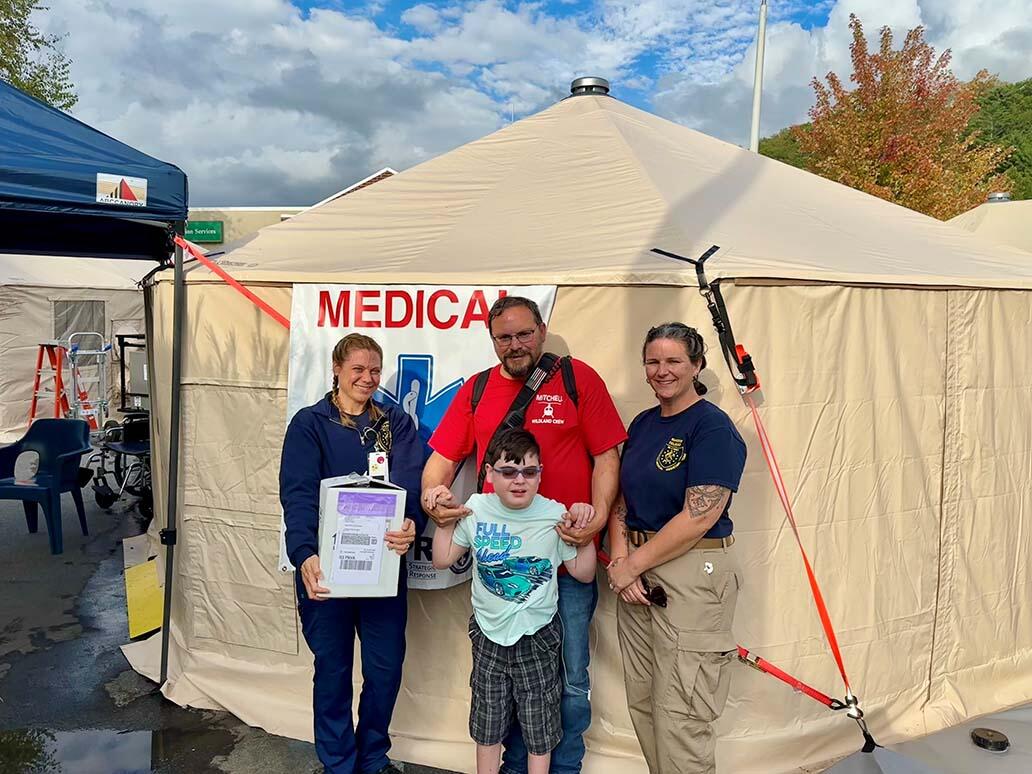
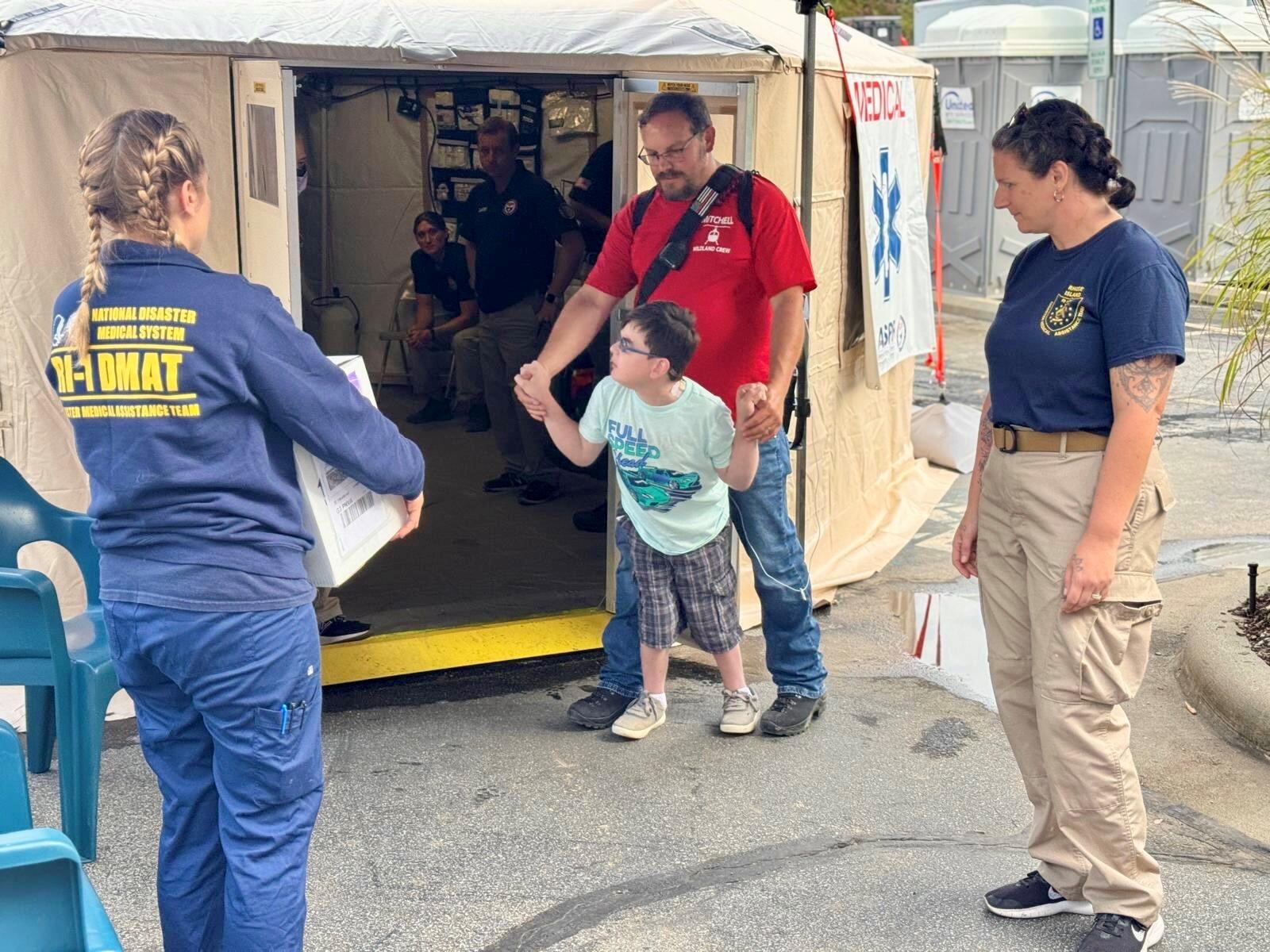
In a scene from every parent's nightmare, Brandon Pitman's 12-year-old son Gabriel needed specialized compound medicine to treat his seizures. But the local compounding pharmacy was closed following Hurricane Helene, and no other pharmacy in the area could produce the medication needed.

Following Hurricane Helene, ASPR's Jennifer Sawicky and Lindsey Corrente help Brandon Pitman get life-saving medication for his son Gabriel.

To make things worse, Brandon's cell phone had no service, so he couldn't call pharmacies outside the area for help. Even if he could find a pharmacy to fulfill the medication, due to storm damage delivery to his home was not an option.

Fortunately, ASPR's responders were ready to help. Brandon brought his child with special needs, Gabriel, to ASPR's Base of Operations (BoO) at Blue Ridge Memorial Hospital in Spruce Pine, North Carolina, for help in securing the life-saving medication.

Two pharmacists from the National Disaster Medical System's Disaster Medical Assistance Team RI-1, Megan McCaskill and Jennifer Sawicky, and the Incident Management Team (IMT) pharmacist lead, Maya Leiva, collaborated to ensure Gabriel received his medication. First, they worked with the prescribing physician to determine the correct medications and dosages. Next, they located an open compounding pharmacy in Durham, NC - approximately 200 miles away - to prepare the medication.

Sometimes, a drug isn't right for a patient as it is usually dispensed. In these cases, the product may need to be compounded. For example, if the FDA-approved medication contains a dye the patient is allergic to, a compounding pharmacy can prepare a version of the drug that does not include that dye. The compounding pharmacy can prepare a liquid formulation if the patient can't swallow a tablet. A licensed pharmacist or physician combines, mixes, or alters the ingredients of a drug to create a tailored medicine that meets the specific needs of the patient.

The compounding pharmacy agreed to waive shipping and copayment fees, ensuring the Pitmans didn't incur any expenses. The pharmacists then focused on getting the medication to the Pitmans as quickly as possible. They arranged for the compounding pharmacy ship the medicine to the IMT in Charlotte and the ASPR logistics team delivered the medicine to the BoO in Spruce Pine.

The Pittman family had the medication in hand within 28 hours of coming to NDMS for help.

ASPR's Jennifer Sawicky and Lindsey Corrente help 12-year-old Gabriel Pitman get life-saving medication difficult to obtain after Hurricane Helene.

The NDMS is activated at a state's request when health resources are overwhelmed by disasters, such as a hurricanes, earthquakes, pandemics, or terrorist attacks.

A BoO is a modularly designed facility that allows NDMS to deploy assets to meet the needs of responders in the field. These assets can include hospital beds, medical equipment, and pharmaceuticals.

Thom Carney and K-9 Skye Provide Behavioral Health Support to Firefighters   

Thom Carney and K-9 Skye Provide Behavioral Health Support to Firefighters   

Thom Carney and Skye, Therapy K-9 Handler Team

"Skye and I are a Therapy K-9 Handler Team as well as being members of the RI MRC Trauma Response Team."

With their exceptional contributions during the 2023 brush fires in Exeter and West Greenwich, Rhode Island, Thom Carney and his therapy K9 partner Skye epitomize the essence of the Outstanding MRC Responder Award. Their unwavering dedication and remarkable service during a protracted four-day fire response, which consumed nearly 1,000 acres, distinguish them as exemplary volunteers within the MRC. 

Thom's commitment to providing behavioral health support, alongside Skye, to firefighters during their rehabilitation periods demonstrates his exceptional resilience and compassion in the face of adversity. Throughout the duration of the response, Thom's steadfast presence and Skye's comforting demeanor served as a beacon of hope and strength for the firefighters and emergency responders. For the past three years, their willingness to go above and beyond their duties has showcased a profound dedication to serving their community in times of crisis.

"Anytime I see what having Skye around can do when someone is having a bad day, it reminds me of why I volunteer. In 99% of the cases, Skye will bring a smile to their faces. It can be a child whose mom needed a quick check at the medical support tent at the Newport Folk Festival, a person that does not like needles at a shot clinic, or a tired firefighter at the end of a long shift, seeing those smiles keeps us doing this."

Thom and Skye's proactive involvement in the brush fire response exemplifies their readiness to mobilize and support their MRC unit at a moment's notice. Their swift and effective response played a crucial role in bolstering the resilience of the affected communities and mitigating the impact of the disaster. Thom and Skye's participation in 12 deployments totaling 76 hours in 2023 underscores his exceptional dedication to disaster response and public health emergency support. Their actions embody the spirit of service and exemplify the highest ideals of volunteerism.

"You don't need to be a doctor, nurse, or therapy dog team, there is a position for everyone to volunteer with their local MRC. It inspired me to pursue my EMT certification at the age of 60. The sense of purpose and helping your community is just a great feeling, and well worth the effort." 


The MRC Recognition Awards recognize and highlight amazing contributions of MRC units, volunteers, leaders, and partners. In 2024, there were hundreds of nominations in 12 categories - covering both response and non-response contributions. Learn more about the awards and the winners at Meet Our MRC Network. Learn how to become a part of the MRC and make a difference in your community at Become an MRC Volunteer.

“LifeSavers” in Nassau County Train Community Members to Recognize and Treat Opioid Overdose   

“LifeSavers” in Nassau County Train Community Members to Recognize and Treat Opioid Overdose   

Lifesavers training program
 

Jim Bollenbacher, Lead Instructor of the Nassau County MRC, accepted the 2024 MRC Recognition Award for Community Preparedness & Resilience on behalf of the Nassau County MRC. "The MRC is an organization of amazingly talented, experienced, and compassionate people who are prepared to help their communities during a crisis or disaster."

The Nassau County MRC unit is leading an aggressive "LifeSavers" program to improve local opioid overdose response and sudden cardiac arrest outcomes. In 2023, Nassau County MRC donated nearly 500 hours at free training events, taught more than 1700 people Hands-Only CPR and more than 800 to recognize an overdose and use Narcan, then provided CPR Anytime Kits to those trained. As a result, an estimated 25-30 AEDs have been added to public-access sites and the county has taken steps to become a recognized HEARTSafe Community (a program from the Citizen CPR Foundation with a set of criteria and guidelines designed to improve outcomes to sudden cardiac arrest emergencies through a specific set of training, preparation, and response protocols).

Additionally, Bollenbacher was invited by Florida CERT and the Citizen CPR Foundation to speak about the LifeSavers program and provide the training to hundreds at Florida's CERT Conference and the national Cardiac Arrest Survival Summit in San Diego. Most importantly, the unit's work has increased community preparedness and will undoubtedly result in lives saved. "Being part of the MRC allows me to give back to the community and use my medical training while doing it. I have also met some incredible people, both in terms of talent and passion."


The MRC Recognition Awards recognize and highlight amazing contributions of MRC units, volunteers, leaders, and partners. In 2024, there were hundreds of nominations in 12 categories - covering both response and non-response contributions. Learn more about the awards and the winners at Meet Our MRC Network. Learn how to become a part of the MRC and make a difference in your community at Become an MRC Volunteer.


Meet Sophie Miller-DeSart​   

Meet Sophie Miller-DeSart​   

Sophie Miller-DeSart, Oregon MRC State Coordinator

"The people involved in MRC are not your average volunteers. The sacrifice, passion, and dedication these health professionals have for community resilience and safety is unmatched." 

Sophie Miller-DeSart is the SERV-OR (ESAR-VHP) the Volunteer Manager and MRC State Coordinator for the Health Security, Preparedness and Response Program in the state of Oregon's Public Health Division at the Oregon Health Authority (OHA). She has worked in various volunteer management and incident coordination capacities in the same program since 2016. She also fills the agency's Public Health Duty Officer role and supports agency incident management as a Planning Section Chief.

"I understood the position as a program manager for the state's healthcare volunteer registry, and I was familiar with the Medical Reserve Corps and OHA's role in supporting local public health, though as I learned more about the role, I became very passionate about putting more energy into local unit development. It felt like a strength our state was under leveraging. I wanted to change that and build more of my presence as a support and advocate for our local partners with (and without) MRC units."

Sophie is a resourceful visionary who is very responsive to the needs of units and unit leaders in her state. Examples of Sophie's 2023 accomplishments include:

  • Successfully submitting and being awarded an MRC STTRONG Grant

  • Developing an MRC Toolkit and New Leader Orientation specifically for OR MRC leaders/units

  • Developing a Volunteer Handbook

  • Developing a Volunteer Training Plan via MRC-TRAIN; and embarking on an MRC Standardization Project

  • Playing an instrumental role in the formation of new OR units and ensuring that new unit leaders onboard seamlessly

"The opportunities MRC membership can offer you are endless! Training, professional development, continuing education, professional recommendations, career path changes, and more. But more importantly, I believe that as a member of the MRC Network, you are joining a family. A very big family, where you might not know everyone, but when you come together, you see that our commonalities and our differences make something really beautiful." 


The MRC Recognition Awards recognize and highlight amazing contributions of MRC units, volunteers, leaders, and partners. In 2024, there were hundreds of nominations in 12 categories - covering both response and non-response contributions. Learn more about the awards and the winners at Meet Our MRC Network. Learn how to become a part of the MRC and make a difference in your community at Become an MRC Volunteer.


Meet MRC’s Jacqueline Kelley

Meet MRC’s Jacqueline Kelley

A Resourceful Leader in Emergency Management and Disability Advocacy
Jacqueline Kelley

MRC Unit Coordinator

Northwest Vermont Medical Reserve Corps 
North West Vermont

Jacqueline Kelley, the Northwest Vermont Medical Reserve Corps (MRC) Unit Coordinator, is a testament to the power of resilience and dedication. Her impactful work in emergency management and with the MRC highlights her commitment to community service, healthcare, and disability advocacy.

Kelley's journey began with a strong academic foundation. "In 2022, I graduated with a master's degree in Disability Studies and Emergency Management from the University of Leeds in the UK," she shared. This educational background laid the groundwork for her career in emergency management. "Once I finished the program, I looked to start my career in emergency management. A job opened at the Vermont Department of Health as the St. Albans District Office Emergency Preparedness Specialist."

Taking on the role of MRC Unit Coordinator was a natural progression for Kelley, although it came with its challenges. "I never heard of the MRC prior to joining the Health Department. But my colleagues and wonderful MRC volunteers helped me understand the MRC and become a successful coordinator."

Reinvigorating the Northwest Vermont MRC

Kelley has been a Unit Coordinator since September 2022, and her impact has been profound. "When I started, my unit was inactive due to turnover in the coordinator role and the end of the unit's response to COVID-19," she explained. With determination and collaboration, she revitalized the unit. "I worked with my seasoned volunteers and fiscal agent to re-activate the unit. We received an ASPR-funded NACCHO [National Association of County and City Health Officials] Operational Readiness Award in 2023, which helped us re-engage the community through hot and cold weather campaigns and train volunteers to ensure volunteer readiness."

Under her leadership, the Northwest Vermont MRC has thrived. "Currently, the Northwest Vermont MRC is one of the smallest units in Vermont, but we are highly active in the community," Kelley proudly stated.

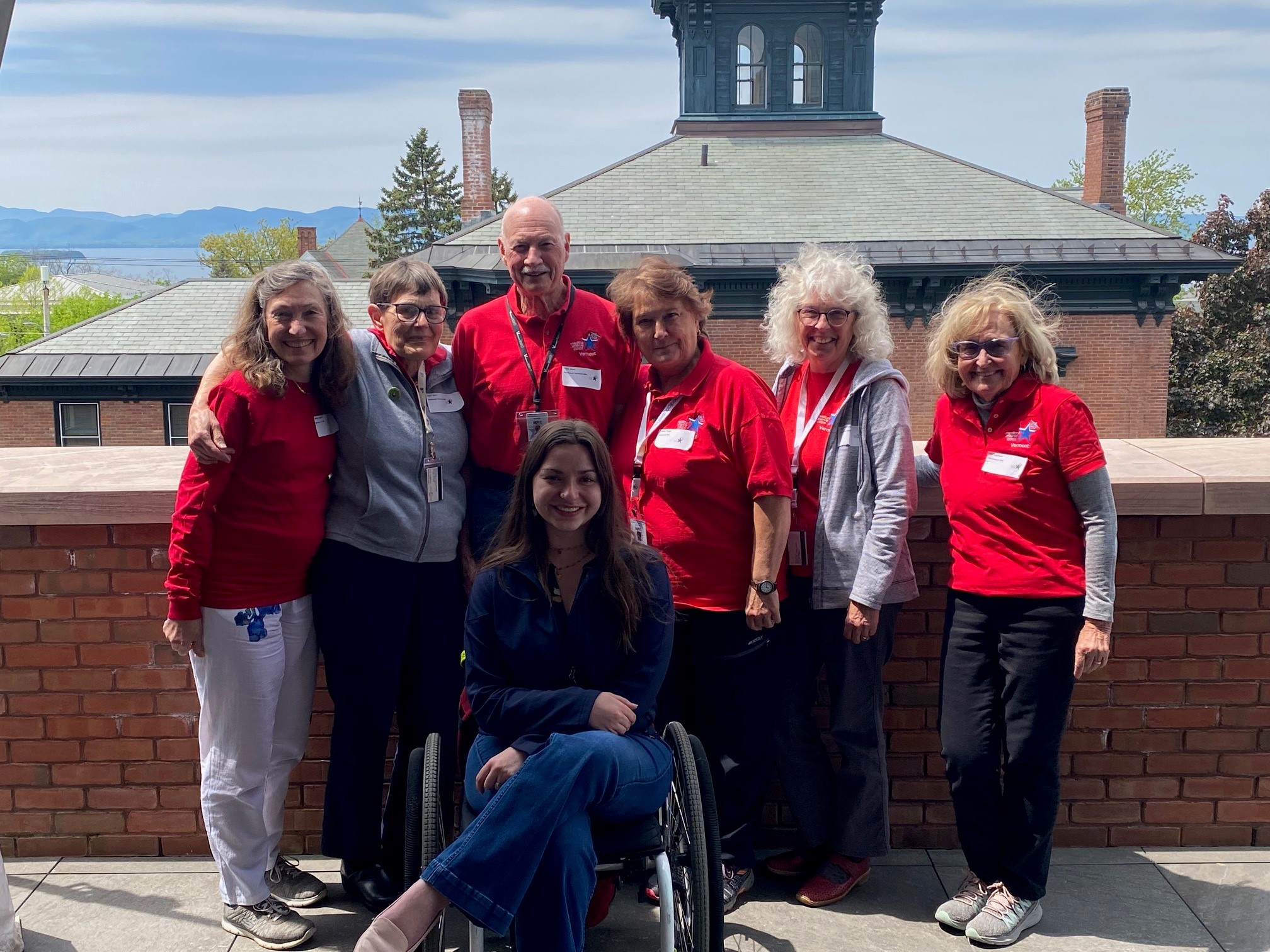
Group photo of Kelley and the Northwest Vermont MRC team
Kelley and the Northwest Vermont MRC team

Overcoming Challenges and Leading by Example 

Kelley, as a person with a disability, faces unique challenges in her role. "The biggest challenge I face is setting up and taking down tabling events," she noted. "These tasks require carrying heavy materials." Despite these physical challenges, she has found ways to participate fully. "In general I can participate in everything MRC. I staff disaster resource centers and multi-agency resource centers. I table at community events. I teach training. I am certified in required hands-on MRC training like CPR and Stop the Bleed. I've found ways to do all these things as a manual wheelchair user, often independently and without the need for support.".

Her ability to adapt and rely on her team is crucial. "When I need help, I lean on those around me," Kelley said, highlighting the importance of teamwork and support systems in overcoming obstacles. 

Addressing Critical Issues for People with Disabilities in Emergencies

Kelley's expertise in disability and emergency management provides valuable insights into the challenges faced by people with disabilities during emergencies. "Disabled people are 2-4 times more likely to be injured or die during emergencies and disasters," she emphasized. A significant issue is the lack of inclusive planning. "Often disabled people are not included in emergency planning. It's great if states are doing DAFN [disability, access, and functional needs] work, but unless they actively involve DAFN populations throughout the entire emergency management cycle, they will continue to be overlooked and forgotten."

The recent flooding in Vermont underscored these challenges. "Vermont experienced significant flooding in July 2023. Many expressed the pitfalls during the flood event. There was no communication on what DAFN populations should do to prepare or recover," Kelley recalled. "Initial communication was in English only, there were many power outages and electricity dependent people didn't know what to do, people were unable to leave their homes to access essential healthcare and medications, and state communication was often not in plain language." 

Kelley advocates for essential accommodations and strategies to improve emergency response for people with disabilities. "First and foremost, it's critical that states comply with legal requirements that help to ensure physical spaces and communication are accessible to everyone," she stressed. Flexibility and availability of necessary resources are also vital. "It's also important to have necessary CMIST [Communication - Maintaining health – Independence - Support, Safety, and Self-determination - Transportation] resources on hand to meet individual needs."

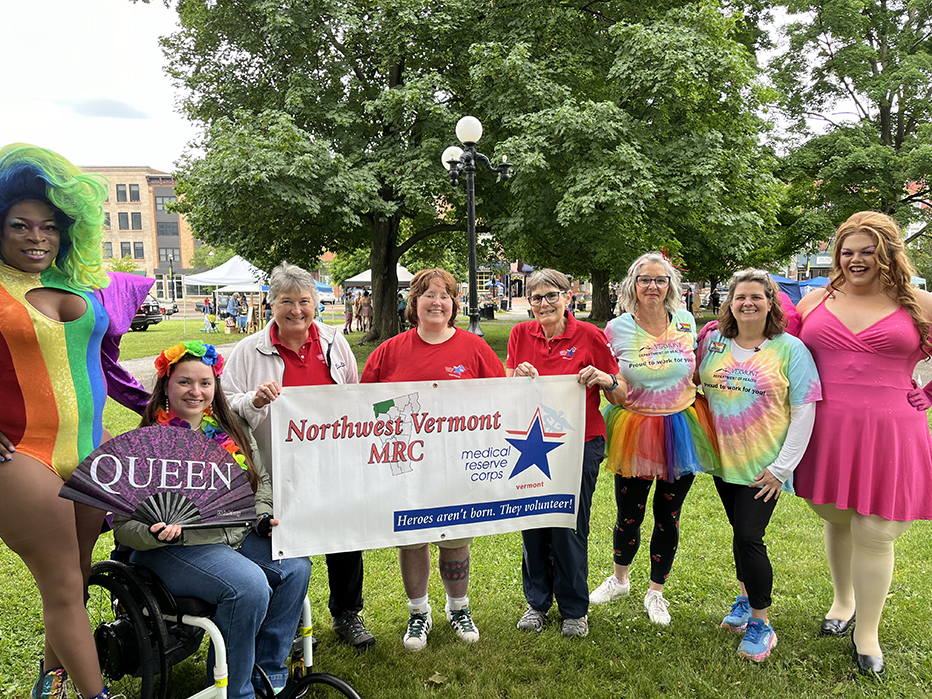
Northwest Vermont MRC Team
The NW VT MRC at the St. Albans 2024 Pride Festival

Making Volunteering More Inclusive

Kelley believes in the importance of making volunteer opportunities within organizations like the MRC more inclusive. "MRCs can push the message that the MRC is for everyone regardless of medical background and ability," she suggested. It's also crucial to be accommodating and open to hearing individual interests and comfort levels. "There are many roles and responsibilities people with disabilities can do in emergency response and preparedness," Kelley emphasized. "It's important not to assume someone's ability. Let them decide what is a what is right for them."

For people with disabilities considering volunteering, Kelley offers encouraging words. "I would tell them to do it! The MRC is such a wonderful program that is open to all." Kelley firmly believes successful volunteerism is not the sole responsibility of the individual. "It is the job of the Unit Coordinator to train volunteers, so they are ready to respond. It is also the job of the Unit Coordinator to provide necessary accommodations to ensure volunteers are successful in their role." 

A Vision for the Future

Kelley is optimistic about the future of disability inclusion in emergency management. "I'm excited that disability inclusion is becoming more and more of a concern to emergency management professionals. My hope is for every state to meaningfully integrate DAFN into emergency management and public health with funding to support the work."

Her leadership and advocacy are paving the way for a more inclusive and effective emergency management system. As she continues to lead the Northwest Vermont MRC, Jacqueline Kelley stands as an example of resilience, dedication, and the power of community. 
 

Project BioShield Act at 20 Years: Sustaining Is Important, National Health Protections Are Critical

Project BioShield Act at 20 Years: Sustaining Is Important, National Health Protections Are Critical

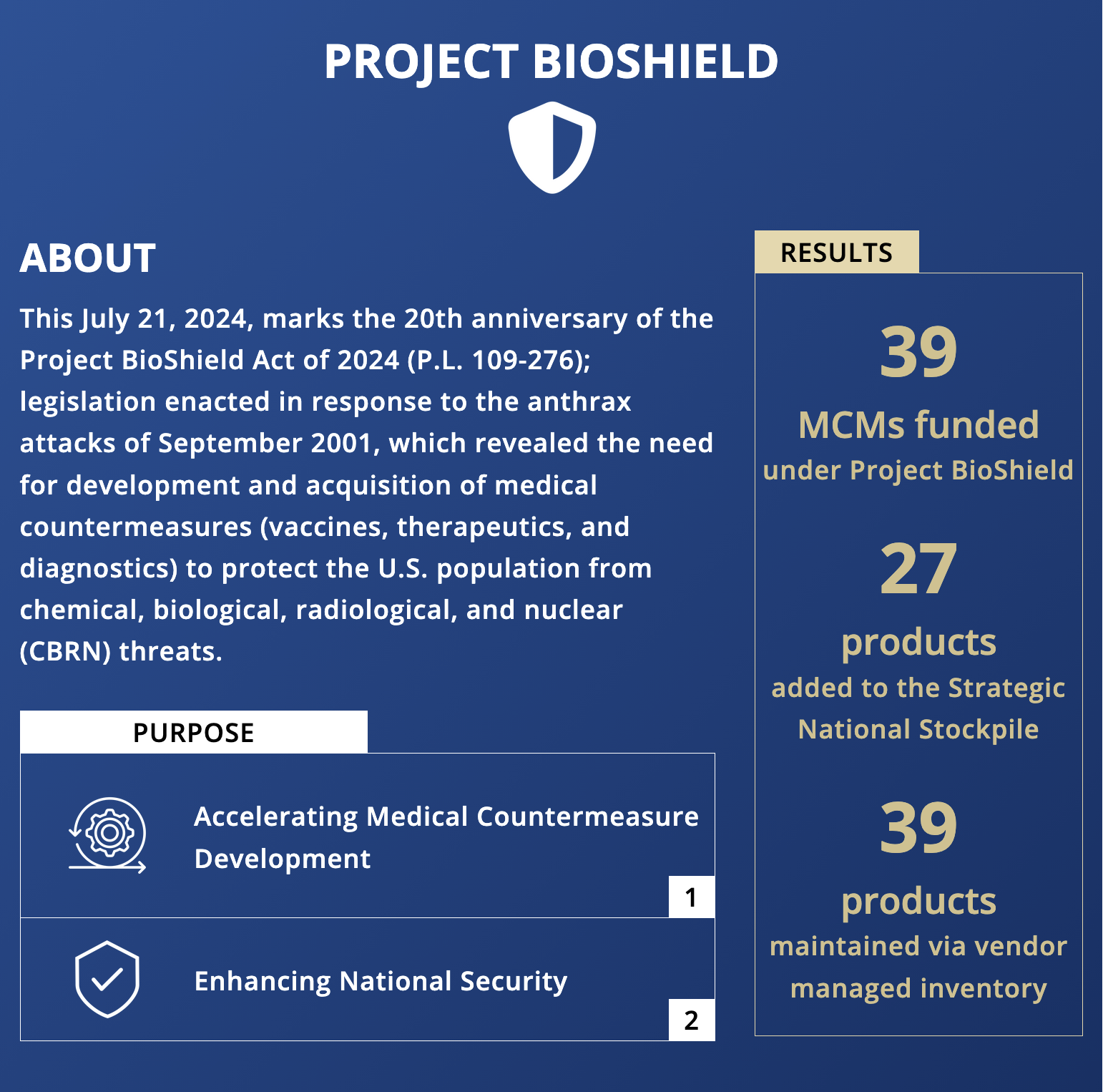
The world looks different than it did 20 years ago yet the need to protect the American people remains just as urgent. It's time to step back and acknowledge a milestone in the protection of the American people against serious public health threats. This July we mark the 20th anniversary of the Project BioShield (PBS) Act. Signed into law on July 21, 2004, the Act allows the U.S. government (USG) to accelerate development of medical countermeasures (MCMs) against chemical, biological, radiological, and nuclear (CBRN) threats to our national security.

The essential gains over the last two decades would not have happened without crucial USG funding and authorities granted under Project BioShield. Both are essential for the Biomedical Advanced Research and Development Authority (BARDA) to establish public-private partnerships to develop the products needed to protect these potentially deadly threats. Vital to the program's success has been the interagency collaborations with the National Institutes of Health and the Department of Defense which supported the early-stage development of products that transitioned to support with BARDA under Project BioShield.

Over the past 20 years, we have leveraged over $12 billion of Project BioShield funding to expand our portfolio of medical countermeasures, which strengthens national security preparedness against some of the most pressing national security threats. By developing and procuring products under PBS, we can be sure they are available during emergencies, which means the U.S. is better positioned to tackle current and future challenges. Overall, we have supported 39 products using PBS authorities and related funding. Three of the products were already FDA approved and purchased under PBS to address radiation and nuclear threats in 2004-2005. Of the other 36 products, 22 have progressed to FDA approval under the FDA's Animal Efficacy Rule or through a traditional approval process; two products are available and regulated under a different mechanism; and six are now in late-stage development.

PBS was established to improve national security, preparedness, and response. While we all hope that a CBRN emergency will never happen, the investments made under PBS mean these products will be available if needed. The products we supported and procured under PBS have made a positive impact on public health. In fact, one of BARDA's aims is to develop products that can prevent, diagnose and treat patients during major incidents but also have more immediate, day-to-day public health uses, such as cancer treatment and severe burn case. Some of the products have been used in emergencies, such as:

  • The first FDA approved vaccine and therapeutic to address Ebola virus deployed to multiple outbreaks in Africa.

  • A smallpox vaccine for at-risk populations and two smallpox antivirals used to curb the mpox outbreak.

  • Heptavalent botulism antitoxin deployed to address naturally occurring cases of botulism.

  • Anthrax antitoxins deployed to treat cutaneous anthrax.

The biggest challenge facing these public-private partnerships is sustainment. Sustained funding and the authorities granted under Project BioShield and PAHPA are essential to maintain sufficient stockpiling of medical countermeasures and ensure access to manufacturing capabilities for production of additional products if required during a CBRN emergency. The United States is stockpiling the majority of these essential products and will need international partners, agencies and organizations to leverage the significant investments made by the USG and support procurement of essential MCMs. Additional procurements by other governments and/or the private sector can expand manufacturing capabilities that are currently only able to support the USG requirements. BARDA will continue to work within USG and with congress, international counterparts, and industry partners to address ongoing challenges in protecting health security.

The PBS Act was intended to bolster national security against CBRN threats. We have overcome scientific and regulatory challenges in the past 20 years, and as a result, our nation is better prepared for health security threats.

Visit the Project BioShield site to learn more about the legislation and how BARDA is leveraging PBS in three main approaches to biodefense.

Information about project bioshield VIEW THE FULL INFOGRAPHIC

Subscribe to