ASPR’s Commitment to First Responders: Our Partners in Supporting Communities During Disasters and Public Health Emergencies

ASPR’s Commitment to First Responders: Our Partners in Supporting Communities During Disasters and Public Health Emergencies

Topic:

First of all, I'd like to take a moment to honor the bravery, skill, and commitment of our EMS professionals and first responders. This dedicated workforce includes everyday heroes who work around the clock to protect health and save lives. Whether in a large city or a rural town, EMS professionals show up every day to support their communities, without hesitation. Thank you for everything you do.

During my 34 years of service in emergency response, I've seen how quickly plans change in an emergency and I know that responders need timely, clear support – not delays and red tape.

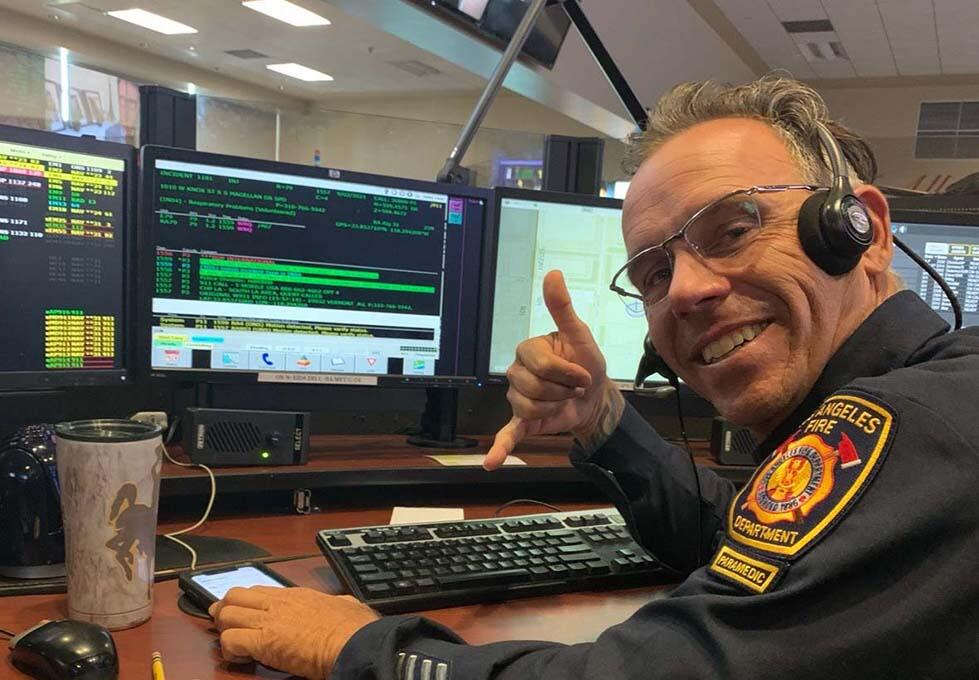
John Knox at the dispatch

John Knox at the dispatch center while visiting the LA Fire Department

At ASPR we are working to make plans for preparedness and response usable, scalable, and focused on real outcomes to save lives during the worst of times. That kind of planning takes contributions from everyone – EMS, hospitals, healthcare facilities, state and local public health, and many, many others. By working together before disasters, we can make sure our preparedness work isn't just theoretical – it's practical and flexible. It is the relationships built before a disaster that hold up when things fall apart.

ASPR makes it easier for responders to access resources and guidance to prepare and respond. We are here to back up communities and provide some of the tools, coordination, and resources you need to help you do your job well when the systems around you are overwhelmed. That includes making sure communication is clear and federal support is easy to access—especially in more remote or underserved areas.

There are a lot of people across the federal government who genuinely want to support local responders. We know that some of the systems in place can be too complex or slow to meet the needs of responders on the ground. At ASPR, I am drawing on my experience in emergency response to simplify access to the support you need, improve coordination before disaster strikes, and make sure that the services we provide are useful.

My Vision for ASPR

In the early days of the COVID-19 pandemic, I saw firsthand how quickly even well-laid plans could get overwhelmed. The systems that had been exercised regularly and leadership teams that had worked together before the crisis made the biggest difference when seconds count.

My vision for ASPR is centered on practical, adaptive, effective preparedness: getting ahead of problems and making sure the systems we build are reliable and ready to perform under pressure. That means improving coordination, investing in the basics like workforce and supply readiness, and making sure our plans aren't just sitting on shelves—they're exercised, refined, and ready to go.

I look forward to working with all our partners to help communities recover stronger after every disaster or public health emergency.


John Knox is a dedicated public servant with over 34 years of experience in emergency response, disaster management, and public health advocacy. He began his career with the Los Angeles County Sheriff's Department as a Reserve Deputy Sheriff, where he honed his skills in law enforcement, search and rescue, and inter-agency collaboration. Building on this foundation, John transitioned to the fire service, serving as a firefighter and paramedic with the Los Angeles Fire Department.

HHS launches new Portable Biocontainment Unit, Only domestic capability of transporting and treating patients with high-​consequence infectious disease  

FOR IMMEDIATE RELEASE
Contact ASPR Press Office

ASPRMedia@hhs.gov
aspr.hhs.gov/newsroom
X: @ASPRgov

HHS launches new Portable Biocontainment Unit, Only domestic capability of transporting and treating patients with high-​consequence infectious disease  

The Administration for Strategic Preparedness and Response today launched a new Portable Biocontainment Unit (PBCU) for high-consequence infectious disease patients during a ribbon cutting ceremony at the U.S. Department of Health and Human Services' (HHS) Hubert Humphry building. 

Earlier this year the ASPR, part of HHS, completed development of the PBCU. The PBCU is the first domestic resource for isolating and transporting patients with contagious infectious diseases, for example Ebola, to Regional Emerging Special Pathogen Treatment Centers (RESPTC). The unit can be transported by air on a C-130 or L-100 aircraft to any U.S. airport or by ground via specialized trailer that can be pulled by a tractor or semi-truck. This allows for continuous treatment of patients isolated in the unit until they can receive more definitive care at a RESPTC hospital. 

"Preparation and training are critical to improve America's national security and our ability to respond to highly infectious diseases whether they are detected at home or abroad," said HHS Principal Deputy Assistant Secretary for Preparedness and Response John Knox. "The portable biocontainment unit will protect patients and the healthcare workers as they move to more definitive care facilities." 

The department will further test the PBCU in an exercise in June called Tranquil Passport, when more than 50 organizations will participate in a full-scale exercise to move infectious disease patients. The exercise begins with government officials facilitating a series of coordination calls to plan the movement of a cluster of American high-consequence infectious disease patients from Toronto, Canada to the United States. 

The treatment centers that plan to receive patients during the exercise include New York City Health + Hospitals/Bellevue (New York City, NY); Medstar Washington Hospital Center and Children's National (Washington, D.C.); Johns Hopkins Hospital (Baltimore, MD); Emory University Hospital and Children's Healthcare of Atlanta (Atlanta, GA); and University of North Carolina Medical Center (Chapel Hill, NC). These facilities are part of the tiered RESPTC network of HHS-supported health care facilities designed to support prompt access to high quality special pathogen care. 

The participating airports are Toronto Pearson International Airport, Washington Dulles International Airport, LaGuardia Airport, Raleigh-Durham International Airport, and Peachtree Dekalb Airport. 

HHS and the U.S. Departments of State and Defense previously collaborated on a series of exercises to move Americans acting as high-consequence infectious disease patients from overseas to the United States for treatment. A video summary of the most recent infectious disease patient exercise, Tranquil Terminus, is available for review here https://www.youtube.com/watch?v=LL1BEwy-2DQ. 

For more information about the PBCU and the Tranquil Passport exercise visit: https://aspr.hhs.gov/Tranquil-Passport/. 

Honoring EMS Professionals with Essential Resources for Preparedness and Response

Honoring EMS Professionals with Essential Resources for Preparedness and Response

Topic:

Celebrating EMS Week 2025 (May 18-24, 2025)

Emergency Medical Services (EMS) professionals are the backbone of our nation's emergency response system. Every day, they answer the call—providing life-saving care during disasters, public health emergencies, and everyday medical emergencies. Their dedication and resilience ensure that communities across the country receive timely, high-quality emergency care when it matters most.

Committed to equipping EMS providers with the knowledge and tools they need to prepare for and respond to complex medical emergencies, the Administration for Strategic Preparedness and Response (ASPR) offers a variety of resources through ASPR TRACIE (Technical Resources, Assistance Center, and Information Exchange). Whether dealing with mass casualty incidents, infectious disease outbreaks, or disaster response coordination, EMS personnel can rely on ASPR TRACIE's guidance to enhance preparedness, improve coordination, and ensure responder safety.

EMS Infectious Disease Playbook (Our Most Accessed EMS Resource)

The EMS Infectious Disease Playbook is an essential guide for EMS professionals handling patients with known or suspected infectious diseases. It provides step-by-step guidance on patient assessment, transport procedures, infection control, and coordination with public health agencies. As infectious disease threats continue to evolve, this playbook serves as a crucial tool for EMS personnel to ensure both patient and provider safety.

Additional EMS Resources from ASPR TRACIE

EMS Resource Page – A central hub featuring a variety of Topic Collections, tip sheets, and webinars, including:

To explore these resources and more, visit ASPR TRACIE-developed Resources.

Thanking Our EMS Heroes

This EMS Week, we extend our deepest gratitude to all EMS professionals for their unwavering commitment to protecting health and saving lives. An efficient, caring, high-quality EMS system is crucial to ensuring care during any emergency and we are grateful for all of the work you do during disasters and public health emergencies and every day.


ASPR TRACIE was created to meet the information and technical assistance needs of regional ASPR staff, healthcare coalitions, healthcare entities, healthcare providers, emergency managers, public health practitioners, and others working in disaster medicine, healthcare system preparedness, and public health emergency preparedness. 

Trump Administ​ration launching projects aimed at revolutionizing U.S. drug manufacturing

FOR IMMEDIATE RELEASE
Contact ASPR Press Office

ASPRMedia@hhs.gov
aspr.hhs.gov/newsroom
X: @ASPRgov

Trump Administ​ration launching projects aimed at revolutionizing U.S. drug manufacturing

HHS, DARPA collaborate with private sector to demonstrate use of AI, other technologies, in producing essential medicines rapidly at the point of need 

The Trump Administration is launching four projects aimed at revolutionizing pharmaceutical manufacturing in the United States using artificial intelligence, machine learning, and informatics. The use of these technologies may enhance efficiency, lower production costs, reduce drug shortages, speed approval times for drugs manufactured using agile manufacturing technologies, and boost rapid response to national emergencies. 

The program, called Equip-A-Pharma, is a collaboration between the U.S. Department of Health and Human Services (HHS), Administration for Strategic Preparedness and Response (ASPR); the Defense Advanced Research Projects Agency (DARPA); and the private sector.

Over the next year, each company and its partners will aim to show how their agile technologies can potentially make active pharmaceutical ingredients and specific finished drug formulations (medications) at the point-of-care. 

"Manufacturing medicines from start to finish in the United States ensures a secure supply of essential medications," said HHS Principal Deputy Assistant Secretary for Preparedness and Response John Knox. "Traditional pharmaceutical manufacturing is often too rigid and slow to adapt to changing demands, especially during national emergencies. We're launching projects aimed at completely changing the approach not just to bring pharmaceutical manufacturing back to the U.S. but to do it better." 

The projects can also facilitate regulatory approval, by streamlining the collection and analysis of data that the U.S. Food and Drug Administration evaluates in approving drugs under its regulatory framework. 

By producing active pharmaceutical ingredients and finished medications at the point of care, such as a hospital, these types of technologies can strengthen domestic supply chains. This approach could mitigate drug shortages, ultimately enhancing national health security and resilience. 

These projects address U.S.-based manufacturing of eight (8) sterile injectable or oral medications and the active pharmaceutical ingredients for these medicines. 

The partners conducting the projects are Battelle Memorial Institute and Aprecia; BrightPath Laboratories; Rutgers University; and the Mark Cuban Cost Plus Drug Company. 

  • Partners Battelle Memorial Institute and Aprecia are integrating advanced process analytics and machine learning that allows for real-time quality assessment and supports a digital approach to generating regulatory submissions. The companies are using their own technologies together to produce 3-D printed oral solid dosage forms (tablets) of levetiracetam to treat epilepsy or other seizures, and linezolid to treat gram-positive infections such as bacterial pneumonia. 

  • Bright Path is demonstrating technology for continuous flow manufacturing to produce Lidocaine HCl, a local anesthetic, and Carboplatin, a chemotherapy drug. The project is expected to show enhanced efficiency, scalability, adaptability of the technology, rapid reconfiguration between products with minimal downtime, and a real-time digital approach to generating regulatory submissions. The technology integrates advanced process informatics and in-process metrology (precise measurement) to ensure consistent quality and compliance with stringent regulatory requirements.

  • Rutgers University will demonstrate manufacturing of registration batches for two critical drugs, Bupivacaine HCl, an anesthetic, and Albuterol Sulfate, used to treat people with asthma, bronchitis, emphysema or other lung conditions. Rutgers has been working with ASPR's Center for Industrial Base Management and Supply Chain and DARPA to develop an innovative, agile manufacturing platform and generating rich data sets using new AI tools that can inform future regulatory submissions and rapid release of products.

  • The Mark Cuban Cost Plus Drug Company is employing a highly automated and flexible manufacturing platform that integrates AI and machine learning for real-time quality assessment and process optimization. The company is demonstrating use of the platform to process active pharmaceutical ingredients and the finished medication doses rapidly with in-line metrology (precise measurement) to produce lidocaine, a widely used anesthetic, and diltiazem, a calcium channel blocker used to treat heart conditions. The system uses AI-driven informatics, is scalable and adaptable, and can be used by operators with minimal training to maintain product quality. 

All of the partners in these projects are expected to submit Abbreviated New Drug Applications to the U.S. Food and Drug Administration within a year as a result of leveraging the government-supported development work. 

ASPR Blog

Submitted by admin on
Description Icon
Screenshot 2025-05-01 145555.jpg

Discover what is happening on the ASPR blog. Stay up-to-date by subscribing to receive the latest posts.

Banner Image
Image
g

ASPR’s Response to the Bundibugyo Ebolavirus Outbreak

Submitted by admin on
Banner Subtitle
The Ebola Bundibugyo outbreak poses a serious threat to regional and global health. Learn how ASPR is strengthening preparedness and medical readiness.
Banner Text

HHS is coordinating with federal and international partners in responding to the ongoing Ebola Bundibugyo outbreak in the Democratic Republic of the Congo (DRC) and Uganda. As part of that response, ASPR is coordinating preparedness and medical response activities.

Banner Image
Microscopic view of the Ebolavirus from a blood sample

From Dusk to Dawn: How Kentucky Health Care Coalitions Served the Community During an Overnight Tornado

From Dusk to Dawn: How Kentucky Health Care Coalitions Served the Community During an Overnight Tornado

Kentucky
May 2025  

Quick Look 

Background

On the night of May 16, 2025, a powerful tornado hit several counties in Southern Kentucky. The tornado destroyed homes, impacted access to major roads, and overwhelmed local hospitals and resources.

Response 

Relying on relationships strengthened through recent Medical Response and Surge Exercises, the Healthcare Emergency Leaders for Preparedness (HELP) and Southeast Kentucky (SEKY) health care coalitions quickly activated their network of response partners to coordinate hospital surge support, mobilize specialized teams and equipment across county lines, and transport patients safely during the response to this devastating storm.

Impact 

Over 100 patients received lifesaving care. The partnerships and skills honed during previous exercises proved invaluable, transforming planning into decisive action and enabling a rapid, unified response that saved lives and supported overwhelmed hospitals and communities during a crisis.

In the late evening on May 16, 2025, a powerful tornado struck Southern Kentucky, cutting a destructive path through several counties. As the Preparedness and Response Coordinator for the Southeast Kentucky Health Care Coalition (SEKY), Gail Timperio and her colleagues were already on high alert. Health care coalitions across the region had been communicating well before the tornado hit, exchanging weather information, coordinating with hospitals, and reaching out to emergency managers in anticipation of the tornado’s path. Thanks to years of preparedness training, drills, and collaboration, Ms. Timperio knew what to do.

The SEKY and the Healthcare Emergency Leaders for Preparedness (HELP) Health Care Coalitions were right in the path of the storm. Administration for Strategic Preparedness and Response’s (ASPR) Hospital Preparedness Program provides funding and guidance to these Kentucky health care coalitions, along with hundreds of others across the nation. Health care coalitions unite local health care and response organizations to prepare for, respond to, and recover from threats and emergencies. With support from their member organizations, HELP and SEKY share plans and resources, conduct preparedness activities, and collaborate to respond to community needs during disasters and emergencies.

As part of the Hospital Preparedness Program, health care coalitions conduct regular exercises, including the annually required Medical Response and Surge Exercise. These functional exercises test and evaluate the capabilities of coalitions and their partners to respond to medical surge events in which health care entities must evaluate and care for a volume of patients that exceeds normal operating capacity. Just two months before the tornado, SEKY conducted a Medical Response and Surge Exercise, and HELP completed one the very day before the disaster struck. These exercises played a pivotal role in equipping the Kentucky health care coalitions with the resources, skills, and relationships needed to respond to the tornado. The coalitions’ recent Medical Response and Surge Exercises fostered direct communication channels and practical experience in mobilizing resources so that when the tornado struck, coalition members had confidence to coordinate swiftly.

As coalition leaders started receiving weather alerts about the storm’s path, they began alerting hospitals, emergency responders, and local partners. The coalitions worked closely with local

emergency management, maintaining open and responsive communication. When the tornado touched down, coalition leaders began fielding numerous calls and messages from hospitals, emergency management services, and other response partners. The storm’s arrival in this rural area late at night posed unique communication and mobilization challenges, as power outages, limited reliable cell service, and the need to reach off-duty responders added hurdles for emergency teams trying to mobilize. Thanks to their recent Medical Response and Surge Exercises, the coalitions knew what to do and who to call. They responded quickly, relying on their established relationships with partners throughout the region to connect community members with life-saving care.

In Laurel County, SEKY’s first call came from the director of the emergency department at a local rural hospital that was facing a surge of over 80 patients within an hour or so after the tornado hit the area. They needed help transporting patients to the nearest trauma center, and helicopter evacuation transport was not possible due to damage from the storm. SEKY sent out a call for help to emergency medical services (EMS) agencies across the eight-county region and worked with the Kentucky State Emergency Operations Center to mobilize ambulance strike teams to support patient transport. The coalition also activated its extensive partner network to recruit assistance. During the response, 21 off-duty emergency department staff traveled from neighboring hospitals to assist. At the hospital, responders set up three triage areas to manage the wave of trauma patients, and clinicians and support staff worked through the night to save lives and treat 106 patients during the night.

The tornado’s devastation was immense, with several casualties and over 280 homes destroyed Nearly 200 more homes suffered severe damage, and over 130 suffered minor damage. Scattered debris blocked major highways including Interstate 75, impeding local traffic and complicating the arrival of federal support teams. During this time of limited access, SEKY and HELP engaged their networks to maintain supply chains and provide essential services, supplies, equipment, and medications via mobile health units from local hospitals and health departments. These efforts helped responders to quickly and safely reach community members in need of assistance to provide lifesaving care.

Meanwhile, as first responders worked to reach impacted communities, HELP focused on deploying resources to areas in need in Russell County and Pulaski County. The coalition called on existing relationships with county EMS, hospitals, and emergency management partners to organize the deployment of an ambulance bus, a large vehicle able to transport multiple patients simultaneously, community shelter supplies, generators, shower trailers, oxygen tanks, and other medical supplies. When the Laurel County Coroner’s office lost power, HELP worked with partners outside of their region to stage a portable morgue unit at the hospital, enabling responders to properly store the bodies of the deceased. Many of these resources came from other health care coalitions within the state, highlighting the value of establishing partnerships before disaster strikes.

By daylight, the magnitude of the destruction was clear, but so was the success of the response. Over 100 patients received lifesaving care, a testament to the efficiency of disaster response protocols and the strength of coalition partnerships. However, the mental health toll on survivors, first responders, and health care workers was immediate and profound. The Kentucky Community Crisis Response Team activated to support community members, and the coalitions assisted in

disseminating information about counseling services throughout the affected areas, highlighting the coalitions’ commitment to comprehensive community care that includes both physical and psychological support.

Following the response, SEKY learned that older populations were disproportionately impacted by the disaster. To address identified gaps in digital access, emergency responders and coalitions adapted essential communication strategies to also rely on landlines and direct outreach when communicating with people who needed assistance following the disaster. This enabled SEKY and its partners to better serve the impacted older population who needed further assistance with health care and recovery, checking that nobody was left behind in the aftermath of the disaster.

“This was great partnership and mutual aid, with first responders working together and sharing resources across county lines. If not for Medical Response and Surge Exercises, those relationships would not have been built. It was heartwarming to see how the community stepped up, and how our work as coalitions in networking these agencies together really benefited the response.”

- Peggy Acey,
 Readiness Response Coordinator for the Healthcare Emergency Leaders for Preparedness 

The Kentucky health care coalitions, prepared through years of regular exercises and collaboration, coordinated across county lines to lead this lifesaving response. As the region continues to rebuild following this devastating storm, the Kentucky health care coalitions serve as an example of the power of collaboration, preparedness, and building trust long before disaster strikes.  

Hurricane Helene

Submitted by admin on
Banner Subtitle

ASPR has responded to help residents of Georgia, North Carolina, and Tennessee impacted by Hurricane Helene. Learn about our assistance programs.

Banner Image
2
Subscribe to