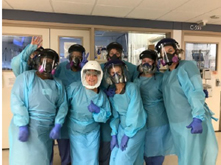
Michigan's Health Care Coalition Obtain Available HEPA Filters to Expand Isolation Care Capacity for the Upper Peninsula Health System Marquette

Michigan's Health Care Coalition Obtain Available HEPA Filters to Expand Isolation Care Capacity for the Upper Peninsula Health System Marquette

Michigan 
October 2020

Situation

In early October 2020, a rapid rise in new COVID-19 cases was noticed in Wisconsin and Region 8 Healthcare Coalition across the Upper Peninsula of Michigan. This was true especially along the Wisconsin border where the case load was rapidly increasing, far beyond previous counts. Upper Peninsula Health System (UPHS) Marquette is the only tertiary care center in Michigan's Upper Peninsula. They are also the receiving hospital for many of the patients requiring tertiary critical care who were seen and treated at many of the outlying hospitals in the area. As the case load was increasing, all the hospitals across the region began using their medical surge plans to provide care for COVID-positive patients. There was a need to bolster the surge capacity for isolation beds at UPHS Marquette as the critical patient case load for COVID-positive patients went on a rapid upward trajectory.

Impact

Region 8 Healthcare Coalition queried hospitals for available portable high-efficiency particulate air (HEPA) units and were able to get some relief. With many of the hospitals at a high capacity due to the medical surge of COVID-positive patients, outside resources were needed. A request was made to the Region 1 Healthcare Coalition hospitals for any available portable HEPA units. These units were purchased through the Hospital Preparedness Program (HPP) in past years. Memorial Healthcare Center in Owosso and Mid-Michigan Medical Center Gratiot were able to provide two units each to assist the rapidly growing need for additional isolation care. Region 1 Healthcare Coalition coordinated with the hospitals, and the health care coalition (HCC) coordinators from Regions 1 and 8 met in Grayling (halfway) to transfer the units. The Region 8 Healthcare Coalition team delivered them to Marquette, where UPHS Marquette put their masterful engineering team together to create a much-needed isolation surge unit. This was part of multiple surge expansions done by UPHS Marquette, allowing them to continue taking many of the most critical patients across the region's hospitals.
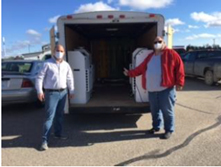
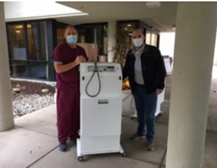
Image of medical staff with a HEPA unit Image of Region 8 Health Care team delivering HEPA units
 

Impact

Regions 1 and 8 have collaborated successfully in the past, enabling them to serve the people in their communities more effectively during the response to the surge in COVID-19 cases. The facility also added five intensive care unit (ICU) beds still in use today, allowing care for 40 patients. Now more than ever, it is critical for relationship building and partnership, as the fight continues during the global pandemic.


This story was developed and submitted by the Amber Pitts, the HPP Coordinator for the state of Michigan. The ASPR Health Care Readiness Programs Communications Team made minor updates throughout for clarity.
 

Michigan DHHS Mobile Crisis Teams and the State’s Regional Healthcare Coalition Provide Critical Staffing Support during the COVID-19 Outbreak in Long-Term Care Facilities

Michigan DHHS Mobile Crisis Teams and the State’s Regional Healthcare Coalition Provide Critical Staffing Support during the COVID-19 Outbreak in Long-Term Care Facilities

Michigan

2020

Situation

Aspirus Ontonagon Long Term Care Facility, located in rural Ontonagon County, Michigan, experienced a major COVID-19 outbreak in both residents and staff within their 46-bed facility. This outbreak had significant impact on all aspects of their facility as staffing was at such a critical level, they were considering a possible evacuation scenario. The facility did not have the staff to continue to provide and maintain daily operations as necessary to care for their residents. Aspirus was not the only area facility experiencing staffing shortages; the Menominee Health Services facility also experienced an outbreak of COVID, affecting not only the staff but also residents. The 59-bed facility put a call in to the Region 8 Healthcare Coalition after all other avenues were exhausted.

Intervention

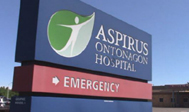
Image of ASPIRUS Ontonagon Hospital Emergency sign

The first of the support staff arrived just hours after Upon Aspirus Ontonagon Long Term Care Facility requested staffing support. After about a week, the facility's staff began to return to work, and the facility was again able to resume normal operations. Menominee Health Services also received staffing relief within hours, as the first of the Michigan Department of Health and Human Services (MDHHS) Mobile Crisis Teams began to arrive.

Impact

Upon the arrival of staffing support at Aspirus Ontonagon Long Term Care Facility, the Director of Nursing said, "…they looked like angels coming through the door!" The administrator subsequently shared that they did not know how they would have able to care for their residents without the assistance of the Region 8 Healthcare Coalition and MDHHS Mobile Crisis Teams. The two facilities had a total of three certified nursing assistants and an infectious control nurse. Both facilities now have a deeper relationship with the Region 8 Healthcare Coalition and a better understanding of how beneficial staffing agencies can be in times of need.


This story was developed and submitted by the Amber Pitts, the HPP Coordinator for the state of Michigan. The ASPR Health Care Readiness Programs Communications Team made minor updates throughout for clarity.


Michigan Leads Multi-Agency Effort in Managing COVID-19 Case Surge Among People Experiencing Homelessness

Michigan Leads Multi-Agency Effort in Managing COVID-19 Case Surge Among People Experiencing Homelessness

Michigan 2020

Situation

On November 17, 2019, the first case of coronavirus was identified in Wuhan, China, and by March 2020, the first case was identified in Michigan. As cases began to occur in Michigan, two counties in Region 5 of the state were experiencing an increase in COVID-19 positive cases among individuals experiencing homelessness. Given the unique situation, there was a lack of public health resources as to where to house the COVID positive individuals who did not need hospitalization. A hotel was acquired to be used for placement of COVID-19 positive residents experiencing homelessness, but the volume of residents became too significant for the public health staff to manage. The Medical Director for public health was needed to manage all referral calls, issues, and challenges related to oversight of the hotel population.

Response Activities

State public health agencies coordinated a multi-agency response to the increase in COVID-19 cases at the hotel. Together, they created a process and procedures to meet the needs of the community. A protocol for admission to the hotel was established and discussed with referring local hospitals. Emergency medical services (EMS) agencies also were enlisted to provide added clinical support and to treat the residents at the hotel. The 5th District Medical Response Coalition provided supplies and resources to the hotel, enabling coalition members to assess and treat more residents.

Physicians in the Western University Homer Stryker MD School of Medicine (WMed) EMS Fellowship program oversaw the admission, evaluation, and treatment of residents. Public Health personnel also worked together to support new admissions and develop a plan of care for the residents.

Image of Gospel Mission truck delivering supplies to homeless.


Impact

ASPR funding supported Whitfield Regional Hospital at a crucial time, ensuring the hospital could not only stay open but also expand its capacity to serve the community and state throughout the pandemic. Whitfield now operates at full capacity with the ability to serve ten additional COVID-19 patients daily. Additionally, the pandemic plan provided Whitfield with a blueprint to guide effective response and preparedness efforts.

HPP Propels the Evolution of a Tennessee Health Care Coalition

HPP Propels the Evolution of a Tennessee Health Care Coalition

Knox County

East Tennessee

From "Me" to "We"

Over the last decade, the Knox/East TN (KET) Healthcare Coalition has evolved from its focus on individual hospital preparedness to more holistic regional preparedness. A decade ago, a subcommittee of local hospitals and emergency medical services (EMS) met to discuss preparedness and response for disasters. Today, thanks to HPP's foresight in encouraging health care coalitions (HCC) to include a diverse set of partners, the KET Healthcare Coalition has members from numerous traditional and non- traditional organizations and facilities. Partners include the Regional Forensic Center, blood banks, home health, dialysis, long-term care, and more. Members gain value from the coalition through the exercises, plans, memoranda of understanding, and other collaboration efforts.


"I commend ASPR for having the foresight [to include more organizations]. We didn't like it at first, but I see the value in it now because it brought us all collectively together to look at things differently. It affected our exercises and lessons learned because we had a different focus." 

– John Brinkley, Knox Regional Hospital Coordinator


This transition from individual to collective action was difficult, but recent challenges demonstrated the value of regularly sharing information, discussing concerns, and developing plans to address those concerns with a diverse group of stakeholders. For example, two hospitals in the region were closing, and the KET Healthcare Coalition identified concerns around bed availability and emergency medical services' (EMS) turnaround time. The hospital administrators went to the coalition for help. Using a system already in place, the Hospital Resource Tracking System, the hospitals and coalition worked to address these new challenges by adding EMS times into the system. If an EMS unit is waiting too long, the hospital can turn to "yellow" or "red" to let EMS services know there are few beds available. There is currently 100% participation in this system, and each year 90% of hospitals report their availability of beds, services, and resources (e.g., ventilators) daily.

Coordinating for Pediatric Preparedness

Pediatric preparedness is a significant undertaking that requires a holistic approach. The KET Healthcare Coalition took a three-pronged approach, providing supplies, pediatric-focused training, and tabletop and full-scale exercises to its members and other partners throughout the state. For example, the coalition provided pediatric-specific mass casualty supplies to EMS providers across the region, and ED equipment and supplies to hospitals, as long as they attended 75% of coalition meetings and committed to maintaining supplies.

The coalition also held pediatric simulation events using new pediatric simulators. In 2019, the KET Healthcare coalition held 26 simulation event, involving 56 scenarios over 51 hours of simulation with 147 EMS providers, 179 registered nurses, 1 physician, and 44 other staff. The pediatric simulation events focus on hands-on training, in-the-moment decisions, and real conversations. One participant said he learned more in the 2 hours they spent doing the simulation than he had in the past 10 years of training. Since the simulators are mobile, the trainers could have EMS practice in a parking lot or could bring it to a hospital in a rural area so they could practice using their own supplies and resources.

Collaboration in Real Time

The coalition-building and preparedness activities of the KET Healthcare Coalition have enabled the region to successfully respond to emergencies and disasters. In 2016, a train derailment resulted in a gas leak, but the hospital that responded did not have enough critical cyanide kits to mitigate the leak. With just one call to the coalition, all cyanide kits from the region were on their way to the hospital within four hours, and all kits throughout the state were en route within 6 hours. The hospital was also able to decontaminate all 88 individuals with the decontamination materials they bought with HPP cooperative agreement funds.

With relationships already in place, those involved in the coalition didn't have to make introductions at the scene of the emergency. Instead, they used those crucial early moments to immediately provide reports, share real-time updates with hospitals, and determine the availability of certain hospitals to accept patients. This event demonstrated the strength of the coalition members' relationships and the impact it has on successful communication and coordination.


"[The coalition] is the mortar between the bricks. In any event, it holds up strong." 

–Wanda Roberts, East Tennessee Regional Hospital Coordinator

Washington Medical Coordination Center Collaborates with Key Health Care Response Partners to Mitigate Hospital Surge and Ensure Continuity of Care During the COVID-19 Pandemic

Washington Medical Coordination Center Collaborates with Key Health Care Response Partners to Mitigate Hospital Surge and Ensure Continuity of Care During the COVID-19 Pandemic

Impact

The early partnership between the Northwest Healthcare Response Network (NWHRN) and Harborview Medical Center was instrumental for creating the vision for the Washington Medical Coordination Center (WMCC) and establishing its operational framework. Coupled with Harborview’s clinical and operational expertise, NWHRN leveraged its health care delivery and disaster response proficiency as well as its long-standing relationships in the community to serve a critical role in articulating the value of the WMCC. This achieved early buy-in among clinical and executive leadership of hospital systems that normally do not collaborate. Through this strong foundation built early in the pandemic and expanded collaboration with additional partners across the state, the WMCC has been able to offer vital support beyond its initial operations in western Washington and has become a key tenant in Washington state’s pandemic response by providing relief to health care facilities statewide. As of early January 2022, the WMCC has received over 3,800 hospital requests for assistance and has completed over nearly 2,000 load balancing patient placements. 
 

The WMCC model has also begun to benefit states within Region 10. WMCC is collaborating with Oregon, Idaho, and Alaska to establish load balancing systems that can facilitate bi-directional information sharing and improve visibility into hospital capacity throughout the region. As a result, the WMCC has been able to expand response communication across the state and influence future preparedness efforts across the region. 


Background

From late February to early March 2020, Washington experienced its first COVID-19 outbreak at Life Care Center of Kirkland, a skilled nursing and rehabilitation facility outside of Seattle. As the number of cases rose, it became clear that an outbreak at a single nursing home can easily overwhelm the health care system. To prepare for a surge in cases throughout the region, the Disaster Medical Coordination Center (DMCC) at Harborview Medical Center/University of Washington and NWHRN, the regional health care coalition, identified the need to pivot their response strategy and establish a central entity that load balances patient movement to ensure maximum health care system efficiency and coordination in response to the COVID-19 pandemic.


Response
 

Harborview Medical Center and NWHRN, which receives funding through ASPR’s Hospital Preparedness Program (HPP) cooperative agreement, partnered to coordinate with hospitals across the region and establish the Regional COVID-19 Coordination Center (RC3). The structure of the RC3 consisted of four major pillars that aimed to support COVID-19 patient triage, situational awareness, decision-making, and bed placement across western Washington using a Medical Operations Coordination Center framework.

By fall of 2020, the RC3 evolved into WMCC, which expanded its capabilities to serve health care facilities across Washington state. The WMCC is supported by both HPP cooperative agreement funding and COVID-19 supplemental funding.  The center has expanded RC3’s mission of preventing strain on hospitals by load balancing acutely ill patients across the state. This includes patients with COVID-19 as well as other acute illnesses and involves hospitals impacted by pandemic-related surges and staffing challenges. Hospitals that have failed to successfully transfer patients using standard referral resources utilize the WMCC to access care across the state.

In turn, the WMCC utilizes statewide operational agreements and bed surveillance of the health system to ensure access to care regardless of which hospital a patient may originate from. Over 75 percent of requests have originated from rural and critical access hospitals unable to access care at larger hospitals in more urban locations. The WMCC also works to stabilize over-capacity tertiary hospitals by transferring patients to hospitals with existing capacity for continued care. 

With support from the NWHRN, Harborview Medical Center leads WMCC operations by providing, or ensuring provision of, regular and timely situational awareness updates as well as data and clinical expertise to facilitate patient placement. In addition to its partnership with NWHRN, the WMCC collaborates with the Regional Emergency and Disaster (REDi) Health Care Coalition in Washington, the Washington State Hospital Association, and the Washington State Department of Health. Throughout the pandemic, these partners have worked together to support continued health care operations, assess regional patient coordination challenges and solutions, coordinate patient placement needs, and align resource sharing and mutual aid, especially during times of surge.

More Information: To learn more about the WMCC, visit the NWHRN’s WMCC webpage or review this summary of the WMCC.

HPP Funds Used to Deploy Mobile Field Hospital in Connecticut

HPP Funds Used to Deploy Mobile Field Hospital in Connecticut

Connecticut 

Spring 2020

Background:

In FY 2019, the Connecticut Department of Public Health (CT DPH) used HPP funds to establish a relationship with the CT Military Department (CTMD) to support training and operations related to the deployment and maintenance of CT's Mobile Field Hospital (MFH). While the 100-bed MFH had been available for over a decade, CT DPH initiated this formal relationship with CTMD to assist with its operations and better support the state's health care system in response to man-made and natural disasters.

Response Activities:

Over the past year, the DPH has provided funding to the CTMD to train the CT Horse and Foot guard and deploy the MFH upon request from a hospital or in the event of an emergency. The MFH is deployable as a flexible configuration of four 25-bed units that operate jointly or independently to provide triage and treatment anywhere in the state. It can also support an acute care hospital after a catastrophic structural or mechanical failure. The CTMD has provided the department with a standard operating procedure (SOP) that describes the process for deploying the MFH upon request.

Impact:

In the spring of 2020, CT deployed the MFH to four hospitals as alternate care sites to expand surge capacity across the state as part of the response to COVID 19. CT will continue to use HPP funds to further the relationship between the DPH and CTMD and strengthen MFH operations. Strengthening this relationship ensures for a more organized, efficient, and rapid deployment of the CTMD in the event of an emergency.

ASPR Hospital Association COVID-19 Supplemental Funding Allows Rural Alabama Hospital to Continue Serving its Community

ASPR Hospital Association COVID-19 Supplemental Funding Allows Rural Alabama Hospital to Continue Serving its Community

Demopolis, Alabama

March 2020

Background:

In early 2020, Whitfield Regional Hospital in Demopolis, Alabama, was close to closing its doors for good. The hospital was functioning at 25 percent of its licensed bed capacity and lacked up-to-date equipment and sufficient resources to provide high-quality care to its patients. Then, in March 2020, COVID-19 changed everything for this rural Alabama hospital.

The Alabama Department of Public Health (ADPH) established a committee to create statewide pandemic preparedness plans for the health sector well before COVID-19, in 2006. This state committee consisted of health care coalitions (HCCs), hospitals, emergency medical services (EMS), assisted living facilities, nursing homes, sheriff’s departments, fire departments, and even pharmacies across the state. The committee worked together to create the Alabama Healthcare Disaster Planning Guide, which contains information on infection control and the process for securing critical personal protective equipment (PPE) as well as ventilator and oxygen resources. In addition, it contained communication plans to support health care coalitions and staff educational resources to enhance pandemic preparedness. When COVID-19 began to spread in Alabama in March 2020, the state had a plan, and it became a matter of obtaining the resources to carry out their plan.

Response Activities:

Whitfield Regional Hospital received ASPR COVID-19 supplemental funding, which provided them the ability to carry out the preparedness plan they had in place. The hospital used funding to replace patient beds that were over 25 years old. ASPR funding was also used to remodel its primary intensive care unit (ICU) and purchase new equipment for an alternate ICU, allowing the hospital to accommodate more patients. Whitfield Regional Hospital used ADPH’s plan to guide them in responding to the pandemic. The hospital formed the COVID-19 Planning and Response Committee, which held daily safety meetings that allowed the state health department to maintain situational awareness of the spread of COVID-19 and assess staffing and PPE needs.

With a plan and new resources, the hospital was able to expand outreach in several ways. Whitfield partnered with University of Alabama-Birmingham to accommodate patients from overwhelmed hospitals across the state. In addition, Whitfield Regional Hospital was one of the first hospitals in the state to begin a COVID-19 testing program with drive-thru and mobile capabilities. Finally, Whitfield was one of the first hospitals in the county to provide COVID-19 vaccinations. The hospital led efforts to vaccinate 46 percent of the county’s adult population— the highest vaccination rate in the southwest district of Alabama

Impact:

ASPR funding supported Whitfield Regional Hospital at a crucial time, ensuring the hospital could not only stay open but also expand its capacity to serve the community and state throughout the pandemic. Whitfield now operates at full capacity with the ability to serve ten additional COVID-19 patients daily. Additionally, the pandemic plan provided Whitfield with a blueprint to guide effective response and preparedness efforts.

Michigan’s Region 2 North Healthcare Coalition Communicates Plan to Deliver Essential Personal Protective Equipment to Health Care Facilities During the COVID-19 Pandemic

Michigan’s Region 2 North Healthcare Coalition Communicates Plan to Deliver Essential Personal Protective Equipment to Health Care Facilities During the COVID-19 Pandemic

Michigan

March 2020

Situation

The rapid spread of COVID-19 and disruption of the supply chain caused a dramatic and substantial shortage in the supply of personal protective equipment (PPE) starting in March 2020. The demand far exceeded the amount on hand and the amount health care facilities were able to receive from vendors. Those with the greatest need were hospitals, emergency medical services (EMS), long-term care, home health care, law enforcement, prisons/jails, and dentists. This was a nationwide issue, but Southeast Michigan was hit particularly hard by supply chain issues.

Response Activities 

Michigan HCC Team

The Region 2 North Healthcare Coalition worked in close conjunction with the local jurisdictional authorities and a plan was put in place for the County Emergency Management organizations to take the lead for the warehousing and distribution of the PPE. Macomb, Oakland, and St. Clair counties implemented a process for storage, communication, ordering, staffing, and distribution. The organizations worked with their county public health departments, along with the Region 2 North Healthcare Coalition.

The Region 2 North Healthcare Coalition communicated the processes to the health care facilities and posted the process on their website. The Region 2 North Healthcare Coalition also handled numerous phone calls and requests, as well as directed individuals to the website. When the Region 2 North Healthcare Coalition received shipments from the State, shipments were received by Oakland County and allocated to the three counties by the Region 2 North Healthcare Coalition. This process has proven to be effective and still utilized today.
 

Impact

Through the outstanding collaboration and cooperation of the three counties, the health care facilities within the Region 2 North Healthcare Coalition and many others were able to order and receive much-needed PPE. The PPE was essential for the response, health, and safety of the first responders, first receivers, clinical and support staff, among many others. The work of county emergency management, public health, materials management, and logistics organizations was— and continues to be— exceptional and much appreciated. This could not have been made possible without the efforts of the Michigan State Police, State Emergency Operations Center, Michigan Department of Health and Human Services, Community Health Emergency Coordination Center, and Division of Emergency Preparedness and Response.


This story was developed and submitted by the Amber Pitts, the HPP Coordinator for the state of Michigan.

HCC and MRC Partnership in New Mexico Prevents Hospital Surge

HCC and MRC Partnership in New Mexico Prevents Hospital Surge

Structure and Function of New Mexico's MRC and HCC Partnership

Albuquerque, NM

2019 

The New Mexico Medical Reserve Corps (NMMRC), which has been established through ASPR's Emergency System for Advance Registration of Volunteer Health Professionals (ESAR-VHP) program, has statewide and inter-coalition mutual aid partnerships with its health care coalitions (HCC). Mutual aid agreements facilitate the rapid sharing of emergency aid and resources among governments and organizations at all levels. Each of the four New Mexico (NM) coalitions has a Medical Reserve Corps (MRC) unit, either within the coalition or in partnership with the coalition, to support regional response. NMMRC coordinators attend coalition meetings to report on what volunteers are doing and their capabilities.

NM uses a coalition fiduciary nonprofit (501(c)(3)) to manage funding from the Hospital Preparedness Program (HPP). This structure enables the MRC and coalitions to collaborate on activities that HCCs would be unable to do on their own, such as accept donations of supplies.

HCCs and NMMRC units work together to develop, and register with the lead state emergency management agency, pre-planned Mission Ready Packages for response deployment throughout the state and nationally through EMAC. Reimbursement and travel prepayment for HCC-affiliated MRC volunteers is facilitated by the coalition's fiduciary nonprofit.

Value of the HCC and MRC Partnership

The HCC and NMMRC partnership helps coalitions, which traditionally focused on planning, serve a response-oriented role. For example, NMMRC supported coalitions during a presidential visit to New Mexico by providing medical assistance and being present for response support in the event of a mass shooting. In addition, NMMRC has also been assisting in hospitals on the front lines of the COVID-19 pandemic. The partnership has also expanded opportunities for MRC recruitment.

The relationship building that has occurred because of this partnership enables the state to do more with less. They can share resources, staff, and training opportunities. By building strong relationships, coalitions and MRC partners in NM can better plan, train, exercise, and respond together.

HCC and MRC Partnership in Action

Event: In 2019, migrants seeking asylum in the U.S. were temporarily housed in shelters provided by volunteer organizations and charities. The Albuquerque Healthcare Coalition MRC and NM Integrative Wellness MRC provided medical assistance, translation, and operational support at shelters and medical clinics set up to assess the health of migrants.

Response: The MRCs received donated medication from Americares, a health-focused relief and development organization. The donations allowed them to provide treatment to migrants in the clinics rather than transporting them to a hospital.

HPP Supports Coordination and Resource Deployment Following a Liquid Oxygen Spill

HPP Supports Coordination and Resource Deployment Following a Liquid Oxygen Spill

Los Angeles, CA

January 2019

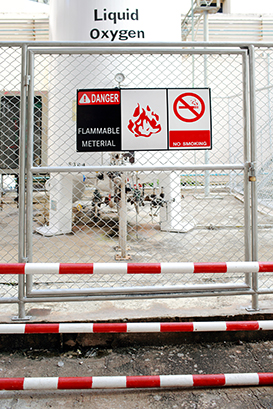
On the morning of January 28, 2019, a pipe leading to a 2,000-gallon tank of liquid oxygen ruptured at Cedars-Sinai Marina del Rey Hospital in Los Angeles County in California. The leaking oxygen froze when it mixed with the air, making it difficult to make immediate repairs. The Los Angeles County's Disaster Resource Center (DRC) program, which is funded through the Hospital Preparedness Program (HPP), was ready to respond with deployable back-up resources.

Liquid oxygen leaks can be very hazardous and endanger all operations at a hospital: its low temperature can cause serious burns to human tissue, and large quantities of oxygen pose a fire risk. Hospitals use oxygen for a variety of procedures and the oxygen is typically stored as liquid in special containers to maintain low temperature. When the rupture first happened, Cedars-Sinai Marina del Rey Hospital reached out to vendors to acquire a backup oxygen supply, but nothing was available statewide.

Cedars-Sinai Marina del Rey Hospital, as a member of the Cedars-Sinai health system, participates in Los Angeles County's DRC program, which is funded through the HPP to enhance surge capacity by fostering relationships and developing regional plans and procedures. The DRC program consists of 13 hospitals, including Cedars-Sinai Medical Center, and one community clinic association. The DRCs and their approximately 66 active umbrella hospitals and health care coalition partners meet regularly and coordinate with each other to stockpile supplies that can be deployed throughout the region in the event of an emergency.

In 2013, Cedars-Sinai Medical Center used HPP funds to acquire a government surplus trailer from a Department of Veterans Affairs hospital and refurbish it into a liquid oxygen trailer. This oxygen trailer was listed as a deployable resource for the DRC program, which meant it was formally available for use by the community. After the tank of liquid oxygen ruptured at Cedars-Sinai Marina del Rey Hospital, the DRC program provided a formal mechanism through which the hospital could request the equipment from Cedars-Sinai Medical Center, and it helped to coordinate logistics.

Cedars-Sinai Medical Center responded quickly to the request, and coordinated vendor support, permitting, and delivery of the tank to Cedars-Sinai Marina del Rey Hospital by the following morning. Cedars-Sinai Marina del Rey Hospital connected the oxygen trailer, and it served as a back-up tank through the entirety of the repair process. This quick coordination and resource deployment helped Cedars-Sinai Marina del Rey Hospital avoid transferring the approximately 70 patients that required oxygen or evacuating the hospital on a larger-scale.

Cedars-Sinai Medical Center proactively assessed the needs of the community and built a solution that could be leveraged and deployed.

"Nobody else in the region has an oxygen trailer like this that can be deployed in emergencies," said Ryan Tuchmayer, MPH, director of Emergency Management at Cedars-Sinai. "We're grateful for the support from the Hospital Preparedness Program that helped us acquire this unique resource that we can use ourselves or to help others."

Subscribe to