Southern Regional Disaster Response System Tele-Emergency Medical Services System Advances Equity and Saves Lives in Georgia and Beyond
Georgia and HHS Region 4
April, 2023
Quick Look
Impact
ASPR funding played was critical in developing and scaling the tele-EMS system to serve more communities across Georgia and the Southeast. Through the Regional Disaster Health Response System, ASPR is working to expand availability of the system throughout the southeast. By connecting EMS clinicians to specialists virtually, they are better able to respond faster, diagnose patients more quickly, provide better health outcomes, and ultimately save lives.
Background
The Southern Regional Disaster Response System (SRDRS) tele-Emergency Medical Services (EMS) system connects EMS clinicians with emergency medicine physicians to enhance patient care during transport and provide more equitable access to care. This innovative method of care was developed by Emory University and ASPR funds were used to scale up the program, making it available in many communities throughout Georgia.
Response
During a response to a suspected food poisoning incident in rural Georgia, experts reached via tele-EMS were able to assist the patients. Virtual experts helped the team on the ground recognize and diagnose it as a case of phosphene gas exposure, manage patient care, and prepare the receiving facility to provide treatment – avoiding the delay of having to transport patients to a larger facility further away.
Small-town Georgia is a peaceful place away from the hustle and bustle of big cities. But when disaster strikes, tranquil rural life can be scary because lifesaving care is far away.
In April 2023, local EMS providers in rural Georgia received a 911 call about a suspected case of food poisoning. However, by the time that the emergency medical technicians (EMTs) arrived on the scene, what they saw was far from a simple case of food poisoning. One patient was unconscious, and two others were displaying symptoms indicative of a far more serious, life-threatening problem. It was a case of phosphene gas exposure, which threatened both patient and responder health and safety.
Thus, the race against the clock kicked off, where the patients needed to be transported to receive medical care before it was too late.
The SRDRS in Atlanta, Georgia, a part of ASPR’s Regional Disaster Health Response System, anticipated rural health crises like this and has been developing, implementing, and scaling their tele-EMS system to increase access to care and the speed it is provided. This initiative has been supported in part by ASPR funding, allowing the SRDRS to expand coverage of the network to communities across Georgia. Due to this system, cases like the phosphene gas exposure can be quickly identified and treated through the tele-EMS system.
The tele-EMS system virtually connects the EMS clinicians in an ambulance with expert clinicians that may not be available locally. The experts then help diagnose the patient and guide the care EMS provides, while simultaneously coordinating with receiving facilities to ensure their care teams are prepared to provide the right treatment. This system enables local, rural EMS and medical facilities to save valuable time and improve patient outcomes, expanding patient access to a higher level of care through virtual coordination.
Without this system the EMTs, likely unaware of how to properly provide care, would rush the patients to a farther-away, larger hospital with more expertise than is available at a closer rural hospital. That transport could take hours and waste valuable time that could otherwise be used to provide care as the clock races for the patient.
The Phosphene Gas Case
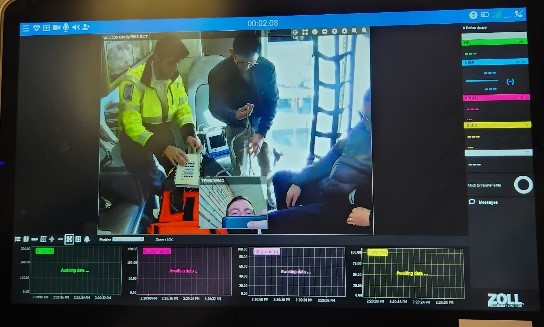
system
When EMTs arrived at the scene in rural Georgia they discovered one severely ill patient and two in stable but guarded condition. The SRDRS’ tele-EMS system helped them get a head start in their race against the clock to stabilize these patients and get them to definitive care.
The EMTs were able to connect with toxicologists in Atlanta who helped determine that the incident was not food poisoning as initially suspected, but actually a phosphene gas exposure that resulted from snake poison placed inside a home two days earlier. The nature of a gas exposure posed a potential hazard to the EMTs and other first responders and required a different, more complex course of treatment. The virtual experts helped direct the on-scene response, instructing the EMTs on how to protect themselves when entering the building. Even a world-renowned expert on phosphene gas exposure, located in India, connected with the rural EMTs to guide their response.
“The tele-EMS system is a force multiplier for small EMS organizations. It brings equity and access where there previously has not been.”
As the patients were transported to their local hospital, the same experts – connected through tele-EMS – advised the receiving hospital staff ahead of the patient’s arrival. This guidance ensured that the rural receiving hospital knew what protective measures to take for their staff and other patients, and how to properly provide care, avoiding a need to move the patients further from their community, such a delay may have cost the patients’ lives.
Leading Practice: Developing the Tele-EMS System and Why It Works
Emory University Hospital started the tele-EMS initiative in partnership with local EMS agencies, focusing on rural areas in Georgia. The goal of the system is twofold: 1) expand the reach of clinical expertise, and 2) mitigate the effects of rural hospital closures, which have resulted in longer patient transport times and delays in care.
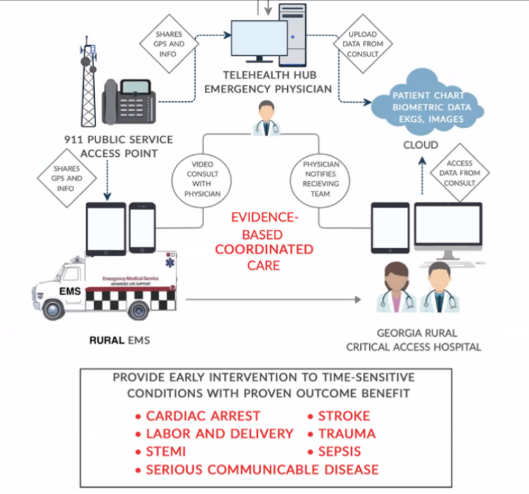
The SRDRS has used ASPR funding to scale and expand the program beyond rural parts of the state. Currently, the SRDRS is working to further expand the program across the Southeast.
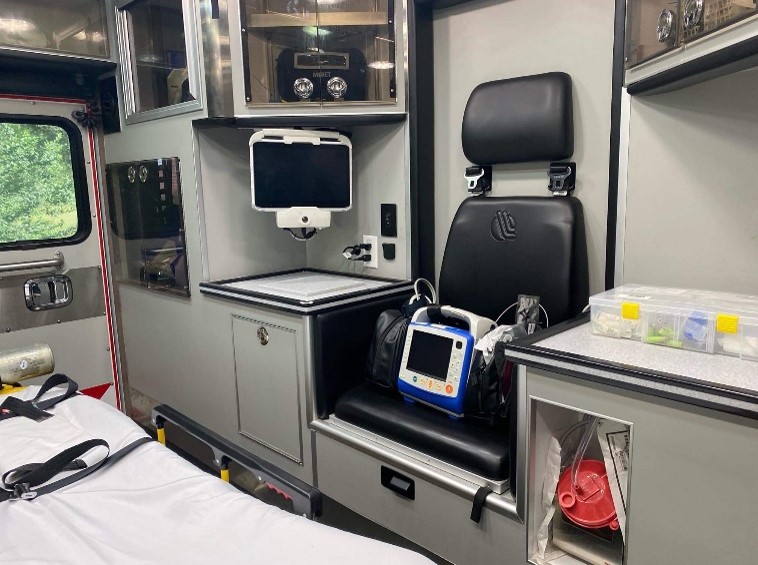
enable tele-EMS
One of the tele-EMS system’s keys to success is that it uses technology users are familiar with. Ambulances are equipped with hardware that enables EMTs to contact an expert clinician on a telemedicine shift at Emory University Hospital. The clinician receives a stream of real-time ambulance data, allowing them to monitor data points such as heart rate and blood pressure. They can also use a camera to see the patient as they discuss courses of action with EMTs on the scene.
The advising clinician also coordinates with receiving hospitals to provide direction on a patient’s course of care. This is essential as it equips local receiving hospitals with context and guidance to provide better care, which can help expedite treatment by preventing the need to transport a patient to a different facility that has the required specialty expertise in-house.
The tele-EMS system fits into the SRDRS’ wider telehealth strategy to better support disaster patients with telehealth systems that are easy for clinicians to use and reflect areas where clinicians need additional tools in their day-to-day work. SRDRS is also piloting telemedicine concepts in emergency medicine, critical care, and observational medicine.
“RDHRS funding from ASPR has directly supported the expansion of this tele-EMS system into communities which wouldn’t otherwise be eligible.”
About ASPR’s Regional Disaster Health Response System
These initiatives are a direct result of ASPR funding through the Regional Disaster Health Response System, and ASPR funding will continue to help the SRDRS serve more areas in both the state of Georgia, and the Southeastern United States.
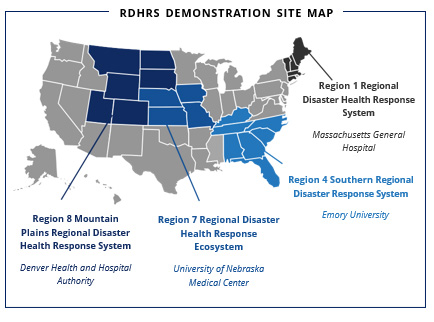
The Regional Disaster Health Response System is a unique program that provides all-hazards regional coordination in order to support a more coherent, comprehensive, and capable health care disaster response system within and across multi-state regions. During responses to disasters and emergencies, Regional Disaster Health Response System demonstration sites increase surge capacity within their regions by coordinating patient load-balancing, resource allocation, and access to specialty care (e.g., trauma, burn, infectious disease), reducing the need for federal support during the response. Regional Disaster Health Response System demonstration sites also enhance regional health care preparedness efforts by maturing models for intra- and inter-regional collaboration that ultimately saves lives.
Access the Regional Disaster Health Response System web page to learn more about this important ASPR program.