HHS Declares Public Health Emergency for Hawaii following Recent Severe Weather

FOR IMMEDIATE RELEASE
Contact ASPR Press Office

ASPRMedia@hhs.gov
aspr.hhs.gov/newsroom
X: @ASPRgov

HHS Declares Public Health Emergency for Hawaii following Recent Severe Weather

Today, the U.S. Department of Health and Human Services (HHS) Secretary Robert F. Kennedy,​ Jr. declared a Public Health Emergency (PHE) for the state of Hawaii to address the health impacts caused by severe storms, flooding, landslides, and mudslides that occurred March 10-24, 2026. The declaration follows President Trump’s emergency declaration and gives the Centers for Medicare & Medicaid Services’ (CMS) health care providers and suppliers greater flexibility in meeting emergency health needs of Medicare and Medicaid beneficiaries.

“HHS is committed to supporting the people of Hawaii as they recover from these devastating storms,” said Secretary Kennedy. “By declaring a public health emergency, we are ensuring that health care providers have the flexibility they need to continue serving their communities and that patients can maintain access to essential services during this critical time.”

To support state and local response efforts, HHS’ Administration for Strategic Preparedness and Response (ASPR) has provided access to HHS emPOWER. Data from emPOWER includes the number of Medicare beneficiaries who are reliant on electricity-dependent durable medical equipment and certain health care services, such as dialysis, oxygen tanks, or home health care. In the past, this data has informed planning, response, and recovery efforts to quicky and effectively address the needs of at-risk residents in areas impacted by the disaster. 

“ASPR is working closely with federal, state, and local partners to support Hawaii’s recovery efforts,” said ASPR Principal Deputy Assistant Secretary John Knox. “Through tools like HHS emPOWER and the flexibilities enabled by this declaration, we are helping identify and reach vulnerable populations, ensuring continuity of care for those who need it most during and after this disaster.”

The Disaster Distress Helpline is also available to provide disaster crisis counseling. Managed by the Substance Abuse and Mental Health Services Administration (SAMHSA), this toll-free, multilingual, crisis support service is available 24/7 to all residents in the U.S. and its territories who are experiencing emotional distress related to natural or human-caused disasters. To connect with a trained counselor, call or text 1-800-985-5990. Spanish speakers can press “2” for bilingual support. Callers also can connect with counselors in more than 100 other languages via third-party interpretation services by indicating their preferred language to the responding counselor.

In declaring the public health emergency and authorizing flexibilities for CMS providers, suppliers, and beneficiaries, Secretary Kennedy acted within his authority under the Public Health Service Act and Social Security Act. These actions and flexibilities are retroactive to March 10, 2026.
HHS Activates Emergency Prescription Assistance Program to Support Uninsured CNMI Residents Following Typhoon Sinlaku

FOR IMMEDIATE RELEASE
Contact ASPR Press Office

ASPRMedia@hhs.gov
aspr.hhs.gov/newsroom
X: @ASPRgov

HHS Activates Emergency Prescription Assistance Program to Support Uninsured CNMI Residents Following Typhoon Sinlaku


The U.S. Department of Health and Human Services (HHS), through the Administration for Strategic Preparedness and Response (ASPR), has activated the Emergency Prescription Assistance Program (EPAP) for residents of Saipan, Rota, and Tinian in the Commonwealth of the Northern Mariana Islands (CNMI). The program helps uninsured individuals replace essential prescription medications and certain medical equipment that may have been lost or damaged due to Typhoon Sinlaku.

EPAP enables eligible individuals to receive up to a 30-day supply of prescription medications at no cost from participating pharmacies. Refills may be authorized in 30-day increments for as long as the program remains active. In addition, EPAP can cover replacement of select durable medical equipment (DME) and supplies, including items such as canes, crutches, walkers, wheelchairs, blood glucose meters, and test strips. Certain vaccinations administered at retail pharmacies may also be eligible.

“Disasters can disrupt access to critical medications and supplies, creating serious health risks—especially for those without insurance,” said ASPR Principal Deputy Assistant Secretary John Knox. “Through EPAP, HHS is working to ensure that uninsured residents in affected communities can continue to access the care and medications they need during recovery.”

Uninsured residents in the impacted areas can call the EPAP hotline at 855-793-7470 or visit the EPAP website to check eligibility, confirm covered medications or supplies, and locate participating pharmacies. Individuals enrolled in Medicare, Medicaid, or the Children’s Health Insurance Program (CHIP) are not eligible, as they are considered insured under the program.
 

EPAP offers a streamlined way for enrolled pharmacies to submit claims for covered prescription medications, vaccines, specific medical supplies, and certain types of DME for eligible individuals in federally designated disaster areas. Thousands of pharmacies across the country participate in EPAP, and pharmacies that do not yet participate are encouraged to enroll.

In response to Typhoon Sinlaku, HHS Secretary Robert F. Kennedy, Jr. declared a public health emergency for CNMI and Guam to address the storm’s health impacts. This action follows President Trump’s major disaster declarations for both Guam and CNMI. Activation of EPAP is one component of the broader federal response supporting impacted communities.

ASPR has also deployed response personnel and resources to the region, including a National Disaster Medical System Health and Medical Task Force, a Health Care System Assessment Team, a behavior health team, and an Incident Management Team. These teams are supported by medical equipment and supplies to assist with delivering care and assessing health system needs.

For more information about EPAP, visit the HHS Emergency Prescription Assistance Program webpage or watch an informational video available in American Sign Language that explains eligibility and program benefits. Updates on ASPR’s response to Typhoon Sinlaku are available on the ASPR website.

###


HHS Secretary Kennedy Declares Public Health Emergency for Guam, CNMI in Response to Typhoon Sinlaku

FOR IMMEDIATE RELEASE
Contact ASPR Press Office

ASPRMedia@hhs.gov
aspr.hhs.gov/newsroom
X: @ASPRgov

HHS Secretary Kennedy Declares Public Health Emergency for Guam, CNMI in Response to Typhoon Sinlaku

NDMS personnel and resources pre-deployed to support health response 

WASHINGTON, DC (April 18, 2026) – U.S. Department of Health and Human Services (HHS) Secretary Robert F. Kennedy, Jr. declared a Public Health Emergency (PHE) for the U.S. territories of Guam and the Commonwealth of Northern Mariana Islands (CNMI) to address the health impacts of Typhoon Sinlaku. The declaration follows President Trump’s emergency declarations for Guam and CNMI and gives the Centers for Medicare & Medicaid Services’ (CMS) health care providers and suppliers greater flexibility in meeting emergency health needs of Medicare and Medicaid beneficiaries.

“HHS stands with the people of Guam and CNMI as they confront the health impacts of Typhoon Sinlaku,” said HHS Secretary Robert F. Kennedy, Jr. “We are coordinating closely with territorial and federal partners, deploying teams to assess needs, and delivering medical and public health support as conditions allow.”

Personnel – including a Health and Medical Task Force from the National Disaster Medical System (NDMS), a healthcare system assessment team, a disaster behavioral health team, and an incident management team and logisticians– are part of the HHS’ Administration for Strategic Preparedness and Response (ASPR). These teams are coordinating with the Federal Emergency Management Agency (FEMA), ASPR regional emergency coordinators (RECs), and territorial health authorities to evaluate impacts and prioritize federal public health and medical support.

“HHS strategically pre-positioned dozens of personnel and critical supplies ahead of the storm so we could respond quickly to the needs of communities in its path,” said Principal Deputy Assistant Secretary for Preparedness and Response John Knox. “By having teams ready in advance, we’re able to quickly identify where help is most needed and deploy NDMS assets where they can have the greatest impact.”

Additional personnel from NDMS, the U.S. Public Health Service, and the Centers for Disease Control and Prevention remain on standby and are ready to deploy, if needed. ASPR’s Disaster Telemedicine program is also available to expand local clinical capacity and help maintain continuity of care. HHS also has information available from the HHS emPOWER program, a partnership between ASPR and CMS, to support public health emergency planning and response activities. The program offers data on the number of Medicare beneficiaries who rely on electricity-dependent durable medical equipment and certain healthcare services—such as dialysis, oxygen, and home health care—to help communities anticipate and respond to the needs of at-risk populations in impacted areas. 

HHS’s Disaster Distress Helpline, sponsored by the Substance Abuse and Mental Health Services Administration (SAMHSA) at 1-800-985-5990, can provide immediate counseling to anyone affected by Typhoon Sinlaku. Callers can connect with counselors in over 100 languages; a videophone option is available to support the deaf or hard-of-hearing.  

In declaring the public health emergency and authorizing flexibilities for CMS beneficiaries, Secretary Kennedy acted under his authority within the Public Health Service Act and Social Security Act. These actions and flexibilities are retroactive to April 11, 2026.

###

PBCU in Pictures

Submitted by admin on
Banner Text

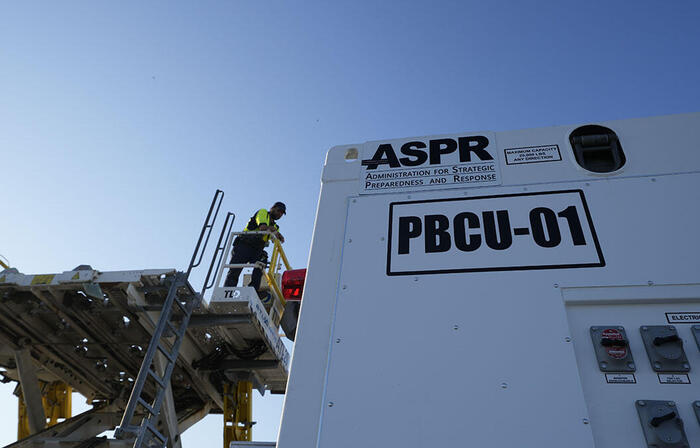
On June 24, 2025, the Tranquil Passport exercise began with government officials facilitating a series of coordination calls to plan the movement of a cluster of simulated American high-consequence infectious disease patients from Toronto, Canada to the United States.

Banner Image
On June 24, 2025, the Tranquil Passport exercise began with government officials facilitating a series of coordination calls to plan the movement of a cluster of simulated American high-consequence infectious disease patients from Toronto, Canada to the United States.

PBCU in Pictures

Submitted by admin on
Banner Text

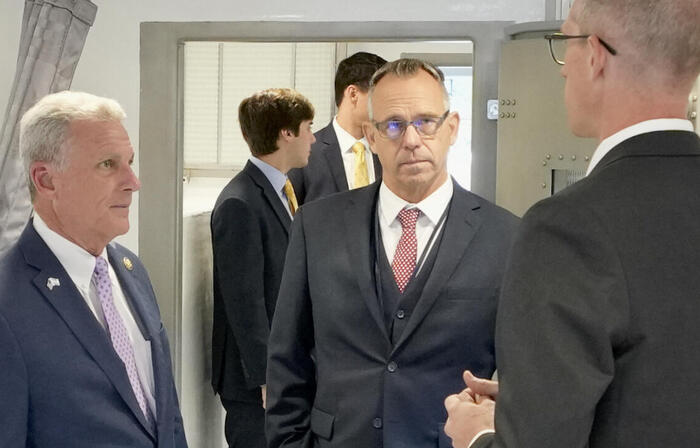
John Knox, HHS Principal Deputy Assistant Secretary for Preparedness and Response, and Congressman Buddy Carter (R-GA) at the Portable Biocontainment Unit.

Banner Image
John Knox, HHS Principal Deputy Assistant Secretary for Preparedness and Response, and Congressman Buddy Carter (R-GA) at the Portable Biocontainment Unit.

PBCU in Pictures

Submitted by admin on
Banner Text

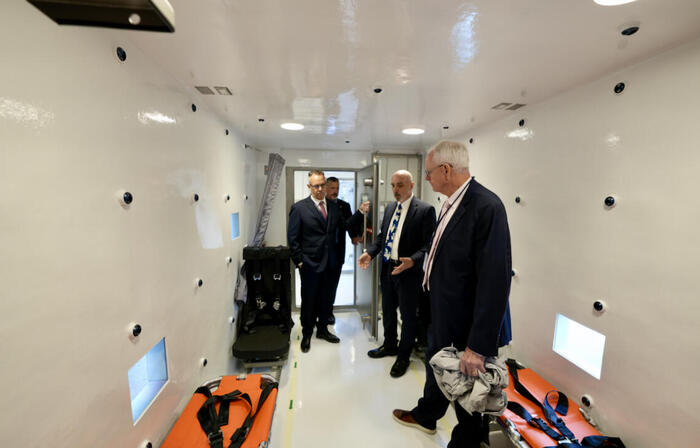
HHS senior leaders inside the Portable Biocontainment Unit following its launch at the U.S. Department of Health and Human Services.

Banner Image
HHS senior leaders inside the Portable Biocontainment Unit following its launch at the U.S. Department of Health and Human Services.

PBCU in Pictures

Submitted by admin on
Banner Text

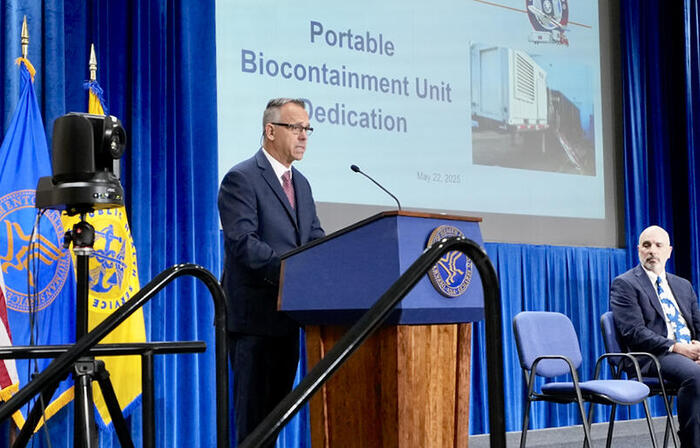
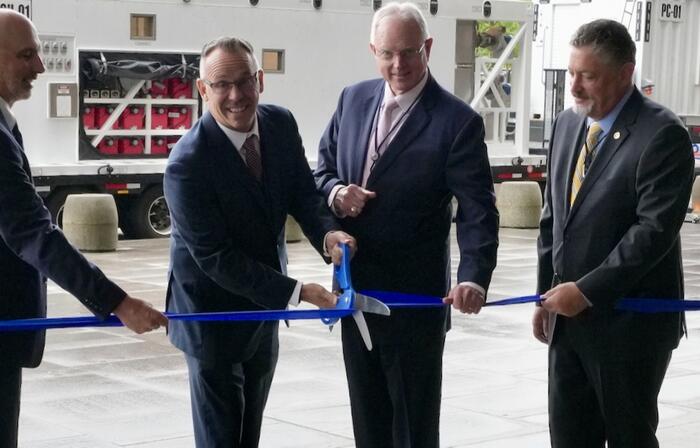
John Knox, HHS Principal Deputy Assistant Secretary for Preparedness and Response, launches the Portable Biocontainment Unit at the U.S. Department of Health and Human Services.

Banner Image
John Knox, HHS Principal Deputy Assistant Secretary for Preparedness and Response, launches the Portable Biocontainment Unit at the U.S. Department of Health and Human Services.

PBCU in Pictures

Submitted by admin on
Banner Text

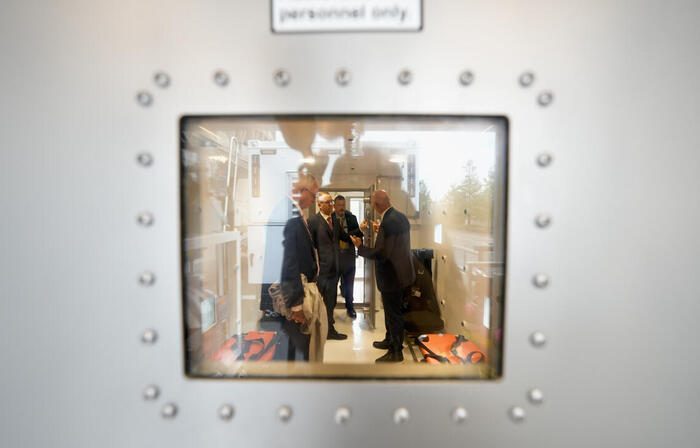
HHS senior leaders seen through a window inside the Portable Biocontainment Unit following its launch at the U.S. Department of Health and Human Services.

Banner Image
HHS senior leaders seen through a window inside the Portable Biocontainment Unit following its launch at the U.S. Department of Health and Human Services
Subscribe to