MRC Response to the Opioid Public Health Emergency

MRC Response to the Opioid Public Health Emergency

Activity Snapshot 2025

Download the PDF

In 2025, MRC units in 37 states and territories carried out activities to prevent opioid misuse, expand education and training, increase access to naloxone, and reduce overdose deaths. The opioid crisis, declared a public health emergency in 2017, remains a serious threat to communities across the country. The Medical Reserve Corps (MRC) remains on the front lines of this response.

The examples below highlight how MRC volunteers are helping close gaps in healthcare access, strengthen local response efforts, and build more resilient communities.


Infographic showing: 37 states, 2,600+ volunteers, 170+ units, 670+ activities, 7,100+ hours, and $280K donated value
 

  • Deschutes County Medical Reserve Corps (OR) and the Deschutes County Health Services partnered to provide harm reduction services across the county. Volunteers distributed supplies, including naloxone and personal protective equipment; connected individuals to care; and offered referrals for higher levels of care. By increasing access to protective supplies, overdose reversal medication, and health services, this collaboration helps prevent the transmission of infectious diseases, may reduce overdose deaths, and supports healthier communities. 
     

  • MRC of Spokane County (WA) trained members of a local nonprofit organization on preventing and responding to opioid overdoses. Participants learned to recognize the signs and symptoms, identify risk factors, and understand how opioids affect the body. This effort strengthened community preparedness by equipping participants with the knowledge and skills to respond to an overdose, including how to administer naloxone.
     

  • Dallas County Medical Reserve Corps (TX) partnered with a local HOSA—Future Health Professionals team in Colleyville to provide opioid awareness education and naloxone administration training at a safety fair for high school students. This effort supported ongoing efforts to address the opioid crisis in Dallas County and the surrounding metro area. 
     

  • Lord Fairfax MRC (VA) led a REVIVE! Lay Rescuer training for second-year Doctor of Pharmacy students at Shenandoah University School of Pharmacy. REVIVE! is Virginia’s Opioid Overdose and Naloxone Education program. During the training, Narcan kits and CPR shields were distributed. Students learned how naloxone works once administered and how to educate patients about opioid safety. 
     

  • Dutchess County Medical Reserve Corps (NY) volunteers assembled 800 naloxone kits for community distribution. Each kit included naloxone, fentanyl and xylazine test strips, gloves, alcohol wipes, and a card identifying local resources. Volunteers also completed naloxone administration training and received a kit. The kits were distributed by the Dutchess County Department of Health (DOH) through a partnership between the New York State DOH, the MRC unit, and community partners focused on peer support. These partners jointly provided trainings to address the opioid epidemic. 
     

  • MN HOSA Medical Reserve Corps (MN) partnered to host a three-day camp for 87 high school students from across Minnesota. The camp included overdose prevention training and naloxone education as part of a broader set of emergency response certifications. Students who completed the full program were eligible to join the MN HOSA – Future Health Professionals, strengthening youth involvement in opioid preparedness and community response efforts. 
     

  • Acadiana Medical Reserve Corps (LA) provided naloxone administration training to nurses and staff at a local elementary school.  
     

  • Medical Reserve Corps of Puerto Rico (PR) attended a training focused on the opioid epidemic on the island, with an emphasis on fentanyl and current drug use trends. The session covered the impact of opioid use, risks to different communities, and overdose awareness. Volunteers were prepared to provide education and support within their communities.  
     

  • Christian County Medical Reserve Corps (MO) partnered with a local hospital to provide a training and information session for volunteers. The session covered the opioid crisis, how to recognize addiction and overdose, and how to respond. A naloxone administration demonstration was provided, and naloxone kits were distributed to attendees.
ASPR’s Response to the Bundibugyo Ebolavirus Outbreak

ASPR’s Response to the Bundibugyo Ebolavirus Outbreak

HHS is coordinating with federal and international partners in responding to the ongoing Ebola Bundibugyo outbreak in the Democratic Republic ​​​of the Congo (DRC) and Uganda. As part of that response, ASPR is coordinating preparedness and medical response activities. This is a coordinated, whole-of-government effort and we are working to ensure the safety of Americans at home and abroad.

ASPR is supporting access to an investigational medical countermeasure for potential use in high-risk exposed individuals. In addition, ASPR is supporting efforts to [BM1.1]maintain readiness across the National Special Pathogen System, including the National Emerging Special Pathogens Training and Education Center (NETEC) and Regional Emerging Special Pathogen Treatment Centers (RESPTCs).

Medical Countermeasures

The Biomedical Advanced Research and Development Authority (BARDA) within ASPR has played a major role in advancing Ebola Zaire medical countermeasures over the past decade through public-private partnerships, supporting diagnostics, vaccines, therapeutics, and manufacturing capacity. These efforts have led to the first FDA approvals for a vaccine (ERVEBO), two Zaire therapeutics (Inmazeb and Ebanga), and a rapid antigen diagnostic (OraQuick).

BARDA continues to invest in additional vaccines and therapeutics for Sudan and Marburg viruses to increase national preparedness. BARDA is currently evaluating candidates for Bundibugyo. These efforts are part of ASPR’s broader mission to strengthen national preparedness for high-consequence infectious diseases.

There are currently no FDA-approved treatments or vaccines specifically for Bundibugyo ebolavirus. MappBio’s MBP134 is an investigational monoclonal antibody treatment that is being evaluated with BARDA support to address Sudan virus, which is closely related to other ebolaviruses. Laboratory data suggest that MBP134 may be effective against Bundibugyo ebolavirus. The product has also completed a phase I study for safety.

BARDA is supporting access to MBP134 for potential use in high-risk exposed individuals. Any potential use of the product is being coordinated through a whole-of-government approach that includes ASPR, FDA, and the Department of State.

An investigational medical countermeasure is a product that is still being evaluated and has not yet received FDA approval for general use. In certain public health or emergency situations, the FDA can authorize access to investigational products through established regulatory pathways when no approved alternatives are available and the potential benefits may outweigh the risks.

The National Special Pathogen System

ASPR’s Center for Preparedness supports and coordinates with the NSPS, which helps the country prepare the health care system, protect the health care workforce, and respond to special pathogen events by coordinating special pathogen care across the United States. The NSPS is a tiered system of care with four facility levels that have increasing capabilities to care for suspected or confirmed patients with high consequence infectious diseases (HCIDs).

Within the NSPS, the 13 RESPTCs provide the highest level of care. The RESPTCs are regional resource hubs which provide highly specialized care, designed to treat and care for patients for their duration of illness.

As part of routine preparedness planning for high-consequence infectious diseases, ASPR maintains visibility of the readiness status of each RESPTC, including reviewing bed capacity, staffing, diagnostic testing, transport, and waste management capabilities to ensure the U.S. health care system is prepared to safely evaluate and care for patients infected with Bundibugyo ebolavirus if needed.


The Bridge from Crisis to Care: How PAHPA Reauthorization Can Strengthen NDMS

The Bridge from Crisis to Care: How PAHPA Reauthorization Can Strengthen NDMS


When a hurricane devastates a community, a tornado touches down, or there’s a new infectious disease outbreak, patient surge may overwhelm local healthcare facilities. When specialists or beds run short, patients with treatable conditions wait as their prognoses worsen. That’s when the National Disaster Medical System (NDMS) plays a critical role.

Most Americans have never heard of the National Disaster Medical System. That’s not a failure—it’s proof the system works quietly in the background, ready for the moment it’s needed. NDMS is the nation’s medical surge force —a network of deployable teams and partner hospitals that supports states after natural and man-made disaster​s and provides a pathway to definitive care when capacity is exhausted.

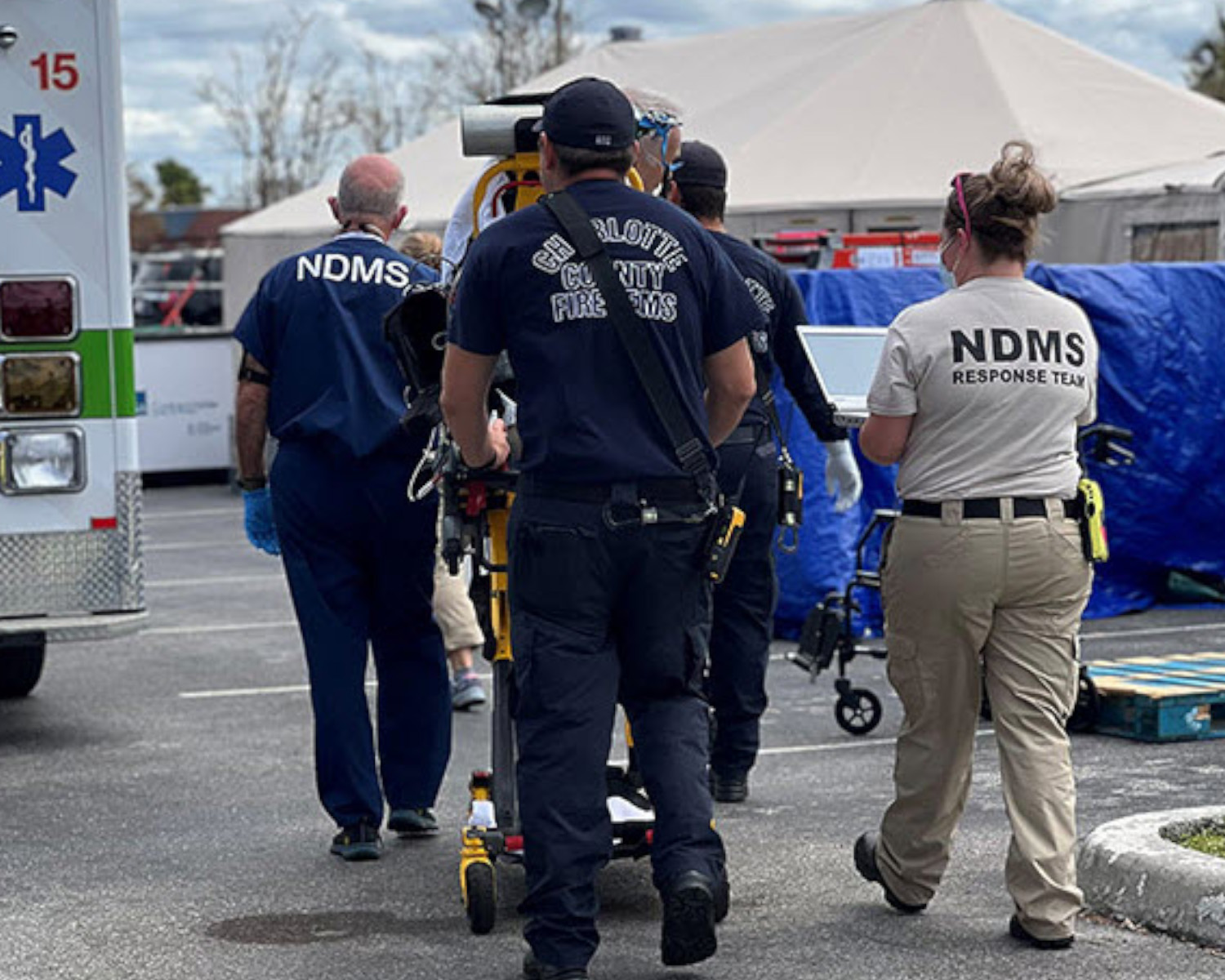
NDMS Response Teams partner with Charlotte County Fire/EMS to provide medical support and services at an event.  

Disasters and public health emergencies stress emergency departments, inpatient wards, and critical care. Sometimes, it’s not the illnesses or injuries that strain systems: It’s the sheer volume of patients. These surges may force hospitals to operate under degraded conditions—staff shortages, supply constraints, and disrupted infrastructure—while patient needs continue for weeks, not days.

In that kind of event, two things matter as much as any countermeasure: trained people who can deploy and a nationwide system that can move patients to care.

That’s NDMS’s lane.

Delivering Care to Patients and Patients to Care

The most visible side of NDMS is the teams that deploy in an emergency. Disaster Medical Assistance Teams mobilize to provide high-quality, rapid-response medical care onsite, performing medical triage, treatment, and supplementing hospital staff. The Trauma and Critical Care Team delivers lifesaving, specialized care, often in catastrophic circumstances. National Veterinary Response Teams ensure pets, service animals, and working animals receive the care they need. Victim Identification Center and Disaster Mortuary Operational Response Teams (DMORT) help grieving families, friends, and communities find the closure they need after a mass casualty event. DMORTs are composed of fatality management specialists who assist in the identification of victim remains, support coroners who are overwhelmed by disaster, and also support dependent processing. All NDMS teams deploy at the request of federal and state partners and supplement state, local, and regional staff to help those impacted and prevent communities from becoming overwhelmed.

In a public health emergency, the Departments of Veterans Affairs (VA) and War (DoW) manage medical evacuation and patient reception through Federal Coordinating Centers. This operation is done under a network built to place patients into definitive care. The NDMS Definitive Care Program is a federally coordinated system designed to ensure that patients affected by disasters and public health emergencies can access hospital care across the United States when local capacity is overwhelmed. At a high level, the NDMS Definitive Care Program connects three essential elements: patient movement, coordination, and a nationwide care network. The NDMS Definitive Care Program sustains care and connects patients to the right destination.

The NDMS Definitive Care Program establishes and maintains a nationwide network of healthcare facilities ready to receive patients during emergencies. Today, that network includes more than 1,900 NDMS hospitals and healthcare facilities that have voluntarily agreed to participate. These partnerships open access to hospital beds when needed during large scale events. Under this system, NDMS is ready to facilitate mass patient movement during Large Scale Combat Operations (LSCO) and during massive emergencies that require large-scale movement of patients such as during Hurricane Katrina.

How PAHPA Reauthorization Can Strengthen NDMS

June 1st marks the beginning of Atlantic Hurricane Season, marking the beginning of the season when coastal communities are more likely to face devastating storms and the need for NDMS responders becomes greater. But it doesn’t matter whether the crisis is a hurricane, a terrorist incident, a chemical release, or a deliberate biological attack, the expectation is the same: Americans should not be left alone when the system is overwhelmed. NDMS exists to make that expectation real.

This is why NDMS belongs at the center of the Pandemic and All-Hazards Preparedness Act (PAHPA) reauthorization conversation. PAHPA reauthorization will ensure that existing federal capabilities that support surge capacity are available and, where possible strengthened, to actually execute during the worst day. NDMS is at the top of that list.

So, what should Congress do in PAHPA reauthorization?

Make NDMS a clear, enduring priority by doing what Congress does best: set direction and ensure readiness. Specifically:

  • Treat NDMS readiness as a standing national requirement, not a capability we rebuild after each crisis.

  • Invest in the NDMS people pipeline—recruitment, training, credentialing, and retention—so experienced members can pass the torch and the system stays deployable and modern. These professionals do not need to be trained how to be doctors, nurses, paramedics, respiratory therapists, pharmacists, fatality management professionals, or veterinarians, as they do this every day in their own communities, BUT they do need to be trained in how to perform in austere environments, operate NDMS’s equipment, and work in an incident command structure. The expertise they bring to the field to deliver high-quality care is critical, as has been proven over many years in deployments across the country.

  • Reinforce NDMS’s patient movement and definitive-care mission, because surge staffing without the ability to safely move and place patients is not system resilience—it’s improvisation.

We must strengthen the operational bridge between crisis and care to ensure that we have practical solutions to ensure Americans get the care they need when disasters strike or during LSCOs. NDMS is that bridge—quiet, professional, and lifesaving.

Most Americans won’t know its name. They’ll only know the outcome: that when the moment came, help arrived and provided lifesaving support.

Securing First U.S. Source of Critical Influenza Drug Component

Submitted by samuel.e.seifman on
Banner Text

IBMSC invested $15 million in domestic production of Shikimic Acid, which is needed to produce Tamiflu. Prior to this investment, Shikimic Acid was sourced entirely from China. With this investment, we are promoting reliable access to critical flu treatments while creating jobs in the U.S.

ASPR’s Response to the 2025 Severe Storms in Washington State

ASPR’s Response to the 2025 Severe Storms in Washington State

Advancing Access to Health Care Through Increased Flexibility

On December 23, 2025, the U.S. Department of Health and Human Services (HHS) Secretary Robert F. Kennedy Jr. declared a Public Health Emergency (PHE) for the state of Washington to address the health impacts caused by recent severe storms, straight-line winds, flooding, landslides, and mudslides. The declaration follows President Trump’s emergency declaration and gives the Centers for Medicare & Medicaid Services’ (CMS) health care providers and suppliers greater flexibility in meeting emergency health needs of Medicare and Medicaid beneficiaries.

HHS has waived sanctions and penalties for violations of certain provisions of the Health Insurance Portability and Accountability Act of 1996 (HIPAA) Privacy Rule against hospitals in the emergency areas. The HHS Office for Civil Rights (OCR) issued a bulletin explaining how limited waivers apply and the duration.

Strengthening Community Resilience with Behavioral Health Support

The HHS Substance Abuse and Mental Health Services Administration (SAMHSA) offers free crisis counseling through the Disaster Distress Helpline. This toll-free, multilingual, crisis support service is available 24/7 to all residents in the U.S. and its territories who are experiencing emotional distress related to natural or human-caused disasters.

To connect with a trained counselor, call or text 1-800-985-5990. Spanish speakers can press “2” for bilingual support. Callers also can connect with counselors in more than 100 other languages via third-party interpretation services by indicating their preferred language to the responding counselor.

Technical Assistance Resources for Severe Storms and Floods

We encourage communities in flood zones to use ASPR TRACIE's resources to plan and protect health during severe storms.
 

ASPR’s Response to the 2026 Severe Winter Storms

ASPR’s Response to the 2026 Severe Winter Storms

ASPR has developed tools and technical assistance resources to enhance public health resilience at the state and local levels and help healthcare facilities prepare for and respond to extreme winter storms.  

We encourage you to use these tools below to protect at-risk individuals; support behavioral health; and fill preparedness gaps at your hospital or healthcare facility. Remind your patients to stay safe during winter storms by staying warm, heating your home safely, taking breaks from shoveling, and keeping a water supply.  To learn more about actions you can take to stay safe and healthy after the storm, see CDC’s Winter Storm Safety Guidelines.
 

HHS emPOWER Program

The HHS emPOWER  program is available to identify the number of Medicare beneficiaries in affected zips codes who rely on electricity-dependent durable medical equipment and certain healthcare services, such as dialysis, oxygen tank, or home health.  The tool is used to help anticipate, plan for, and respond to the needs of at-risk Americans in potentially impacted areas. 

Supporting Behavioral Health 

The HHS Substance Abuse and Mental Health Services Administration (SAMHSA) offers free crisis counseling through the Disaster Distress Helpline. This toll-free, multilingual, crisis support service is available 24/7 to all residents in the U.S. and its territories who are experiencing emotional distress related to natural or human-caused disasters. To connect with a trained counselor, call or text 1-800-985-5990.  
 

Technical Assistance

ASPR's Response to Potomac Interceptor Collapse

ASPR's Response to Potomac Interceptor Collapse

Following the Potomac Interce​​ptor sewer line collapse, millions of tons of raw, untreated sewage have flowed into the Potomac River. FEMA, in coordination with EPA, is supporting federal cleanup efforts.

Promoting Clear Communication

A spill of this magnitude has understandably left residents worried and uncertain about what steps they should take to safeguard their health and the health of their families. HHS has deployed staff from ASPR, CDC, and FDA to help coordinate clear, accurate, and timely public health and safety messages for residents in DC, Maryland, and Virginia.

Science-Backed Recommendations

In addition, HHS is providing technical assistance, including chemical evaluation, sediment impact assessment, food safety monitoring, public health communications, data analytics, modeling, and assessment of emerging public health impacts. The results of these assessments will be used to inform public health and environmental health recommendations.

Technical Assistance

U.S. Army’s 250th Birthday Festival and Parade

U.S. Army’s 250th Birthday Festival and Parade

On June 14, 2025, ASPR provided medical support at the U.S. Army’s 250th Birthday Festival and Parade. Our team enhanced situational awareness to ensure that everyone can enjoy a safe and healthy celebration.

The U.S. Army’s 250th Birthday Festival and Parade is just one of the National Special Security Events that ASPR supports throughout the year. For example, ASPR has provided medical support for presidential inaugurations, the President’s State of the Union address, Independence Day celebrations on the National Mall, and many other events of national significance.

ASPR is proud to provide medical support as our nation pauses to recognize the generations of soldiers who have defended our nation and our freedoms. Go behind-the-scenes with our team to see what we are doing to keep people safe and healthy during the celebration.
 

MRC responders with ASPR’s National Disaster Medical System train in CPR exercises to prepare for events.

View the Full Album

NDMS Teams Provide Medical Support

Submitted by samuel.e.seifman on
Banner Text

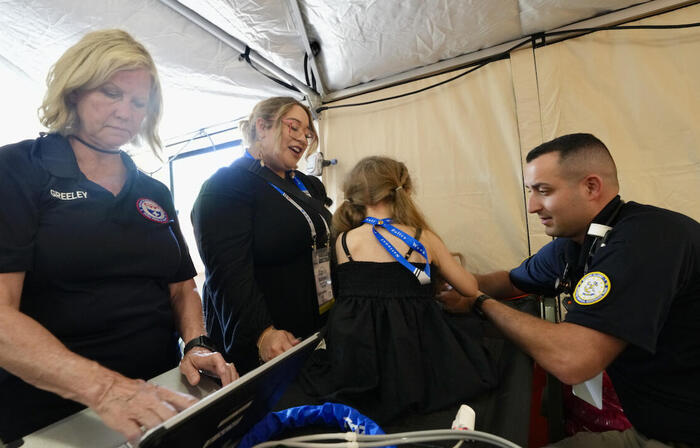
Medical professionals on National Disaster Medical System (NDMS) Disaster Medical Assistance Teams (DMATs) care for patients. Sometimes that means treating a twisted ankle or dehydration. Other times, that means stabilizing the patient following a heart attack until they are transferred to the hospital. NDMS teams are trained in advanced lifesaving techniques, and stand ready to provide support in the event of a more serious emergency, like a mass casualty situation. They deploy with portable medical stations, medical caches and equipment - everything they need to provide immediate care to the patient. Care is provided under the special and unique authorities provided by Congress for this unique and critical federal system.

Banner Image
NDMS Teams Provide Medical Support
Subscribe to