When the World Came to Houston: How PAHPA Strengthened Resilience Before the First 14 Days of FIFA World Cup 2026
Just fourteen days into the thirty-nine-day FIFA World Cup 2026 operational period, and Southeast Texas had already experienced a level of complexity few regions ever encounter.
In only two weeks, the Southeast Texas Regional Advisory Council (SETRAC) and its Catastrophic Medical Operations Center (CMOC) have supported mass gatherings involving more than 100,000 spectators, coordinated healthcare support for international dignitaries, implemented a regional missing persons capability, and activated to Level 2 for tropical weather and widespread flooding — all while continuing to support the day-to-day healthcare needs of more than eight million residents across our 25-county region.
The FIFA World Cup is one of the largest events ever hosted in the United States. ASPR expected it would challenge the healthcare system in Texas and other world cup locations. What we did not know was exactly how we would be challenged or how quickly multiple incidents would converge. The first fourteen days have already reinforced an important lesson: preparedness is not about planning for a single event. It is about building relationships and systems that can adapt when the unexpected occurs.
Health Care Coalition Builds Critical Partnerships and Capabilities
SETRAC is a Health Care Coalition (HCC) funded by ASPR’s Hospital Preparedness Program (HPP). During steady state, SETRAC works with its coalition of providers, responders, and other healthcare partners to improve health outcomes through research, education, and collaboration. During large events, such as the FIFA World Cup, SETRAC helps those partners work together to ensure they are ready to respond.
The support that HPP provided is critical to building those relationships.
For more than two years, SETRAC has worked alongside local, state, federal, healthcare, and FIFA partners to prepare for this event. Those preparations included mass gathering medicine, healthcare resource coordination, infectious disease planning, patient reunification, transportation disruptions, severe weather, medical surge operations, fatality management, and support for international dignitaries.
As it turns out, nearly all of those capabilities were needed in just the first two weeks.
Embedded in FIFA Unified Command, the CMOC maintained daily healthcare coalition coordination calls, monitored EMResource and WebEOC, provided Situation Reports, and maintained real-time awareness of hospital capacity and resource requests. This common operating picture allowed hospitals, EMS agencies, public health departments, emergency management organizations, and government partners to make informed decisions and rapidly adapt as conditions changed.
Protecting Health Through Complex, Simultaneous Events
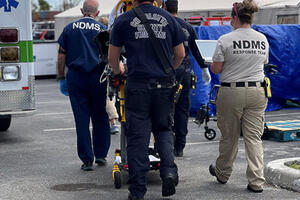
During the FIFA World Cup, FIFA Fan Fest activities repeatedly reached capacity, overflow venues opened, and Houston Stadium welcomed crowds approaching 64,000 attendees. Despite large crowds and significant heat concerns, medical transports to hospitals remained remarkably low. Most patient encounters were successfully managed on-site through the Hospital Preparedness Program-funded Mobile Medical Unit, cooling stations, and Houston Fire Department event medical teams. This kept unnecessary strain off our hospitals and allowed our healthcare system to continue functioning normally.
The first two weeks also reminded us that large events rarely occur in isolation.
While supporting FIFA activities, Southeast Texas experienced tropical weather and widespread flooding that required SETRAC to elevate the CMOC to a Level 2 activation. Staff simultaneously supported World Cup operations while monitoring flooding impacts to hospitals and EMS agencies, maintaining situational awareness of transportation disruptions, coordinating with emergency management partners, and ensuring continuity of healthcare communications.
Only 14 days into a 39-day event, the SETRAC Coalition had already supported more than 100,000 spectators, sustained healthcare operations during periods of hospital saturation, implemented innovative patient reunification capabilities, deployed medical surge resources, integrated specialized infectious disease transportation assets, and responded to widespread flooding without interruption to healthcare coordination activities.
These first 14 days have demonstrated something both ASPR has known for years: no single hospital, agency, or organization can manage this level of complexity alone.
This response has been successful because hospitals, EMS agencies, public health, emergency management, government partners, and healthcare coalitions have chosen to function as one regional healthcare system. We need strong partnerships, consistent funding, and legislative authorities that empower hospitals and public health partners to protect the American people. The Pandemic All-Hazards Preparedness Act (PAHPA) has
provided those authorities for 20 years, and its reauthorization would help ensure that public health and healthcare partners can work together effectively to protect Americans.
Because of the continued support from the Hospital Preparedness Program and the relationships built over decades of collaboration, Southeast Texas was prepared not only to host the world, but to protect it, care for it, and adapt when events unfolded in ways none of us could have fully predicted.