





Appendix B: Landscape Assessment Example
On March 16, 2025, a powerful EF-3 tornado touched down in the central corridor of Gibbs County, carving a 22-mile path through rural farmland, small towns, and unincorporated communities. Wind speeds peaked at 145 mph, damaging homes, schools, agricultural infrastructure, and critical roadways. The storm was part of a broader outbreak that affected three counties but caused its most concentrated damage in Gibbs County.
The tornado struck at approximately 2:10 PM local time, with minimal warning and while many families were at home or in school-based programs. Emergency services were overwhelmed in the initial hours, and mutual aid was activated from neighboring counties.
Community Demographics
Gibbs County is a rural county with a population of approximately 48,000 residents and a low population density (~53 people per square mile). Children make up roughly 22.5% of the population (~10,800 children ages 0–17).
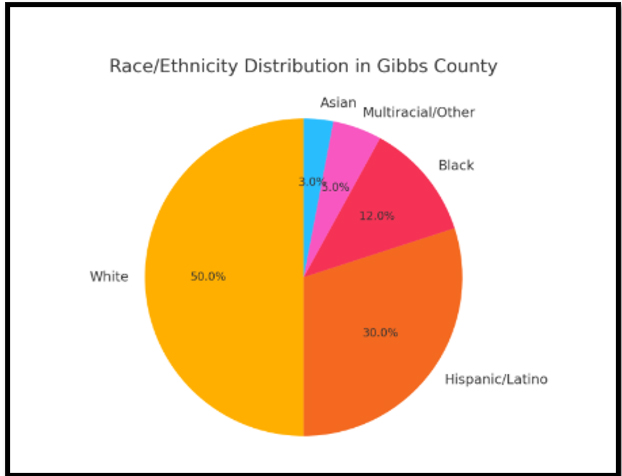
The county is racially and ethnically diverse: approximately 50% of residents identify as White, 30% as Hispanic/Latino, 12% as Black or African American, 5% as multiracial or other races, and 3% as Asian. Around 30% of households speak a language other than English at home, with Spanish being the most common.
The median household income is approximately $46,000, and nearly 25% of children live below the federal poverty line. Housing is generally older and spread across unincorporated areas, with many families facing limited access to broadband internet and public transportation. These factors may affect the accessibility of educational and health services, particularly in remote areas.
Social Vulnerability Index (SVI) – Summary
This table summarizes key SVI indicators relevant to children's environmental health and disaster recovery:
| SVI Theme | Key Indicators | Estimated Risk Level |
|---|---|---|
| Socioeconomic Status | High poverty (25%+), low income ($46K median) | State Child Care Licensing Agency |
| Household Composition | Aging population (20% 65+), 10% of households are single-parent | Moderate |
| Minority & Language | 30% Hispanic/Latino, 30% of households speak non-English | High |
| Housing & Transportation | Unincorporated areas, old housing stock, limited broadband | High |
Estimated Overall SVI Score: 0.85
ðº Vulnerability Level: Very High
Known Disruptions to Children's Services & Related Vulnerabilities:
Childcare: Two licensed centers were destroyed; Head Start center closed indefinitely
Education: Temporary relocations for 1 elementary and 2 middle schools
Food Access: Disruption to school meal programs for over 1,500 children
Behavioral Health: Increased demand for crisis counseling services among families and school staff
Transportation: Multiple rural bus routes disrupted due to debris and damaged roads
Data Sources:
U.S. Census Bureau (via data.census.gov): population totals, age, race/ethnicity, language, income, housing
CDC Social Vulnerability Index: socioeconomic and household characteristics
State GIS portal or local planning office: housing age and broadband access
County health or education departments: child-specific service data
Children's Programs
Gibbs County is a rural area with ~10,800 children under 18. The community includes a single public school district, limited early childhood care infrastructure, and school-centered services that serve as key hubs for health, nutrition, and outreach. Internet and transportation access remain barriers for many families, especially in unincorporated and agricultural zones.
Child Care
| Program Type | Count / Description | Notes & Sources |
|---|---|---|
| Center-Based Care | ~7 licensed centers | Located in incorporated towns; limited infant care |
| Family Child Care Homes | ~15 registered providers | Many serve 6–12 children; state licensing data used |
| Faith-Based Care | 3–5 programs with part-time preschool hours | Not all are licensed; data from local networks, licensing board |
| Informal Care | Not quantified | Anecdotal reports suggest reliance on relatives or neighbors |
Education
| Program Type | Count / Description | Notes & Sources |
|---|---|---|
| Public Schools | 10 schools (PreK–12) in 1 district | 1 high school, 2 middle, 6 elementary, 1 early learning center |
| Charter or Magnet | ~15 registered providers | Many serve 6–12 children; state licensing data used |
| Homeschool / Private | ~60 registered homeschool families; 1 small church school | Estimated via state education agency data |
| Special Education | 12% of students identified | Includes services for autism, speech, and learning disabilities |
| Head Start / Early Head Start | 2 program sites (serving ~120 children) | Federally funded; accessed via Region VI Head Start locator |
Health
| Program Type | Count / Description | Notes & Sources |
|---|---|---|
| Pediatric Hospitals | None in-county; nearest 70 miles away | Mobile and telehealth services available |
| Federally Qualified Health Center (FQHC) | 1 clinic with pediatric services | Offers vaccinations and Women-Infant-Children services |
| Rural Health Clinics | 2 total, with limited pediatric capacity | Limited mental health care availability |
| Behavioral Health/Substance Use Programs | 1 youth-serving counselor at county health office | School-based counseling is a critical access point |
| Suicide Prevention/Crisis Line Access | Available via state 988 services | Not always culturally tailored |
Protection & Juvenile Justice
| Program Type | Count / Description | Notes & Sources |
|---|---|---|
| Child Protective Services | 1 regional office serving multiple counties | High caseloads; limited Spanish-speaking staff |
| Foster Care | ~45 children in care from county | Some placed out-of-county |
| Juvenile Justice Facility | None in-county; services via regional hub | Youth are transported for hearings or detention |
| Youth Homeless/Shelters | None in-county | School district tracks McKinney-Vento eligibility (homeless students) |
Youth & Community Services
| Program Type | Count / Description | Notes & Sources |
|---|---|---|
| After-School Programs | ~5, mostly hosted at schools | Community funded; no summer-only programs |
| Recreation Centers | 1 county-run facility with youth sports | Not accessible to most unincorporated areas |
| Faith-Based Youth Groups | Active in 6–8 congregations | Includes food programs, mentoring, and youth nights |
| Youth Camps | Seasonal church camps and 4-H day programs | No disability-specific options noted |
| Services for Children with Disabilities | Limited; county school district provides main access | No community-based organizations focused solely on disability inclusion |
Post-Disaster Environmental Health Scan
A structured internet search was conducted using the terms: "Gibbs County tornado," "March 2025," and environmental health keywords such as: mold, asbestos, air quality, chemical exposure, sewage, heat, drinking water, pests. Social media platforms and online local newspapers were searched for community-level concerns, anecdotal reports, and publicly visible posts about environmental conditions affecting children or families.
Key Environmental Health Themes
| Environmental Health Concern | Observed Issues in Media/Community Posts | Notes for Assessment Team |
|---|---|---|
| Water: Damage & Mold | Multiple reports of mold growth in school gyms and mobile homes | Prioritize school inspections and home remediation support |
| Chemical: Asbestos | Local Facebook post mentioned old siding debris suspected to contain asbestos | May require state/local environmental health verification |
| Air: Indoor Air Quality | Parents commenting on "musty smell" and visible debris in reopened classrooms | Parents commenting on "musty smell" and visible debris in reopened classrooms |
| Water: Drinking Water Safety | One town reported boil-water advisory due to damaged pipes | Coordinate with water utility and health dept. |
| Debris & Physical Hazards | Concerns about children playing near storm debris piles | Coordinate messaging on safety; consider fencing priority |
| Pest Management | Reports of rodent and mosquito increases after flooding and food spoilage | May increase exposure to vector-borne illness |