HHS Declares Public Health Emergency for the State of Washington Following Recent Severe Weather

FOR IMMEDIATE RELEASE
Contact ASPR Press Office

ASPRMedia@hhs.gov
aspr.hhs.gov/newsroom
X: @ASPRgov

HHS Declares Public Health Emergency for the State of Washington Following Recent Severe Weather

Today, the U.S. Department of Health and Human Services (HHS) Secretary Robert F. Kennedy Jr. declared a Public Health Emergency  (PHE) for the state of Washington to address the health impacts caused by recent severe storms, straight-line winds, flooding, landslides, and mudslides. The declaration follows President Trump's emergency declaration  and gives the Centers for Medicare & Medicaid Services' (CMS) health care providers and suppliers greater flexibility in meeting emergency health needs of Medicare and Medicaid beneficiaries.  

"HHS stands ready to assist state and local response efforts in the state of Washington due to the potential health care impacts from severe storms." said  John Knox , HHS' Principal Deputy Assistant Secretary for the Administration for Strategic Preparedness and Response (ASPR). "With today's declaration and waiver, HHS is helping ensure that residents in the storm's path have continuous access to the care they need during and after this storm. ASPR's highly trained personnel are prepared to support state and local actions to save lives and protect the delivery of health care services." 

To support State and local response efforts, HHS has provided access to  HHS emPOWER.  Data from HHS emPOWER includes the number of Medicare beneficiaries who are reliant on electricity-dependent durable medical equipment and certain health care services, such as dialysis, oxygen tanks, or home health care. In the past, this data has informed planning and response efforts to quicky and effectively address the needs of at-risk residents in areas impacted by the disaster.  

The Disaster Distress Helpline is available to provide disaster crisis counseling. Managed by the Substance Abuse and Mental Health Services Administration (SAMHSA), this toll-free, multilingual, crisis support service is available 24/7 to all residents in the U.S. and its territories who are experiencing emotional distress related to natural or human-caused disasters. To connect with a trained counselor, call or text 1-800-985-5990. Spanish speakers can press "2" for bilingual support. Callers also can connect with counselors in more than 100 other languages via third-party interpretation services by indicating their preferred language to the responding counselor. 

HHS has also waived sanctions and penalties for violations of certain provisions of the Health Insurance Portability and Accountability Act of 1996 (HIPAA) Privacy Rule against hospitals in the emergency areas. The HHS Office for Civil Rights (OCR) issued a bulletin explaining how this limited waiver - PDF applies and its duration. 

In declaring the public health emergency and authorizing flexibilities for CMS providers, suppliers, and beneficiaries, Secretary Kennedy acted within his authority under the Public Health Service Act and Social Security Act. These actions and flexibilities are retroactive to December 9, 2025.

ASPR's Response to Hurricane Helene

ASPR's Response to Hurricane Helene

The Secretary declared public health emergencies in 5 states: South Carolina, Tennessee, Florida, Georgia, and North Carolina. These declarations gave the Centers for Medicare & Medicaid Services' (CMS) health care providers and suppliers greater flexibility in meeting emergency health needs of Medicare and Medicaid beneficiaries.

ASPR Deployed Responders, Medical Supplies and Equipment

ASPR deployed hundreds of medical, public health, and disaster response personnel as well as more than 405 tons of medical supplies and equipment to support North Carolina communities as part of the government-wide response to Hurricane Helene. During their deployment, ASPR's responders from the National Disaster Medical System (NDMS) cared for approximately 1,000 patients over the course of 30 days.

  • In Buncombe County, NDMS responders provided 24-hour surge support in medical tents for the influx of patients arriving to the Emergency Department at Mission Hospital in Asheville.

  • In Catawba County, an NDMS Health and Medical Task Force (HMTF) provided care at a state medical support shelter in Hickory.

  • In Mitchell County, NDMS responders provided 24-hour surge support in medica tents outside the Emergency Department at Blue Ridge Regional Hospital in Spruce Pine.

  • In Polk County, a HMTF provided a second state medical shelter in Mill Springs.

  • Two experts from NDMS' Disaster Mortuary Operational Response Team provided fatality management support.

  • ASPR supported oxygen filling capabilities at four state-run refill stations

Emergency Prescription Assistance Program

Uninsured residents in Tennessee, Georgia, and North Carolina living in areas impacted by Hurricane Helene could replace their 30-day supply of certain prescription medications, durable medical equipment, and medical supplies from any pharmacy that participates in the Emergency Prescription Assistance Program while the program was activated in those states.

Increasing Access to Health Care with Increased Flexibility and Data

In addition, HHS emPOWER program helped identify Medicare beneficiaries in affected zips codes who rely on electricity-dependent durable medical equipment and certain healthcare services, such as dialysis, oxygen tank, or home health, to help anticipate, plan for, and respond to the needs of at-risk citizens in potentially impacted areas.

HHS waived sanctions and penalties for violations of certain provisions of the Health Insurance Portability and Accountability Act of 1996 (HIPAA) Privacy Rule against hospitals in the emergency areas. The HHS Office for Civil Rights (OCR) issued bulletins explaining how limited waivers apply and the duration.

Supporting Behavioral Health

The HHS Substance Abuse and Mental Health Services Administration (SAMHSA) continues to offer free crisis counseling through the Disaster Distress Helpline. This toll-free, multilingual, crisis support service is available 24/7 to all residents in the U.S. and its territories who are experiencing emotional distress related to natural or human-caused disasters.

To connect with a trained counselor, call or text 1-800-985-5990. Spanish speakers can press "2" for bilingual support. Callers also can connect with counselors in more than 100 other languages via third-party interpretation services by indicating their preferred language to the responding counselor.

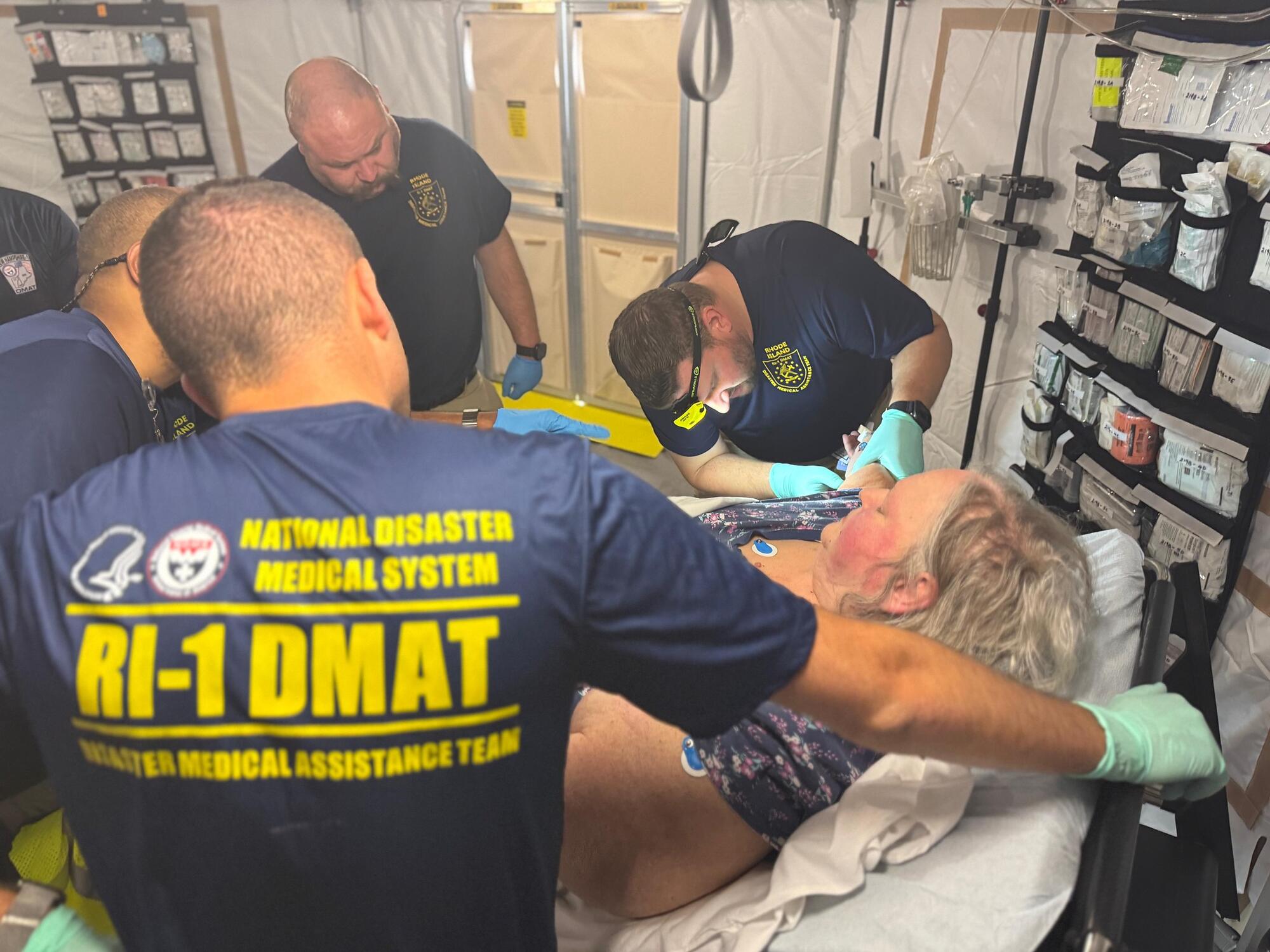
DMAT team members treat patient


PHEs and 1135s

  • June 12, 2025: Renewal of Determination that a Public Health Emergency Exists as a Result of the Consequences of Hurricane Helene in the State of Georgia

  • March 21, 2025: Renewal of Determination that a Public Health Emergency Exists as a Result of the Consequences of Hurricane Helene in the State of Georgia

  • December 27, 2024: Renewal of Determination that a Public Health Emergency Exists as a Result of the Consequences of Hurricane Helene in the States of Georgia, North Carolina, and Tennessee

  • September 30, 2024: Determination that a Public Health Emergency Exists As a Result of the Consequences of Hurricane Helene in the States of Tennessee and South Carolina

  • September 30, 2024: Waiver or Modification of Requirements Under Section 1135 of the Social Security Act as a Result of Hurricane Helene in the States of Tennessee and South Carolina

  • September 28, 2024: Determination that a Public Health Emergency Exists As a Result of the Consequences of Hurricane Helene in the State of North Carolina

  • September 28, 2024: Waiver or Modification of Requirements Under Section 1135 of the Social Security Act as a Result of Hurricane Helene in the State of North Carolina

  • September 27, 2024: Determination that a Public Health Emergency Exists As a Result of the Consequences of Hurricane Helene in the State of Georgia

  • September 27, 2024: Waiver or Modification of Requirements Under Section 1135 of the Social Security Act as a Result of Hurricane Helene in the State of Georgia

  • September 26, 2024: Determination that a Public Health Emergency Exists As a Result of the Consequences of Hurricane Helene in the State of Florida

  • September 26, 2024: Waiver or Modification of Requirements Under Section 1135 of the Social Security Act as a Result of Hurricane Helene in the State of Florida


Technical Assistance 

We encourage communities in all hurricane prone areas to use ASPR TRACIE's resources to plan to protect health during a hurricane.

ASPR's Response to the California Wildfires

ASPR's Response to the California Wildfires

Increasing Access to Health Care with Increased Flexibility and Data

On January 10, 2025, the Secretary of the U.S. Department of Health and Human Services (HHS) declared a Public Health Emergency (PHE) for California to address the health impacts of the ongoing wildfires in Los Angeles County. The declaration followed the President's major disaster declaration and gives the Centers for Medicare & Medicaid Services' (CMS) health care providers and suppliers greater flexibility in meeting emergency health needs of Medicare and Medicaid beneficiaries.

The Public Health Emergency Declaration gives the Centers for Medicare & Medicaid Services' (CMS) health care providers and suppliers greater flexibility in meeting emergency health needs of Medicare and Medicaid beneficiaries. 

In addition, HHS emPOWER program is available to identify the number of Medicare beneficiaries in affected zips codes who rely on electricity-dependent durable medical equipment and certain healthcare services, such as dialysis, oxygen tank, or home health, to help anticipate, plan for, and respond to the needs of at-risk citizens in potentially impacted areas.

HHS has waived sanctions and penalties for violations of certain provisions of the Health Insurance Portability and Accountability Act of 1996 (HIPAA) Privacy Rule against hospitals in the emergency areas. The HHS Office for Civil Rights (OCR) issued bulletins explaining how limited waivers apply and the duration. 
 

Supporting Behavioral Health

The HHS Substance Abuse and Mental Health Services Administration (SAMHSA) offers free crisis counseling through the Disaster Distress Helpline. This toll-free, multilingual, crisis support service is available 24/7 to all residents in the U.S. and its territories who are experiencing emotional distress related to natural or human-caused disasters.

To connect with a trained counselor, call or text 1-800-985-5990. Spanish speakers can press "2" for bilingual support. Callers also can connect with counselors in more than 100 other languages via third-party interpretation services by indicating their preferred language to the responding counselor.
 

1135 Waivers 

  • January 10, 2025: Waiver or Modification of Requirements Under Section 1135 of the Social Security Act

  • January 10, 2025: Waiver or Modification of Requirements Under Section 1135 of the Social Security Act as a Result of Wildfires in the State of California


Technical Assistance 

We encourage communities in all wildfire prone areas to use ASPR TRACIE's resources to plan to protect health during a wildfire. 

Tranquil Passport

Tranquil Passport

On May 22, 2025, the U.S. Department of Health and Human Services has unveiled a new Portable Biocontainment Unit (PBCU) that will be used to transport patients with high-consequence infectious diseases (HCID). The PBCU is the first domestic resource for isolating and transporting patients with contagious infectious diseases to Regional Emerging Special Pathogen Treatment Centers (RESPTC) via ground and air. This allows for continuous treatment of patients isolated in the unit until they can receive more definitive care at a RESPTC hospital.

The department will further test the PBCU in an exercise in June called Tranquil Passport, when more than 50 organizations will participate in a full-scale exercise to move infectious disease patients. The Tranquil Passport exercise will allow the department to test existing plans, processes, procedures, authorities, and capabilities to coordinate the movement of an HCID patient cluster from Canada to the United States. The exercise will occur over four days with coordination from local, state, federal, international, and nongovernmental partners. 

The referenced media source is missing and needs to be re-embedded.
Tranqul Exercise Series Backgrouns. Learn more.
Portable Biocontainment Unit Fact Sheet. Download the PDF
National Pathogen Systems. Learn more.

Preparing for High Consequence Infectious Disease Patients 

The following resources can help health care providers, emergency medical services, and public health professionals prepare for an event involving a patient or patients with High Consequence Infectious Diseases (HCIDs), such as Ebola.

  • Ebola/Viral Hemorrhagic Fever (VHF): The resources in this TC highlight case studies, lessons learned, tools, and promising practices for planning for and responding to Ebola and VHF outbreaks.

  • Exercise Program: The resources in this TC can help exercise designers, planners, researchers, and other interested individuals plan exercises with robust evaluation and in compliance with Federal guidelines.

  • VHF Preparedness Checklist [netec.org]: The Health Care Facility Viral Hemorrhagic Fever (VHF) Preparedness Checklist is a hospital planning tool to help health care facilities assess their readiness to identify, isolate, inform, and provide initial treatment for patients suspected or confirmed to have a VHF. 

  • EMS Biosafety Operators Course [courses.netec.org]: This self-paced course covers PPE, vehicle prep, decontamination, and biosafety best practices for EMS professionals to safely transport patients with high-consequence infectious diseases. 

  • Incident Planning Guide (IPG): Special Pathogens [repository.netecweb.org]: The Special Pathogen Incident Planning Guide (IPG) helps healthcare facilities prepare for and respond to special pathogen events, including risk assessment, protocol development, training, and more. 

  • Identify, Isolate, Inform Approach for High-Consequence Infectious Diseases: A toolkit for enhancing infection prevention and control in healthcare facilities. 

  • Hospital Surge Capacity and Immediate Bed Availability: These resources highlight recent case studies, lessons learned, tools, and promising practices for planning and improving response to a surge event with a focus on capacity for mass casualties.

  • Incident Management: The resources in this TC highlight incident and hospital incident command and other models that can help emergency medical planners create new and improve existing plans.

  • Information Sharing: These resources highlight guidance and lessons learned on information sharing that can help emergency health planners identify stakeholders to incorporate into the information flow, develop rules and elements for sharing, and exchange information to ensure a common operating picture.

  • Pre-Hospital: The resources in this TC include research articles, fact sheets, algorithms, and templates that can help emergency medical service providers and other first responders prepare for and respond to a variety of critical incidents.

  • Patient Movement, Medical Operations Coordination Center (MOCCs), and Tracking: This TC includes resources on patient movement from area healthcare facilities and tracking that can help emergency planners and responders learn more about various levels of assistance available, how to request it, how it is activated, and lessons learned from recent incidents.

  • Responder Safety and Health: The resources in this TC focus on safety strategies (e.g., preventing fatigue, ensuring the availability and correct use of personal protective equipment) and maintaining behavioral health (e.g., working through stress and preventing/addressing compassion fatigue).

  • Crisis Standards of Care (CSC) Resources Page: This page highlights resources developed to help healthcare stakeholders better understand the concept of CSC, how it has been implemented in the past, and how CSC can be incorporated into existing hospital emergency operations plans.

  • EMS Infectious Disease Playbook: This playbook (updated in 2023) synthesizes multiple sources of information in a single planning document addressing the full spectrum of infectious agents to create a concise reference resource for emergency medical services (EMS) agencies developing their service policies. The information can be incorporated into agency standard operating procedures and reviewed by the EMS medical director.

  • Infectious Disease Resource Page: This page highlights resources ASPR TRACIE developed to address current and emerging infectious disease threats. While many ASPR TRACIE resources are relevant to planning for and responding to infectious disease emergencies, this page features those created specifically for that purpose. 


ASPR's Response to the 2025 Aircraft Collision

ASPR's Response to the 2025 Aircraft Collision

In response to the airline collision near Washington Reagan National Airport, ASPR deployed fatality management experts along with regional personnel.

Deploying Fatality Management Specialists

At the request of National Transportation Safety Board (NTSB), NDMS' Disaster Mortuary Operational Response Team (DMORT) was working in collaboration with the DC Office of the Chief Medical Examiner and provided an assessment of fatality management needs. Personnel from NDMS' Victim Identification Center (VIC) team supported the family assistance center.

Providing Immediate Support following the Crash

In addition, members of ASPR's Tactical Medicine Team were on the scene immediately after the accident and supported responder care at the Incident Command Post set up at Joint Base Anacostia-Bolling.

Supporting Behavioral Health

Experts from ASPR's Disaster Behavioral Health Team worked overnight and conducted a rapid behavioral health needs assessment. District officials used the assessment and put resources in place which supported the family member's behavioral health needs.

The HHS Substance Abuse and Mental Health Services Administration (SAMHSA) offers free crisis counseling through the Disaster Distress Helpline. This toll-free crisis support service is available 24/7 to all residents in the U.S. and its territories who are experiencing emotional distress related to natural or human-caused disasters. To connect with a trained counselor, call or text 1-800-985-5990.

Technical Assistance

We encourage communities ASPR TRACIE's resources to plan to protect health during a mass casualty event.

ASPR’s Response to H5N1 Bird Flu

ASPR’s Response to H5N1 Bird Flu

H5N1 bird flu is widespread in wild birds worldwide and is causing outbreaks in poultry and U.S. dairy cows. While the current public health risk is low, the HHS Administration for Strategic Preparedness and Response (ASPR) is monitoring the situation closely and making resources available to support state, local, tribal, and territorial partners.

ASPR has several preparedness elements in place to help stay ahead of the H5N1 virus that is infecting cows. ASPR has personal protective equipment (PPE) and antiviral drugs available in the Strategic National Stockpile (SNS). The National Pre-pandemic Influenza Vaccine Stockpile (NPIVS), managed by the Biomedical Advanced Research and Development Authority, contains pre-pandemic influenza vaccine "building blocks" in the form of bulk antigens, the part of vaccine that triggers the immune system to protect against the virus; and adjuvants which reduce the amount of antigen needed to trigger an immune response.

PPE

The SNS maintains a large inventory of PPE that may be requested to protect health care professionals. SNS is also offering the following types of PPE for workers on farms or related industries where cattle or other infected animals are present: face shields, gloves, NIOSH-approved N95 respirators, elastomeric half-mask respirators, and goggles.

ASPR's mission is to help the country prepare for, respond to, and recover from public health emergencies and disasters. The SNS contributes to this mission as the nation's largest repository of emergency medical supplies. While many states hold large supplies of PPE in state-held stockpiles, if those stockpiles of PPE are depleted or unavailable, federal supplies managed by SNS may be requested. The HHS Secretary's Operations Center (SOC) is the initial contact for requesting emergency supplies. The SOC is staffed by ASPR 24 hours a day, 7 days a week, and 365 days a year. More information can be found at: Requesting SNS Assets. PPE may also be obtained via the commercial market through the normal supply chain.

Vaccines

NPIVS holds an array of pre-pandemic bulk antigens to protect against influenza viruses with pandemic potential. The NPIVS maintains sufficient raw materials to rapidly formulate enough vaccine doses to immunize critical care workers and at-risk populations during the early phases of a response. The government has the raw material to make millions of additional doses within weeks, with more to come in the following months. At this time, ASPR is supporting the availability of vaccines if they are needed.

Antivirals

The SNS contains millions of treatment courses of antiviral drugs, including Tamiflu (oseltamivir), an antiviral drug that treats seasonal flu and is expected to work against H5N1. Tamiflu may reduce the severity of infection if the medicine is taken shortly after the patient is symptomatic.

ASPR will make Tamiflu available upon request to jurisdictions that do not have their own stockpiles and are providing resources to support the treatment of symptomatic persons with exposure to birds, cattle, or other animals with confirmed or suspected H5N1 infection. Tamiflu and generic oseltamivir are also available through the normal commercial supply chain.


Developing Treatments for the Front Lines: How ASPR Is Advancing the Next Generation of Overdose Treatments

Developing Treatments for the Front Lines: How ASPR Is Advancing the Next Generation of Overdose Treatments

During my 34 years of experience in emergency response, I've seen firsthand the devastation that illegal opioids leave behind—on minds, on bodies, and on entire communities. Today, that devastation continues to spread, and it's claiming lives at an alarming rate.

In 2024 alone, more than 54,000 Americans died from opioid overdoses. That's not just a statistic—it's the equivalent of losing the entire population of a city like Harrisonburg, Virginia, or Saratoga Springs, New York. It's the size of a major university campus. And behind every number is a name, a family, a future cut short.

This crisis has taken children from classrooms, parents from dinner tables, and neighbors from our communities. It has shaken our nation's sense of security. Today, HHS Secretary Kennedy's renewal of the public health emergency for the opioid crisis went into effect. In addition, the U.S. Department of Homeland Security has declared synthetic opioids and certain drug adulterants to be material threat—a clear signal that this is not just a public health emergency, but also a national security issue.

In our response, we're not just fighting the opioid public health emergency, we're fighting for the soul of our country, for the dignity of our people, and for the promise of a healthier tomorrow. We're supporting efforts through public-private partnerships that bring together the best of American science, ingenuity, and compassion.

At ASPR, we believe all lives are worth saving, and that no first responder should ever have to stand by helplessly because they lack the tools to intervene. That's why we're taking bold action.

Current FDA-approved treatments have saved countless people but do fail in cases where opioids are mixed with other illicit drugs. Through efforts within the Biomedical Advanced Research and Development Authority (BARDA), ASPR has partnered with Orexo US, Inc. to develop a new rescue nasal powder designed to treat overdoses involving drugs like xylazine and medetomidine illicitly mixed with fentanyl.

If successful, Orexo's new drug could give first responders a powerful new tool to save lives in situations where current treatments fall short. This is the kind of innovation that turns moments of crisis into moments of hope.

At ASPR, we are committed to Secretary Kennedy's goal to Make America Healthy Again (MAHA). That means treating drug overdose with urgency, science, and humanity. It means giving first responders the tools they need to save lives. It means never giving up on the often forgotten people and communities who've been hit hardest by this crisis.

If you or someone you know is struggling with substance use disorder, please don't wait. Help is available. Visit FindTreatment.gov to locate treatment options near you.

Together, we can build a future where no family has to lose a loved one to overdose—and where every American has a second chance at life.

Alternative Text for Time-Based Media

Alternative Text for Time-Based Media

  • ASPR's National Sp ecial Pathogen System (NSPS) - The video introduces ASPR's National Special Pathogen System (NSPS). A nation-wide, system-based network that was created to support infectious disease readiness through education, regional coordination, and surge activity training. 

    View Video | View Description

  • Hurricane Michael: Promoting Recovery in Ba y District Schools - As recovery from Hurricane Michael continues, area schools had to grapple with rising levels of anxiety, depression and PTSD; increasing numbers of homeless students; and rapidly dwindling numbers of staff. Although all of these challenges are daunting, they are not unique to this disaster. ASPR helped connect school administrators and educators who were are grappling with recovery from Hurricane Michael with mentors from around the country who faced disasters in their school districts and were ready to share lessons learned. Together, they discussed solutions to help bolster recovery. 

    View Video | View Description 

  • Mapping the Capacity of Healthcare in Puerto Rico - Captain Betty Hastings, Recovery Field Coordinator for the U.S. Department of Health & Human Services at the Joint Recovery Office in Puerto Rico, is showing how ASPR is helping to assess the capacity and capabilities of private and public healthcare services across the island through mapping. 

    View Video | View Description 

  • Dr. Kevin Yeskey: Regional Disaster Health Response System - Dr. Yesky explains the advantages of using a tiered multi-state, regional system to get patients the care they need in the time that they need it following a disaster. 

    View Video | View Description 

  • Exercise : Tranquil Terminus - The video shows the Tranquil Terminus Exercises in Spokane, WA, Boise, ID, and Los Angeles, CA. These are three of the participating patient debarkation locations where patients will be received and transported to their treatment facilities. The exercise is an opportunity for federal and local health agencies and organizations to both prepare and practice for any kind of possible contagion. 

    View Video | View Description 

  • Statement: BARDA Director on Emergency Use Authorization (EUA) of the Third COVID-19 Vaccine - The video features a statement given by Dr. Gary Disbrow, Director of the Biomedical Advanced Research and Development Authority (BARDA), explaining the public-private collaboration and platform technologies brought together for COVID-19 vaccines. 

    View Video | View Description

  • COVID-19 Response: NDMS Assists with Mass Vaccination Efforts in Arizona - NDMS responders share their experiences with assisting local volunteers in a mass vaccination efforts in Arizona

    View Video | View Description

  • COVID-19 Response: NDMS Nurses Share Field Experiences during Mass Vaccination Efforts - Two NDMS nurses share their field experiences supporting the mass vaccination efforts.

    View Video | View Description 

  • NDMS Supports COVID-19 Vaccinations in Chandler, Arizona: The National Disaster Medical System (NDMS) team deployed as part of the Health and Human Services shot team to Southeast Maricopa County in Chandler, Arizona. They were there to assist the local community and the state provide vaccinations to the population at a local drive-up vaccination center.

    View Video | View Description

  • NDMS Supports COVID-19 Vaccinations at the Tucson Convention Center - The video is recorded at the Tucson Convention Center in Pima County, Arizona during a COVID-19 response. The video features the Medical Director, Dr. John Gaither, highlighting the NDMS teams integration and assistance with the COVID vaccinations organized through the Tucson Fire Department.

    View Video | View Description 

  • ASPR TRACIE "Through the Years" - ASPR TRACIE was started in 2015 with quite a mission—deliver information and resources to professionals on the front lines of healthcare preparedness. We're proud of our accomplishments, but even prouder that you've allowed us to share your best practices and become your trusted source for preparing for and responding to emergencies. 

    View Video | View Description 

  • ASPR TRACIE "Lessons Learned on Crisis Standards of Care in Kenema" - In this video, Dr. Lewis Rubinson shares his personal experiences treating Ebola patients in Sierra Leone. 

    View Video | View Description 

  • ASPR TRACIE "Cybersecurity and Healthcare Facilities" - Cybersecurity is a critical issue facing the ASPR TRACIE audience. In this webinar, a distinguished panel of experts describe lessons learned from recent experiences, planning considerations, and steps the federal government is taking to address cybersecurity and cyber hygiene. 

    View Video | View Description 

  • ASPR TRACIE "Preparing for the Worst, Responding at Your Best, and Continuing On" - The scenarios and information presented in this webinar summarizes Modules 1 and 2 and help emergency healthcare responders and providers prepare to manage their emotional response during real-life situations. 

    View Video | View Description 

  • ASPR TRACIE "Cognitive Tools for Mitigating Compassion Fatigue and Secondary Traumatic Stress" - Learn more about tools and strategies for identifying and mitigating stress, compassion fatigue, and secondary traumatic stress. 

    View Video | View Description 

  • ASPR TRACIE "Preview: Cognitive Tools for Mitigating Compassion Fatigue and Secondary Traumatic Stress" - This preview explains how the module uses exercises and scenarios to teach participants strategies for managing stress in their daily lives and during disasters. 

    View Video | View Description 

  • ASPR TRACIE "Organizational Wellness from the Top: Stress Mitigation and Work Satisfaction for Staff" - Participants will learn about organizational "disease," and how stress can negatively affect the work environment in this webinar. Tips and tools for measuring wellness and implementing related strategies are included. The module closes with stress-reducing exercises for executives and an emphasis on the importance of physical activity and learning opportunities for leaders and staff. 

    View Video | View Description 

  • ASPR TRACIE "Preview: Organizational Wellness from the Top: Stress Mitigation and Work Satisfaction for Staff" - Healthy leaders manage health teams. Check out this preview of ASPR TRACIE's webinar " Organization Wellness from the Top: Stress Mitigation and Work Satisfaction for Healthcare Providers. " 

    View Video | View Description 

  • ASPR TRACIE "Compassion Fatigue and Secondary Stress Identification for Healthcare Providers" - Learn more about the concept of traumatic stress, including risk factors and symptoms associated with compassion fatigue, secondary traumatic stress, vicarious trauma, and burnout. 

    View Video | View Description 

  • ASPR TRACIE "Who Me? How Do I Know if I Have Compassion Fatigue and Secondary Traumatic Stress?" - This brief video describes ASPR TRACIE's disaster responder self-care webinar "Compassion Fatigue and Secondary Traumatic Stress Identification for Healthcare Providers." 

    View Video | View Description 

  • ASPR TRACIE Celebrates Two Years of Service - Learn about ASPR TRACIE's progress over the past two years—based on close collaboration with stakeholders and partners. 

    View Video | View Description 

  • ASPR TRACIE: User Comments After the First Year - Public health officials and emergency planners share their experiences working with ASPR's Technical Resources, Assistance Center and Information Exchange (TRACIE) in its inaugural year. 

    View Video | View Description 

  • ASPR TRACIE: A Year in Review - This video summarizes ASPR TRACIE's first year of service. 

    View Video | View Description 

  • Patient Surge Strategies 2018 Lehigh Valley Health System - In this interview with ASPR TRACIE, Ryan Hay, Director of Emergency Preparedness for Lehigh Valley Health System, describes their surge management strategies for the 2018 seasonal illness surge. Visit asprtracie.hhs.gov for more information. 

    View Video | View Description 

  • Patient Surge Strategies: NYC Health + Hospitals 2018 - In this interview with ASPR TRACIE, Drs. Madad and Studer discuss the development of surge sites, tents, and mobile medical units to help decompress their emergency departments during this year's seasonal illness surge. Visit asprtracie.hhs.gov for more information. 

    View Video | View Description 

  • BARDA Ventures: Gary Disbrow: BARDA has launched BARDA Ventures, an effort to better ensure that a continuous pipeline of the most innovative technologies are available the moment our nation needs them. BARDA Director Gary Disbrow explains how BARDA Ventures enables BARDA to partner with the investment community to support innovative technologies that solve current and future health security challenges. 

    View Video | View Description 

  • BARDA Ventures: Justin Yang - Justin Yang, Director of the BARDA DRIVe Catalyst Office, explains how BARDA plans to leverage its history of success in medical countermeasure development to support entrepreneurs through BARDA Ventures.

    View Video | View Description

  • BARDA Ventures: Sandeep Patel - BARDA Ventures expands the range of investment tools that BARDA has available to advance novel medical countermeasure development. BARDA DRIVe Director Sandeep Patel tells how BARDA Ventures will help critical public health emergency preparedness and response technologies find a path to commercialization and invite matching investments from the private investment community. 

    View Video | View Description

  • Project BioShield: Partnering to Build a Portfolio of Medical Countermeasures - BARDA Deputy Director Disbrow explains how BARDA is working with private industry to build a robust portfolio of medical countermeasures. BARDA has supported 27 products under Project BioShield and added 15 products to the Strategic National Stockpile. Ten of those products have earned FDA approval, with others available under FDA's Emergency Use Authority. 

    View Video | View Description 

  • DRIVe: Personal Devices - This video teaser announces one of three, cross-cutting problems the DRIVe program will tackle on June 5th, "Personal Devices that know BEFORE you get sick". To learn more about DRIVe and how ASPR and BARDA are involved, visit DRIVe.hhs.gov. 

    View Video | View Description 

  • DRIVe: Solving Sepsis - This video teaser announces one of three, cross-cutting problems the DRIVe program will tackle on June 5th, "Solve sepsis in OUR lifetime". To learn more about DRIVe and how ASPR and BARDA are involved, visit DRIVe.hhs.gov. 

    View Video | View Description 

  • DRIVe: Transforming Health Security - This video teaser announces one of three, cross-cutting problems the DRIVe program will tackle on June 5th, "Transforming Health Security". To learn more about DRIVe and how ASPR and BARDA are involved, visit DRIVe.hhs.gov. 

    View Video | View Description 

  • Telehealth Webinar for Community Based Organizations Part 1: Services, Payment and Partners - The webinar provided an overview of telehealth basics for community-based organizations such as public housing authorities, multi-family housing providers, aging and disability network stakeholders, and other social service providers. The webinar highlighted relevant resources and provided examples of telehealth use and lessons from the field.

    View Video | View Description 

  • Telehealth Webinar for Community Based Organizations Part 2: Accessibility and Language Access - The second webinar of the Telehealth for Community-Based Organizations Series, Promising Practices: Accessibility and Language Access, was held August 26, 2020. The webinar focused on telehealth accessibility for individuals with access and functional needs and individuals with limited English proficiency. It highlighted innovative strategies for ensuring access to older adults, people with disabilities, and addressed cultural and linguistic competency when providing telehealth services. 

    View Video | View Description 

  • Telehealth Webinar for Community Based Organizations Part 3: Addressing Barriers for Homelessness and Connectivity - The third and final webinar of the Telehealth for Community-Based Organizations Series, Promising Addressing Barriers for Homelessness and Connectivity, was held September 30, 2020. The webinar focused on how Community-Based Organizations can help connect homeless individuals with telemedicine services during the COVID-19 pandemic. Find out about a federal program to improve access to phone and internet services for low-income individuals.

    View Video | View Description

  • The Emergency Prescription Assistance Program - The Emergency Prescription Assistance Program, or EPAP, helps people in a federally-identified disaster area who do not have health insurance get the prescription drugs, vaccinations, medical supplies, and equipment that they need. This program helps people and communities better cope with a disaster and reduces stress on the healthcare system. 

    View Video | View Description 

  • The Hospital Preparedness Program (HPP) - Find out how the Hospital Preparedness Program helps keep our nation's communities safe in response to disasters and emergencies. 

    View Video | View Description 

  • HPP Turns 15 - In this video, ASPR takes a look back at the Hospital Preparedness Program on its 15 year anniversary. Over the years, the program has taken the lead on hospital preparedness by helping patients receive the right care at the right place at the right time. Visit Hospital Preparedness Program (HPP) for more information. 

    View Video | View Description 

  • Prabhavathi Fernandes, PhD: Introduction to the National Biodefense Science Board - Prabhavathi Fernandes, Ph.D., Chairperson of the National Biodefense Science Board (NBSB), provides an overview of the board's activities. The NBSB provides advice directly to the Office of the Assistant Secretary for Preparedness and Response and the Secretary of the Department of Health and Human Services on preventing, preparing for, and responding to adverse health effects of emergencies and disasters. The NBSB also provides expert guidance on current and future chemical, biological, nuclear, and radiological agents and the threats they may pose to our nation. 

    View Video | View Description 

  • Health & Medical Task Force: ASPR Supports the State of Maryland - As part of the response to the COVID-19 pandemic, responders from the National Disaster Medical System deployed in support of the Maryland Department of Health to assess area long-term care facilities. NDMS responders worked with the Maryland Department of Health, the Maryland National Guard, Maryland Institute for Emergency Medical Services Systems, the U.S. Public Health Service, and other partners to evaluate each facility's preparedness planning, including transport protocols, isolation guidelines, disinfection procedures, PPE usage and availability, and staffing. 

    View Video | View Description 

  • 2020 Independence Day: NDMS Responders Behind the Scenes - In this video, Brian Walters, a NDMS medical officer with the Department of Health and Human Services, tells how NDMS teams worked together behind-the-scenes to provide medical care during the Independence Day celebrations on the National Mall in Washington, D.C. 

    View Video | View Description 

  • 2019 Peace Officers Memorial - NDMS Prepares to Provide Behind-The-Scenes Support - During the annual Peace Officers Memorial, responders from the National Disaster Medical Service stand ready to provide medical care if it is needed. Before the event, NDMS ensures that all of its personnel and teams are prepared to handle a wide range of medical emergencies, so they review and rehearse the latest medical procedures before deploying. 

    View Video | View Description 

  • HHS Medical Teams Provide Care after Hurricane Michael - More than 400 medical personnel from the HHS National Disaster Medical System deployed after Hurricane Michael to provide emergency medical care in some of the hardest hit communities in Florida. These teams set up temporary medical facilities outside severely damaged hospitals and are working alongside local medical professionals to care for patients. NDMS brings the best of care in the worst of times. 

    View Video | View Description 

  • Dr. Gaither: NDMS Supports Urban Search and Rescue Teams - Josh Gaither, a Medical Officer with the National Disaster Medical System (NDMS), explains how NDMS responders are able to work with urban search and rescue teams to provide urgently needed care to survivors. NDMS responders are specially trained and they can help with anything from ICU care to surgical care, enabling them to operate in a many different settings. 

    View Video | View Description 

  • SNS Training Video: Bariatric Bed Assembly - New Medline Model: Assembling a bariatric bed might seem intimidating, but it is easier than you might think. Check out this quick training video from HHS/ASPR's Strategic National Stockpile for step-by-step instructions to help you assemble the Medline bariatric bed.

    View Video | View Description

  • SNS Training Video: Westcott Bed - This training video provides a visual demonstration and instructions to guide the user through the process of assembling the Westcott Bed. 

    View Video | View Description 

  • (Spanish Version) Video de capacitación de SNS: Montaje de cama Westcott - este video de capacitación proporciona una demostración visual e instrucciones para guiar al usuario a través del proceso de montaje de la cama Westcott. 

    Ver video | Ver descripción 

  • SNS Training Video: Hospital Bed Assembly - This training video provides a visual demonstration and instructions to guide the user through the process of assembling the Hospital Adjustable Bed. 

    View Video | View Description

  • (Spanish Version) Video de capacitación de SNS: Montaje de cama ajustable de hospital -Este video de capacitación proporciona una demostración visual e instrucciones para guiar al usuario a través del proceso de montaje de la cama ajustable de hospital. 

  • Ver video | Ver descripción 

  • SNS Training Video: General Use Bed (GUB) Assembly - This training video provides a visual demonstration and instructions to guide the user through the process of assembling a General Use Bed.

    View Video | View Description 

  • (Spanish Version) Video de capacitación de SNS: Montaje de cama de uso general (GUB) -este video de capacitación proporciona una demostración visual e instrucciones para guiar al usuario a través del proceso de ensamblaje de una cama de uso general.

    Ver video | Ver descripción

  • (Spanish Version) Video de capacitación de SNS: Montaje de cama bariátrica 2020 (Modelo Heredado) -Montar una cama bariátrica puede parecer intimidante, pero es más fácil de lo que cree. Vea este breve video de capacitación de la Reserva Nacional Estratégica de HHS / ASPR para obtener instrucciones paso a paso que lo ayudarán a ensamblar la cama bariátrica. 

    Ver video | Ver descripción

  • SNS Training Video: Bariatric Lift Assembly - A Bariatric Lift Assembly, used primarily to lift obese patients from the bed, might look like a challenge to assemble, but you really just need a few simple tools. Check out this step-by-step training video from the Strategic National Stockpile to learn how to assemble a a bariatric lift assembly. 

    View Video | View Description 

  • (Spanish Version) Video de capacitación de SNS: Montaje de Elevación Bariátrica -un ensamblaje de elevador bariátrico, que se usa principalmente para levantar a pacientes obesos de la cama, puede parecer un desafío para ensamblar, pero realmente solo necesita algunas herramientas simples. Vea este video de capacitación paso a paso de la Reserva Nacional Estratégica para aprender cómo ensamblar un conjunto de elevación bariátrica. 

    Ver video | Ver descripción

Cutting Through the Red Tape: ASPR’s Regional Operation Teams Empowers Local Public Health Leaders

Cutting Through the Red Tape: ASPR’s Regional Operation Teams Empowers Local Public Health Leaders

All emergencies are local. When state, local, tribal, and territorial (SLTT) leaders are empowered to make key decisions about disaster response and recovery operations, communities benefit. 

On March 18, 2025, President Trump issued Executive Order 14239 as a clear mandate to reduce the complexity of federal disaster management policies and empower state and local leaders. The federal government offers many services that SLTT leaders can leverage to protect health and save lives. However, finding the right federal public health and medical resource to meet a community's need can be a challenge – that's where ASPR's Regional Operation teams comes in.

ASPR's Regional Operation teams, including its Regional Administrators (RAs) and Regional Emergency Coordinators (RECs), help cut through red tape. They serve as ASPR's representatives to federal, state, tribal and territorial healthcare officials. From preparedness planning to disaster exercises, through response and recovery operations, ASPR's RAs and RECs are situated across the country to provide support and help their SLTT partners navigate the wide array of public health and medical services that are available from the federal government.

Does this system work? According to our state partners, the answer is yes. We talked with 5 directors of public health preparedness (DPHP) from across the country to get their perspectives.

Sheryl Roub, Public Health Preparedness and Response Unit Manager at the Wyoming Department of Health, describes ASPR RAs and RECs as "strategic problem solvers." They serve as an important resource that helps states connect with federal resources, provide a critical perspective, and offer technical assistance. "RECs provide critical guidance and a broader perspective, especially when it comes to integrating federal assets into state responses." says Tim Wiedrich, Director of the Health Response and Licensure Section at the North Dakota Department of Health.

ASPR RECs help states face and address their most complex public health and medical challenges. "Radiation is one of those tricky spaces for states. We're much more comfortable planning for and responding to environmental threats," explained Jay Fiedler, Director of the Bureau of Emergency Preparedness, EMS, and Systems of Care for the Michigan Department of Health. However, Michigan is home to several nuclear power plants, so it is critical that the state is ready to respond to a radiation incident.

Fiedler relied on the perspective of his ASPR REC throughout the planning process for Cobalt 25, a federally sponsored radiation exercise. "Our REC was there from the beginning of a year-long planning process next to my state emergency management coordinator, all the way through the execution of the exercise. He was literally sitting in our state health Emergency Operation Center, right next to us, helping us to navigate those federal resources from a lot of different federal agencies that we're not used to working with…Our access to RECs helps us respond in the most meaningful and in the most complete way that we could."

ASPR RECs can also connect their partners with some unique federal public health and medical resources. When an anthrax outbreak was identified in a herd of cattle in Wyoming, the state reached out to their REC for support. The REC worked to help the state DPHP get the federal assistance needed. Working first through the HHS Secretary's Operations Center and then through the CDC Emergency Operations Center, the REC helped the state DPHP to find the right people at CDC to initiate a clinical evaluation. Following the evaluation, the state received doses of Cyfendus, a newly approved medical countermeasure, to protect the community. Cyfendus was delivered in just a few days, enabling the state to deploy the product to three sites that needed it. "This response could not have happened without all of the REC's help," explained Roub. "I know I can call on them at any time."

When major disasters strike, ASPR RECs are there to ensure the state knows which federal public health and medical resources are available and can help the states get the help they need. Paul Petersen, Director of the Emergency Preparedness Program for Tennessee's Department of Health, recalls that "RECs were instrumental during the Helene disaster, assisting with patient evacuations and resource coordination." For example, the ASPR RECs assisted state officials with activation of the Emergency Prescription Assistance Program (EPAP). EPAP was activated at the request of the state, helping disaster survivors get access to prescription medications, durable medical equipment, and more. "Just having that input from the RECs helped us pull together all of these pieces that we had in play to ensure people could get access to care," said Petersen.

At the national level, responses that trigger a Stafford Act declaration get the most attention, but state and local responders manage every single emergency that happens in their jurisdictions. ASPR RECs are there to help during both the big events and the smaller, more routine emergencies.

For example, a power outage in New Hampshire didn't make national headlines, but it did threaten patient health in the jurisdiction. As part of the state's response, Stephanie Locke, Bureau Chief for Emergency Preparedness, Response, and Recovery at the New Hampshire Department of Health and Human Services called her REC for support. The REC helped coordinate resources during the power outage. Locke worked with her local REC to identify available resources to help protect patient safety. Ultimately, the hospital didn't have to evacuate.

Empowered local leaders are the cornerstone of effective disaster response and recovery. ASPR RECs are vital allies, streamlining processes so SLTT partners can effectively manage disaster preparedness, response, and recovery operations. When federal public health and medical resources are needed by SLTT partners, RECs truly serve as the "front door to ASPR".

As we look ahead to 2026, we're excited to continue building on this strong partnership and working together to support communities nationwide for years to come. If you are a SLTT public health or emergency management professional, take the time to get to know your ASPR REC or RA. 

Looking for a way to connect? You can find their contact information right here.


Thanks to the following DPHPs for contributing their perspectives to this blog: Jay Fiedler (Michigan), Stephanie Loke (New Hampshire), Paul Petersen (Tennessee), Sheryl Roub (Wyoming), and Tim Wiedrich (North Dakota).

HHS Provides Doses of Investigational Vaccine, Therapeutic to Ethiopia to Address Current Outbreak of Marburg Virus

FOR IMMEDIATE RELEASE
Contact ASPR Press Office

ASPRMedia@hhs.gov
aspr.hhs.gov/newsroom
X: @ASPRgov

HHS Provides Doses of Investigational Vaccine, Therapeutic to Ethiopia to Address Current Outbreak of Marburg Virus

The Administration for Strategic Preparedness and Response (ASPR) within the U.S. Department of Health and Human Services (HHS) announces the provision of up to 2,500 doses of Sabin Vaccine Institute's investigational cAd3-Marburg Vaccine and up to 25 treatment courses of Mapp Biopharmaceutical's investigational MBP091 monoclonal antibody therapeutic to Ethiopia to support the country's response to its first-ever outbreak of Marburg virus disease.

"While case numbers remain limited, HHS is taking the Marburg virus outbreak seriously, and we are acting early," HHS Deputy Secretary and Acting Director of the Centers for Disease Control and Prevention (CDC) Jim O'Neill said. "Together with CDC and ASPR, HHS will end this threat swiftly."

Marburg is a highly contagious hemorrhagic fever disease and can have a case fatality rate up to 90 percent if patients are not properly managed. As of December 2, 2025, the Ethiopian Ministry of Health has confirmed 13 cases of Marburg, including eight deaths.

"Providing these products demonstrates the U.S. government's longstanding commitment to life-saving humanitarian aid, keeping Americans safe at home and abroad, and the Trump Administration's transition towards efficient and country-led assistance," said Principal Deputy Assistant Secretary for ASPR John Knox. "This action will protect U.S. national security and the health of Americans."

Both investigational products are under development by ASPR's Biomedical Advanced Research and Development Authority (BARDA) and are being made available through contracts with their respective manufacturers. Both products will be administered under appropriate regulatory mechanisms to ensure that any safety concerns are identified through proper oversight. These products are being made available to potentially protect and treat health care and front-line workers in Ethiopia.

# # #


About ASPR:


ASPR is the nation’s lead health security agency—driving preparedness before disaster strikes, securing domestic medical supply chains, advancing gold standard science, and delivering a fast, accountable federal response when lives are on the line. We partner with states, local communities, tribes, territories, other federal agencies, and the private sector to strengthen readiness at home. We invest in American manufacturing to reduce foreign dependency, and steward taxpayer resources with transparency, discipline, and measurable outcomes. ASPR protects the American people and ensures that the United States can prepare for, respond to, and recover from any threat to national security, anytime, anywhere.

Subscribe to